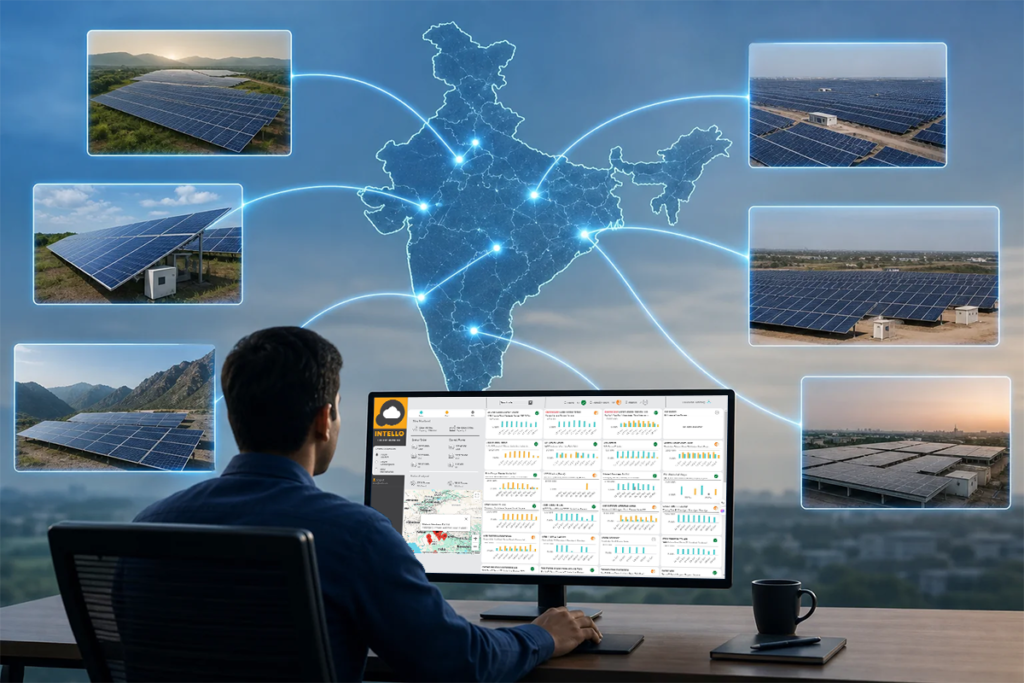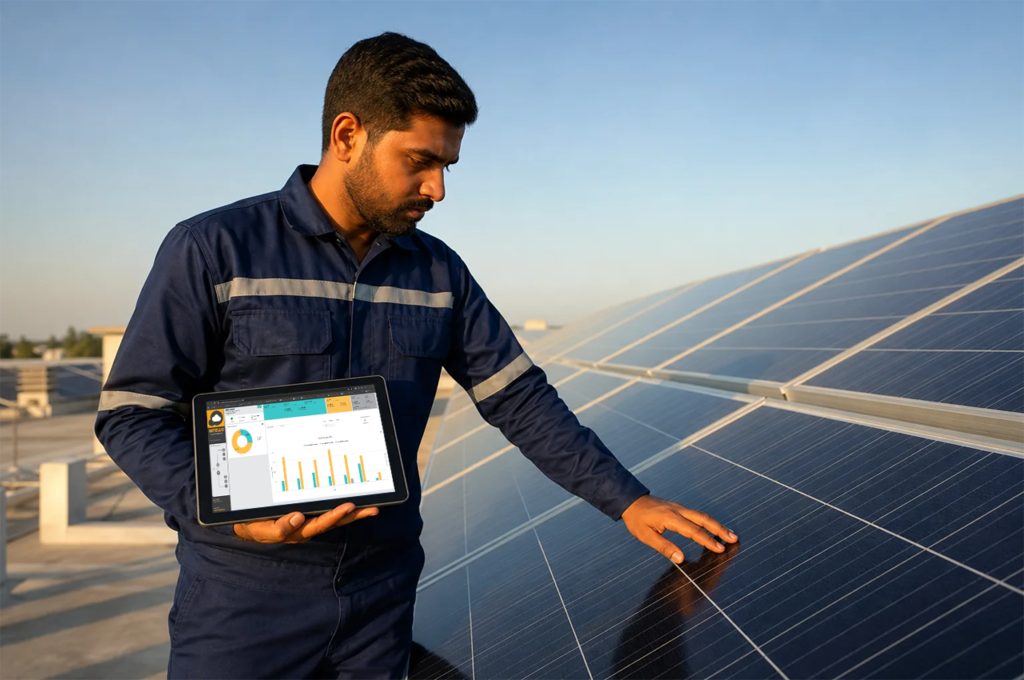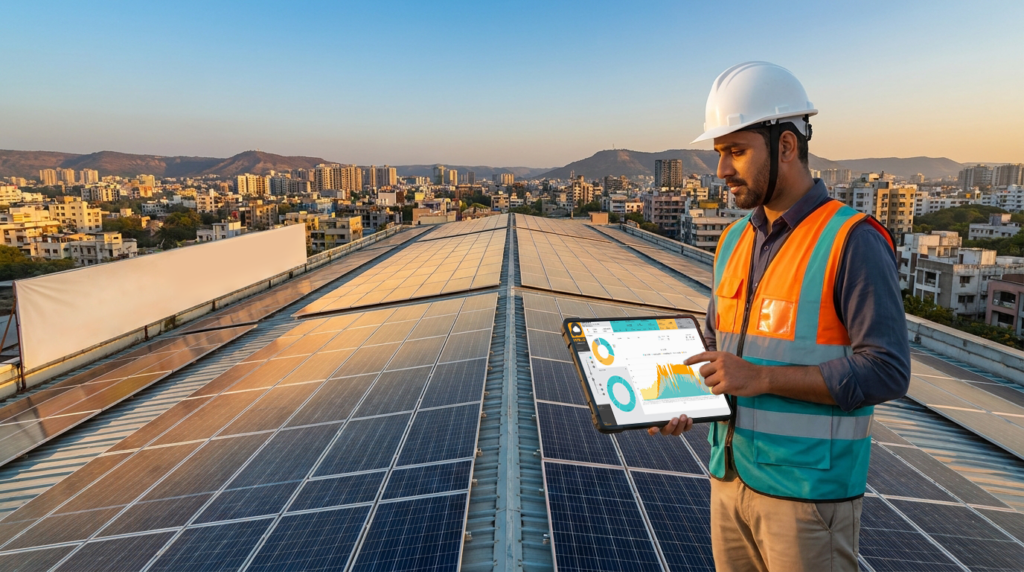
If your solar installation is not performing at its peak, you are losing money every single day. In India, where dust accumulation, extreme heat, and grid fluctuations are everyday realities, a reliable solar monitoring system is not a luxury — it is the foundation of a profitable solar asset. Yet many asset owners in India invest in solar panels and then rely on quarterly reports or manual inspections to track performance. By the time a fault is discovered, weeks of energy losses have already compounded into a significant dent in solar ROI.
This guide is designed for commercial solar asset owners, residential system owners, and solar EPC companies who want to make a smart, informed decision when choosing a solar monitoring platform. We cover the 10 must-have features every system should offer, the red flags that signal a poor investment, and a practical checklist to evaluate any vendor before you sign a contract.
Why Solar Monitoring Is Non-Negotiable in 2026
India added over 20 GW of new solar capacity in 2025, and the installed base continues to grow rapidly. But capacity alone does not guarantee returns. Studies from the Ministry of New and Renewable Energy (MNRE) consistently show that underperforming solar assets are a widespread problem, often caused by faults that go undetected for weeks or months. String faults, inverter failures, soiling losses, and DC wiring issues can silently reduce output by 15 to 30 percent without triggering any visible alarm.
A robust solar monitoring system changes this equation entirely. It gives you continuous visibility into every component of your installation, from individual strings to the inverter and grid connection point. When something goes wrong, you know within minutes, not months. For commercial and industrial solar asset owners in India, this translates directly into protected revenue, faster warranty claims, and lower solar maintenance costs over the asset’s lifetime.
The challenge is that not all solar monitoring solutions are created equal. Some offer basic data logging with no actionable alerts. Others lock you into proprietary hardware with escalating subscription fees. Choosing the wrong platform can leave you with the same blind spots you were trying to eliminate. The sections below break down exactly what to look for and what to avoid.
1. Real-Time Alerts and Fault Detection
The single most important feature of any solar monitoring system is its ability to detect faults in real time and alert you immediately. A system that sends you a daily summary report is not monitoring — it is record-keeping. By the time you read that report, a string fault or inverter trip could have already cost you 8 to 12 hours of generation.
What Good Real-Time Alerts Look Like
- Configurable alert thresholds for generation deviation, voltage anomalies, and communication loss
- Multi-channel notifications via SMS, email, and mobile push notifications
- Fault categorization that distinguishes between critical faults (inverter down) and advisory alerts (soiling threshold exceeded)
- Automated escalation if an alert is not acknowledged within a defined time window
Common Faults a Good System Must Detect
In the Indian solar context, the most damaging and frequently occurring faults include string faults and DC losses, inverter trips and communication failures, grid outages and anti-islanding events, and soiling-related performance degradation. A solar monitoring platform that cannot detect and categorize these faults is not fit for purpose.
Red flag: If a vendor’s demo shows you only daily or weekly performance summaries with no granular alert configuration, walk away. Delayed fault detection is one of the leading drivers of avoidable solar repair costs in India.
2. Data Granularity and Historical Logging
Not all data is equal. A solar monitoring system that reports only total plant output gives you very little to work with when diagnosing underperformance. You need granular data at the string or inverter level, captured at frequent intervals, and stored for the long term.
What to Look For
- Data resolution of 5 to 15 minutes for meaningful trend analysis and fault isolation
- String-level or inverter-level data to pinpoint exactly where losses are occurring
- At least 5 years of historical data retention to support warranty claims and performance benchmarking
- Irradiance and temperature data alongside generation data for accurate performance ratio calculations
Historical data is particularly valuable in India because it supports solar warranty claims with manufacturers. If your panels degrade faster than the warranted rate, you need timestamped, granular performance records to make a credible claim. Without this data, warranty disputes are nearly impossible to win.
Red flag: Platforms that offer only 30 or 90 days of data retention, or that charge extra for historical data access, are not suitable for serious solar asset management. Data portability and long-term retention should be standard, not premium features.
3. Mobile Accessibility and Remote Dashboard
Solar asset owners in India increasingly manage multiple sites across different cities or states. A solar monitoring system that requires you to be at a desktop computer to check performance is a significant operational limitation. Mobile accessibility is now a baseline requirement, not a bonus feature.
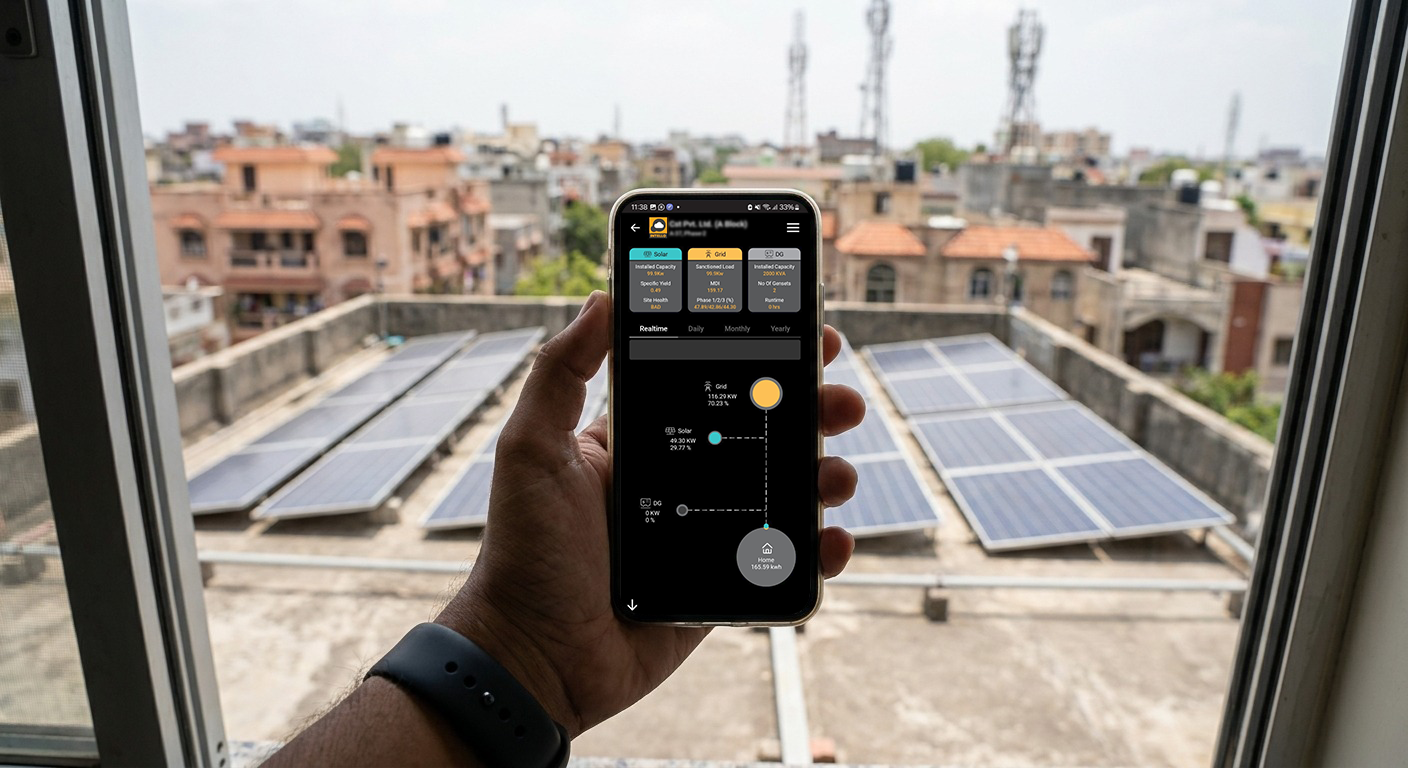
Mobile App Must-Haves
- Real-time generation and performance data accessible from any smartphone
- Push notifications for critical alerts so you are informed immediately, wherever you are
- Multi-site dashboard that aggregates performance across all your installations in one view
- Maintenance activity logs with location stamps, timestamps, technician signatures, and photographic evidence
The last point is especially important for commercial asset owners who need accountability from their O&M teams. When a maintenance visit is logged with GPS location, a timestamp, and before-and-after photographs, you have a verifiable record of every service activity. This level of transparency is what separates a professional solar monitoring and maintenance platform from a basic data logger.
Intello’s mobile app, for example, is built specifically for this use case. Field technicians log every maintenance activity with photographic reports and customer signatures, giving asset owners complete visibility into on-ground work. You can access the Intello monitoring portal from any device to review live performance data and maintenance history in one place.
Red flag: If the vendor’s mobile app is a stripped-down version of the desktop platform with limited functionality, or if it has poor reviews for reliability and speed, treat this as a serious concern. A poorly designed mobile interface signals that the vendor does not prioritize the user experience of asset owners.
4. Integration Capabilities with O&M Workflows
A solar monitoring system that operates in isolation from your maintenance workflows creates a dangerous gap. Alerts are only valuable if they trigger action. If your monitoring platform cannot connect to your O&M team’s work order system, you are relying on manual handoffs that introduce delays and errors.
Key Integration Requirements
- Compatibility with major inverter brands available in India, including SMA, ABB, Sungrow, Growatt, and Delta
- Weather station integration for accurate performance ratio and soiling loss calculations
- Automated work order generation triggered by specific alert types
- API access for EPC companies and large asset owners who need to integrate monitoring data into their own systems
The most effective approach to solar monitoring in India is an integrated one, where the monitoring platform and the maintenance team operate as a single system. When an alert fires, the O&M team is automatically notified, a work order is created, and the response is tracked through to resolution. This closed-loop approach is what drives down solar downtime and keeps solar panel efficiency at its highest.
For a deeper understanding of how integrated O&M services work, see our Complete Guide to Solar O&M India: Services and Best Practices.
Red flag: Monitoring vendors who cannot demonstrate integration with the inverter brands in your installation, or who offer no pathway to connect monitoring alerts to maintenance workflows, are selling you half a solution.
5. Scalability for Residential, Commercial, and Ground-Mounted Assets
Your solar monitoring needs today may be very different from your needs in two or three years. A residential system owner with a 10 kW rooftop installation has different requirements than a commercial asset owner managing 500 kW across three sites, or an EPC company overseeing dozens of client installations. The platform you choose must be able to grow with you.
Scalability Considerations by Asset Type
Residential solar owners need a simple, intuitive interface that shows generation, consumption, and savings without requiring technical expertise. Alerts should be easy to understand, and the system should require minimal configuration after installation.
Commercial and industrial asset owners need multi-site aggregation, role-based access for different team members, and detailed reporting for financial and compliance purposes. The ability to benchmark performance across sites is particularly valuable for identifying underperformers.
Solar EPC companies need a white-label or multi-tenant platform that allows them to manage all client installations from a single interface, with the ability to generate branded reports for each client. Custom RTU design that works across varied installation types is a significant advantage here.
Red flag: Platforms that offer a single pricing tier and a one-size-fits-all feature set are unlikely to serve your needs well as your portfolio grows. Ask vendors specifically how their platform handles multi-site management and what the cost implications are as you scale.
6. Vendor Lock-In and Hidden Costs: Red Flags to Watch
This is one of the most overlooked risks when choosing a solar monitoring system. Many vendors offer attractive entry-level pricing but build in structural dependencies that make switching expensive or practically impossible later. Understanding these risks before you sign a contract can save you significant money and frustration.
Common Vendor Lock-In Tactics
- Proprietary hardware that only works with the vendor’s software platform, making it impossible to switch providers without replacing physical equipment
- Data held hostage — platforms that do not allow you to export your historical performance data in standard formats
- Per-user or per-site fees that escalate sharply as your portfolio grows
- Hidden charges for API access, advanced reporting, or data retention beyond a basic period
Questions to Ask Before Signing
- Can I export all my historical data at any time, in a standard format like CSV or JSON?
- What happens to my data if I cancel my subscription?
- Are there additional fees for adding new sites, users, or inverter types?
- Is the hardware compatible with other software platforms if I choose to switch?
- What are the total costs over a 5-year period, including hardware, software, and support?
Understanding the true total cost of ownership is essential for accurate solar ROI calculations. A platform that appears cheap upfront but charges for every additional feature can easily become more expensive than a premium integrated solution over a 5-year horizon. For a broader perspective on managing solar O&M costs, our guide on In-House vs Outsourced Solar O&M in India 2026 covers the financial trade-offs in detail.
7. Customer Support and On-Ground Response
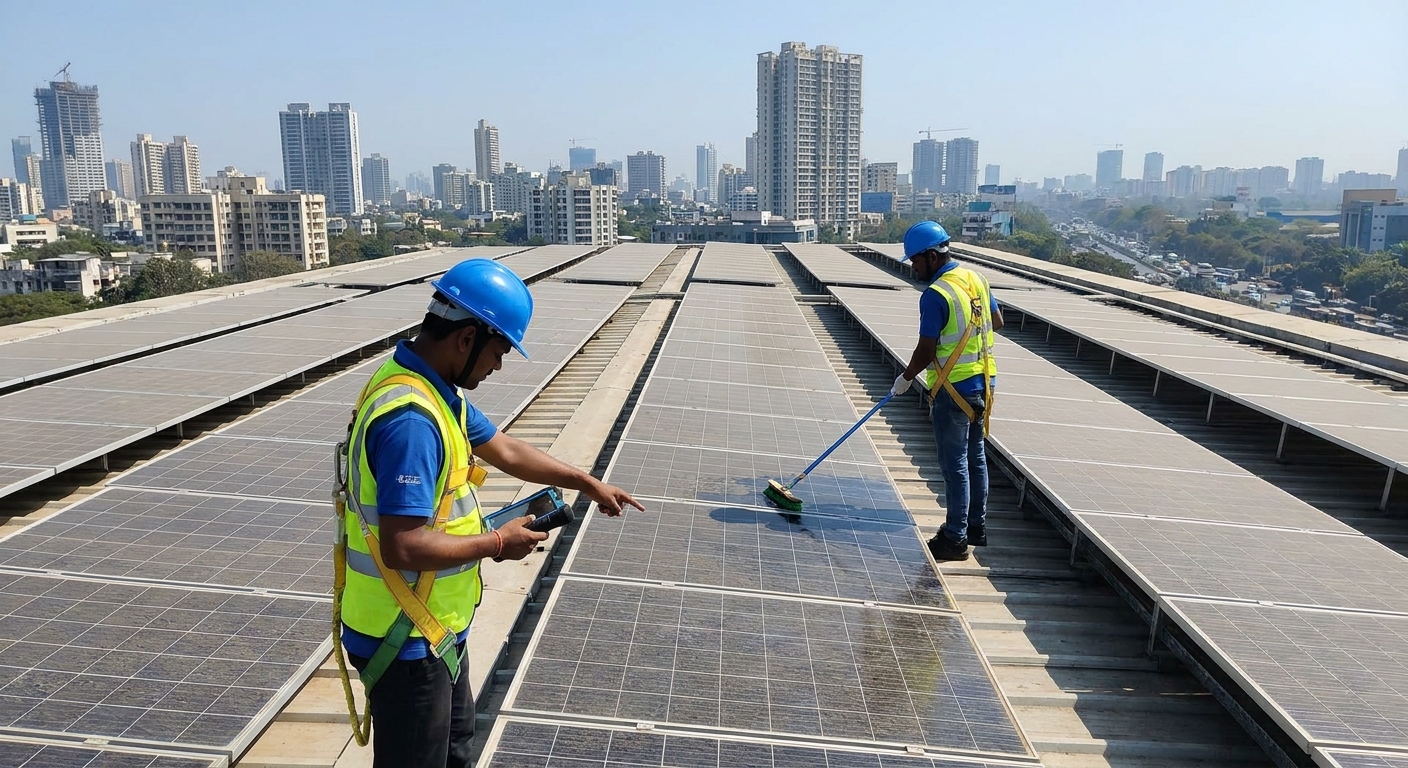
A solar monitoring system is only as good as the response it enables. Knowing that your inverter has tripped is useful. Having a trained technician on-site to fix it within hours is what actually protects your energy output. This is why the quality of customer support and on-ground response capability is a critical evaluation criterion that many buyers overlook.
What Strong Support Looks Like
- Defined SLAs for alert acknowledgment and on-site response times
- Dedicated account management rather than generic helpdesk ticketing
- On-ground technical teams with expertise in solar inverter servicing, string balancing, and hardware repairs
- Transparent escalation paths so you always know who is responsible for resolving an issue
In the Indian solar O&M context, the gap between monitoring-only vendors and integrated monitoring-plus-maintenance providers is significant. A monitoring-only vendor will tell you what is wrong. An integrated provider like Intello will tell you what is wrong and fix it, with a team of over 150 solar experts available across India. This distinction matters enormously when a fault occurs on a hot summer afternoon and every hour of downtime is costing you generation revenue.
Red flag: If a vendor’s support model is limited to email tickets with 48-hour response windows, or if they have no on-ground maintenance capability, you will be left managing the gap between alert and resolution yourself. For commercial and industrial asset owners, this is an unacceptable operational risk.
8. Warranty Claim Management and Compliance Reporting
One of the most underappreciated functions of a good solar monitoring system is its role in protecting your warranty rights and supporting compliance reporting. Solar panels in India typically carry 25-year performance warranties, and inverters carry 5 to 10-year warranties. Without documented performance data, making a successful warranty claim is extremely difficult.
What to Look For
- Automated performance reports that document generation against warranted output levels over time
- Fault logs with timestamps that create an auditable trail of equipment failures
- Compliance reporting templates for DISCOM submissions, net metering reconciliation, and financial audits
- Integration with warranty claim workflows so that fault data can be packaged and submitted to manufacturers efficiently
Intello’s platform includes warranty claim management as a core service, using monitoring data to build the documentation trail needed for successful claims. This is particularly valuable for commercial asset owners who may be managing multiple warranty claims across a large portfolio at any given time.
Soiling is another area where good monitoring data pays dividends. In India’s diverse climate zones, from the dust-heavy plains of Rajasthan to the humid coastal regions of Tamil Nadu, soiling losses vary dramatically by location and season. Monitoring data that tracks performance ratio over time can quantify soiling losses precisely, helping you optimize your solar panel cleaning schedule by climate zone and reduce unnecessary maintenance costs.
Red flag: Platforms that offer no structured reporting, no data export for warranty purposes, or no compliance reporting templates are not suitable for commercial solar asset management in India.
How to Evaluate Solar Monitoring Platforms: A Checklist
Use this checklist when evaluating any solar monitoring vendor. A credible platform should be able to answer yes to every item on this list.
The 10 Must-Have Features Checklist
- Real-time alerts with configurable thresholds and multi-channel notifications
- Granular data at string or inverter level, captured at 5 to 15-minute intervals
- Long-term data retention of at least 5 years with full export capability
- Mobile app with full functionality, not a stripped-down version of the desktop platform
- Multi-site dashboard for aggregated portfolio management
- Integration with major inverter brands and O&M workflows
- Scalability across residential, commercial, and ground-mounted asset types
- Transparent pricing with no hidden fees for data, users, or API access
- On-ground support with defined SLAs and a trained maintenance team
- Warranty and compliance reporting with structured documentation and audit trails
How Intello’s Integrated Platform Addresses Each Criterion
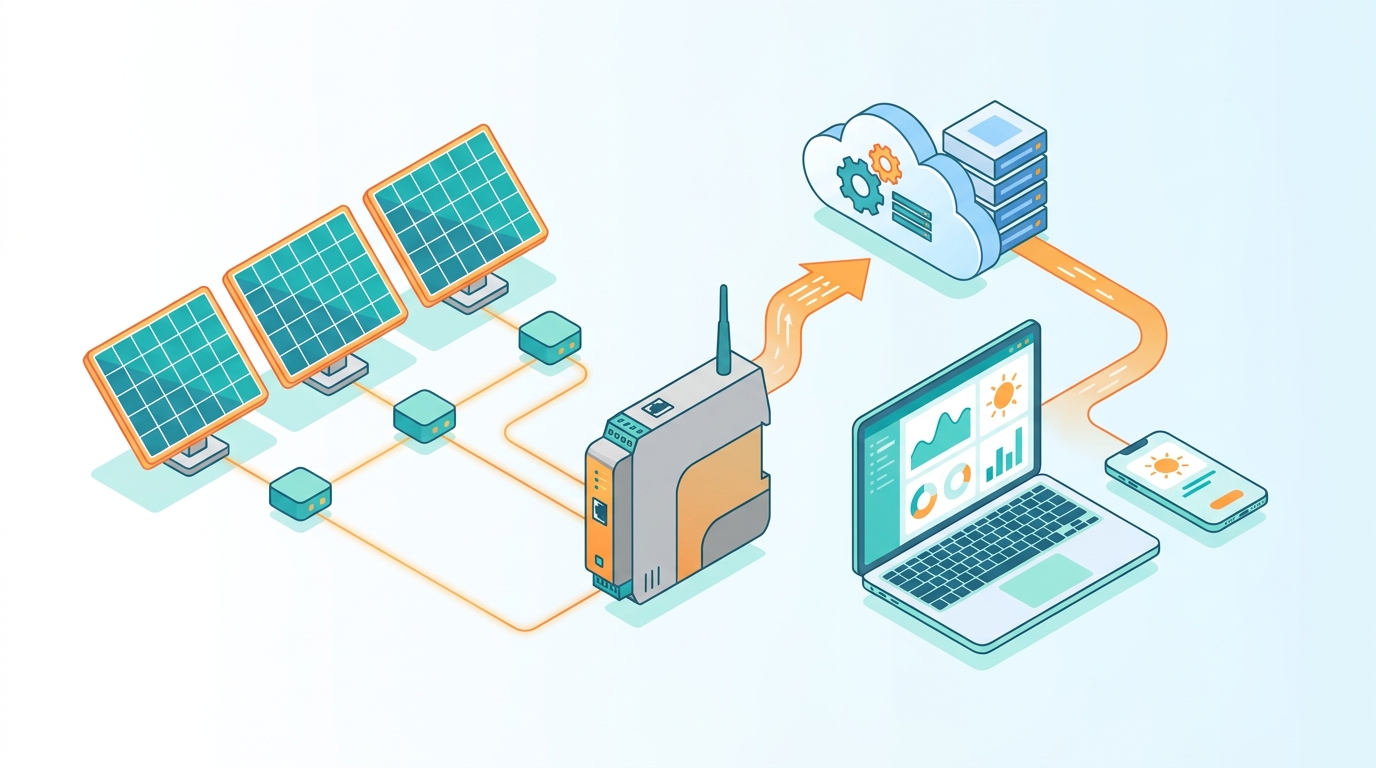
Intello’s solar monitoring platform is built specifically for the Indian solar market, combining IoT-enabled remote monitoring with custom-designed RTUs, a centralized dashboard, and a mobile app that gives asset owners complete visibility into their installations. Unlike standalone monitoring vendors, Intello integrates monitoring with preventive maintenance, AMC services, inverter servicing, and warranty claim management into a single platform backed by over 150 on-ground solar experts.
This integrated approach means that when a fault is detected, the response is immediate and coordinated. There is no gap between the alert and the action. For commercial asset owners managing large portfolios, and for EPC companies responsible for client installations, this level of integration is what makes the difference between a solar asset that consistently delivers its projected returns and one that quietly underperforms year after year.
To learn more about Intello’s approach to solar O&M and monitoring, explore the Intello story and service philosophy.
Frequently Asked Questions About Solar Monitoring
What is the difference between solar monitoring and solar SCADA?
Solar SCADA (Supervisory Control and Data Acquisition) is a more advanced system typically used for large utility-scale solar plants. It provides real-time control capabilities in addition to monitoring. Solar monitoring systems, as used for commercial and residential installations, focus on data collection, performance analysis, and alerting without direct control functions. For most commercial and industrial rooftop installations in India, a well-designed solar monitoring platform is sufficient and more cost-effective than a full SCADA system.
How much does solar monitoring cost in India?
Solar monitoring costs in India vary widely depending on the scale of the installation, the features required, and whether monitoring is bundled with O&M services. Standalone monitoring hardware and software can range from basic data loggers to sophisticated IoT platforms with custom RTUs. The most cost-effective approach for most asset owners is to bundle solar monitoring with an AMC or O&M contract, which spreads the cost across a comprehensive service package. Contact Intello for a customized quote based on your specific installation size and requirements.
Can I monitor multiple solar sites from one dashboard?
Yes, a well-designed solar monitoring platform should support multi-site management from a single centralized dashboard. This is a standard requirement for commercial asset owners and EPC companies managing multiple installations. Look for platforms that offer site-level and portfolio-level views, with the ability to drill down from aggregate performance to individual string data when needed.
What happens when my solar monitoring system detects a fault?
In a well-integrated system, fault detection triggers an immediate alert to the asset owner and the O&M team simultaneously. The O&M team acknowledges the alert, assesses the severity, and dispatches a technician if on-site intervention is required. The entire process, from alert to resolution, should be tracked and documented within the monitoring platform. With Intello’s integrated approach, this closed-loop response is built into the service model, ensuring that detected faults are resolved quickly and that every action is logged for accountability and reporting purposes.
Is solar monitoring necessary for small residential systems?
Yes. Even a small 5 kW residential system can lose 15 to 20 percent of its annual generation to undetected faults. Over a 25-year asset life, this represents a substantial financial loss. Solar monitoring for residential systems does not need to be complex, but it should provide real-time generation data, basic fault alerts, and a simple mobile interface that makes it easy for homeowners to stay informed about their system’s performance.
Make the Right Choice for Your Solar Monitoring Needs
Choosing the right solar monitoring system is one of the most important decisions you will make as a solar asset owner in India. The wrong choice means blind spots, delayed fault detection, escalating solar maintenance costs, and a solar ROI that consistently falls short of projections. The right choice means complete visibility, fast response, protected warranties, and a solar asset that delivers its full financial potential year after year.
Intello’s integrated solar monitoring and O&M platform is designed specifically for this challenge. With custom-designed RTUs, an IoT-enabled centralized dashboard, a full-featured mobile app, and over 150 solar experts available across India, Intello gives you everything on the must-have checklist in a single, transparent service package. Whether you own a residential rooftop system, a commercial installation, or a ground-mounted solar farm, Intello’s platform scales to your needs without hidden costs or vendor lock-in.
Take the first step toward complete solar visibility. Request a customized solar monitoring and O&M quote from Intello and find out exactly how much performance you could be recovering from your existing installation.