
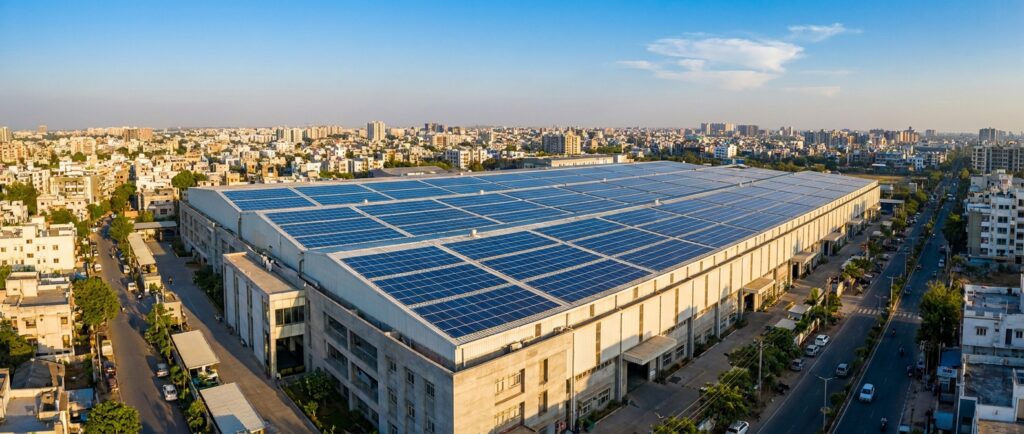
If you own a solar installation in India, you already know the promise: lower electricity bills, energy independence, and a strong return on investment. But what happens when your solar performance falls short of that promise? Across India, thousands of solar asset owners are quietly losing lakhs of rupees every year to underperforming systems — and most don’t even know it. This expert guide answers the 25 most critical questions about solar performance, covering everything from identifying underperformance to restoring optimal energy output through smart maintenance and monitoring.
Why Solar Performance Issues Cost Indian Asset Owners More Than They Realize
Solar panels are often treated as a “set it and forget it” investment. Once installed, many asset owners assume the system will deliver promised returns without active management. This assumption is one of the most expensive mistakes in solar asset ownership. A system operating at just 85% of its rated capacity may seem acceptable, but over a 25-year lifespan, that 15% gap translates into a significant financial loss — often exceeding the original cost of the installation itself.
In India, the challenge is compounded by extreme weather conditions, high dust levels, frequent grid fluctuations, and a lack of standardized solar monitoring practices. According to the Ministry of New and Renewable Energy (MNRE), India has over 80 GW of installed solar capacity as of 2026, yet a large portion of this capacity operates below optimal performance benchmarks due to inadequate operations and maintenance.
This guide is structured as a comprehensive FAQ, addressing the 25 most pressing questions that solar asset owners, commercial property managers, and EPC companies ask about solar performance. Whether you’re troubleshooting an existing system or building a proactive maintenance strategy, these expert answers will help you protect your solar investment.
Section 1: Understanding Solar Performance Benchmarks
Q1: What is a good performance ratio for a solar system in India?
The Performance Ratio (PR) is the most widely used metric for evaluating solar performance. It compares actual energy output against the theoretical maximum output under ideal conditions. In India, a well-maintained solar system should achieve a PR of 75% to 80% or higher. Systems falling below 70% PR are considered underperforming and require immediate investigation. Utility-scale and well-monitored commercial systems often achieve PR values above 80% with consistent preventive maintenance.
Q2: How do I know if my solar panels are underperforming?
The clearest sign of underperformance is a gap between your expected and actual energy generation. If your electricity bills haven’t reduced as projected, or if your solar monitoring dashboard shows generation consistently below the baseline, your system is likely underperforming. Other indicators include visible damage to panels, frequent inverter alarms, and generation that drops sharply after periods of dust or rain. Without a solar monitoring system, these issues often go undetected for months.
Q3: What is the expected energy output per kWp in India?
In India, a well-functioning solar system typically generates between 4 to 5.5 units (kWh) per kWp per day, depending on the location and season. States like Rajasthan, Gujarat, and Maharashtra with high solar irradiance can achieve the upper end of this range. Coastal and northeastern states may see lower averages. Annual generation of 1,400 to 1,800 kWh per kWp is a reasonable benchmark for most Indian locations. If your system is generating significantly less, it’s time to investigate solar performance issues.
Q4: How does solar panel efficiency degrade over time?
All solar panels experience gradual efficiency degradation. Most quality panels degrade at a rate of 0.5% to 0.7% per year. This means a panel rated at 400W today will produce approximately 390W after five years under normal conditions. However, poor maintenance, physical damage, and harsh environmental conditions can accelerate this degradation significantly. Regular inspections and preventive maintenance are essential to keeping degradation within the manufacturer’s warranty limits.
Q5: What performance benchmarks should I set for my solar installation?
Set benchmarks based on your system’s design report, which should include expected monthly and annual generation figures. Compare actual output against these figures monthly. A deviation of more than 5-10% from the expected output warrants investigation. Also track your Performance Ratio, Capacity Utilization Factor (CUF), and specific yield (kWh/kWp). Establishing these baselines early makes it much easier to detect solar performance degradation before it becomes costly.
Section 2: Common Causes of Solar Underperformance
Q6: Why are my solar panels producing less energy than expected?
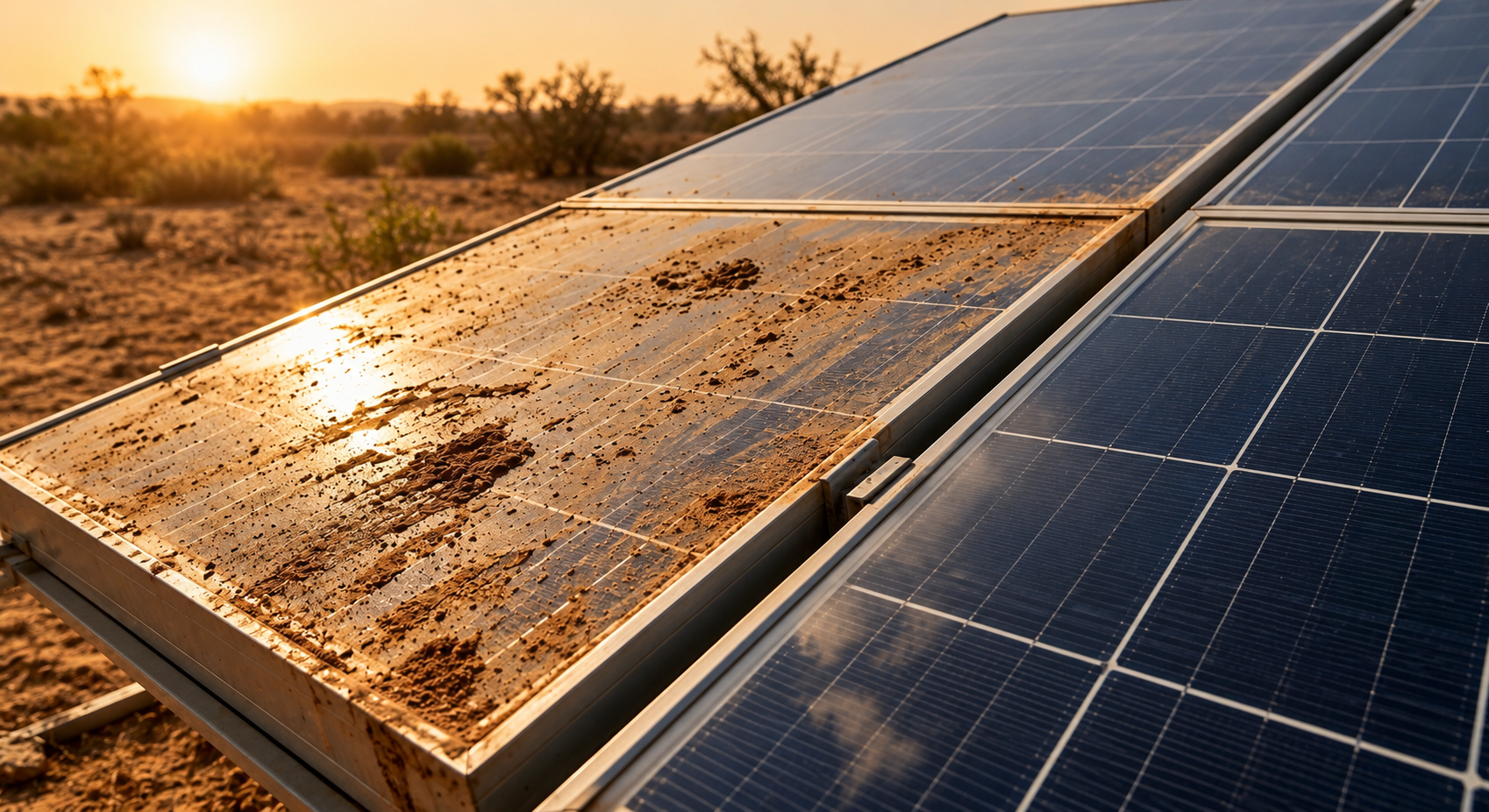
There are several common reasons for reduced solar performance. The most frequent causes include soiling and dust accumulation, shading from new obstructions, inverter faults, string imbalances, degraded panel connections, and incorrect system configuration. In India, dust accumulation alone can reduce output by 15-25% during dry seasons. A systematic diagnostic approach, ideally supported by a solar monitoring platform, is the most efficient way to identify the root cause.
Q7: How much do dust and soiling reduce solar panel output in India?
Dust and soiling are among the biggest threats to solar panel efficiency in India. Studies have shown that in high-dust regions like Rajasthan and parts of Maharashtra, soiling losses can reach 20-30% within just two to four weeks without cleaning. In urban areas with air pollution, a combination of dust, soot, and particulate matter creates a stubborn film that standard rainfall cannot remove. This is why scheduled solar panel cleaning is not optional — it is a core maintenance activity.
Q8: What are string faults and how do they affect solar performance?
A solar array is made up of multiple strings, series connections of solar panels. A string fault occurs when one or more panels in a string fail, are shaded, or develop a connection issue. Because panels in a string are connected in series, a single underperforming panel can drag down the output of the entire string. String faults are a leading cause of significant solar performance losses and are often invisible without proper monitoring. String-level monitoring is essential for detecting these faults early.
Q9: Can shading really cause significant solar performance loss?
Yes, shading is one of the most underestimated causes of solar performance degradation. Even partial shading of a single panel can reduce the output of an entire string by 30-50% depending on the inverter technology used. In India, new construction, growing trees, water tanks, and telecom equipment are common sources of shading that develop after installation. Regular site inspections help identify new shading sources before they cause sustained performance losses.
Q10: How do inverter issues impact overall solar system output?
The inverter is the heart of your solar system. It converts DC power from the panels into usable AC power. Inverter faults, overheating, firmware issues, and component failures can cause partial or complete system shutdowns. In India, voltage fluctuations and grid instability put additional stress on solar inverters. A faulty inverter can silently reduce your system’s output by 20-100% depending on the severity of the fault. Regular inverter servicing is a critical part of any preventive maintenance solar program.
Section 3: Seasonal Variations and Environmental Factors
Q11: Why does my solar output drop during summer despite more sunlight?
This is one of the most common surprises for solar asset owners in India. While summer brings more sunlight hours, extremely high temperatures actually reduce solar panel efficiency. Solar panels are rated at 25°C (Standard Test Conditions), and for every degree above this, output drops by approximately 0.3-0.5%. In Indian summers, panel temperatures can reach 60-70°C, causing a temperature-related efficiency loss of 10-20%. This is a normal characteristic of photovoltaic technology, not a system fault.
Q12: How does the monsoon season affect solar performance in India?
The monsoon season brings reduced irradiance due to cloud cover, which naturally lowers energy generation. However, monsoon rains also provide a natural cleaning effect that can temporarily improve solar performance after the dry season. The key risk during monsoon is water ingress into junction boxes, connectors, and inverters. Poorly maintained systems with degraded seals or loose connections are vulnerable to moisture damage during heavy rains. Pre-monsoon inspections are strongly recommended.
Q13: What is the impact of high ambient temperature on solar panel efficiency?
High ambient temperatures affect both the panels and the balance of system components. Inverters are particularly sensitive to heat and may throttle output or shut down when ambient temperatures exceed their operating range. Proper ventilation around inverters, shading of electrical components, and heat-resistant cabling are important design considerations for Indian climates. Monitoring inverter temperature data through your solar monitoring platform can help identify thermal issues before they cause failures.
Q14: How do I account for seasonal variations in my performance expectations?
The best approach is to use location-specific solar irradiance data to create monthly generation benchmarks. Tools like NASA’s POWER database or MNRE’s solar radiation resource data provide historical irradiance values for Indian locations. Your system’s design report should already include monthly generation estimates. Comparing actual output against these monthly benchmarks, rather than a single annual figure, gives you a much more accurate picture of your system’s solar performance throughout the year.
Q15: Does air pollution in Indian cities affect solar panel output?
Yes, significantly. Urban air pollution creates a layer of particulate matter, soot, and aerosols that reduces the amount of solar irradiance reaching your panels. Research published in environmental science journals has found that air pollution in major Indian cities can reduce solar generation by 8-12% annually compared to rural locations with similar irradiance. This makes solar panel cleaning even more critical for urban installations, where standard dust is compounded by industrial and vehicular pollution.
Section 4: Troubleshooting and Diagnosing Solar Performance Problems

Q16: How do I identify which panels or strings are underperforming?
The most effective method is string-level or panel-level monitoring through your solar monitoring system. By comparing the output of individual strings against each other and against historical baselines, you can quickly isolate underperforming sections. Without monitoring, a thermal imaging (infrared) inspection is the next best option, it reveals hotspots, cell damage, and bypass diode failures that are invisible to the naked eye. A professional solar inspection in India typically includes both data analysis and thermal imaging.
Q17: What data should I look at in my solar monitoring dashboard?
A well-designed solar monitoring dashboard should give you access to the following key metrics: daily, monthly, and annual energy generation; Performance Ratio (PR); specific yield (kWh/kWp); inverter status and alarms; string-level current and voltage data; irradiance and temperature readings; and grid export/import data. Intello’s IoT-enabled monitoring platform provides all of these metrics through a centralized dashboard, with automated alerts when any parameter falls outside normal ranges. You can also access your system data through the Intello monitoring portal at any time.
Q18: When should I call a professional for solar performance issues?
You should contact a professional solar O&M provider when: your generation drops more than 10% below expected output for more than a week; your inverter shows persistent fault codes; you notice physical damage to panels, mounting structures, or cables; your system has not been professionally inspected in more than six months; or you are preparing for a warranty claim. Early professional intervention almost always costs less than waiting for a minor issue to become a major failure. For solar asset owners across India, having an O&M provider on retainer through an AMC is the most cost-effective approach.
Q19: What is a solar performance audit and do I need one?
A solar performance audit is a comprehensive assessment of your solar system’s actual output versus its design potential. It typically includes a review of historical generation data, a physical inspection of all components, thermal imaging, string testing, and a detailed report with recommendations. If your system is more than two years old and has never been audited, or if you’ve noticed unexplained generation drops, a performance audit is strongly recommended. It provides the data you need to make informed decisions about maintenance, repairs, or upgrades. Learn more about what a thorough solar inspection process in India involves.
Q20: How does remote monitoring help detect solar faults early?
Remote solar monitoring is the single most powerful tool for protecting solar performance. By continuously tracking system parameters and comparing them against expected values, a good monitoring system can detect faults within hours, sometimes minutes, of their occurrence. This is far faster than monthly manual inspections. Intello’s remote monitoring system uses custom-designed RTUs (Remote Terminal Units) to collect real-time data from your installation and flag anomalies automatically. Early fault detection reduces solar downtime, prevents cascading failures, and significantly lowers long-term solar maintenance costs. For a deeper look at monitoring and maintenance best practices, see our complete guide to solar O&M in India.
Section 5: Maintenance Solutions to Restore Solar Performance
Q21: How often should I clean my solar panels in India?
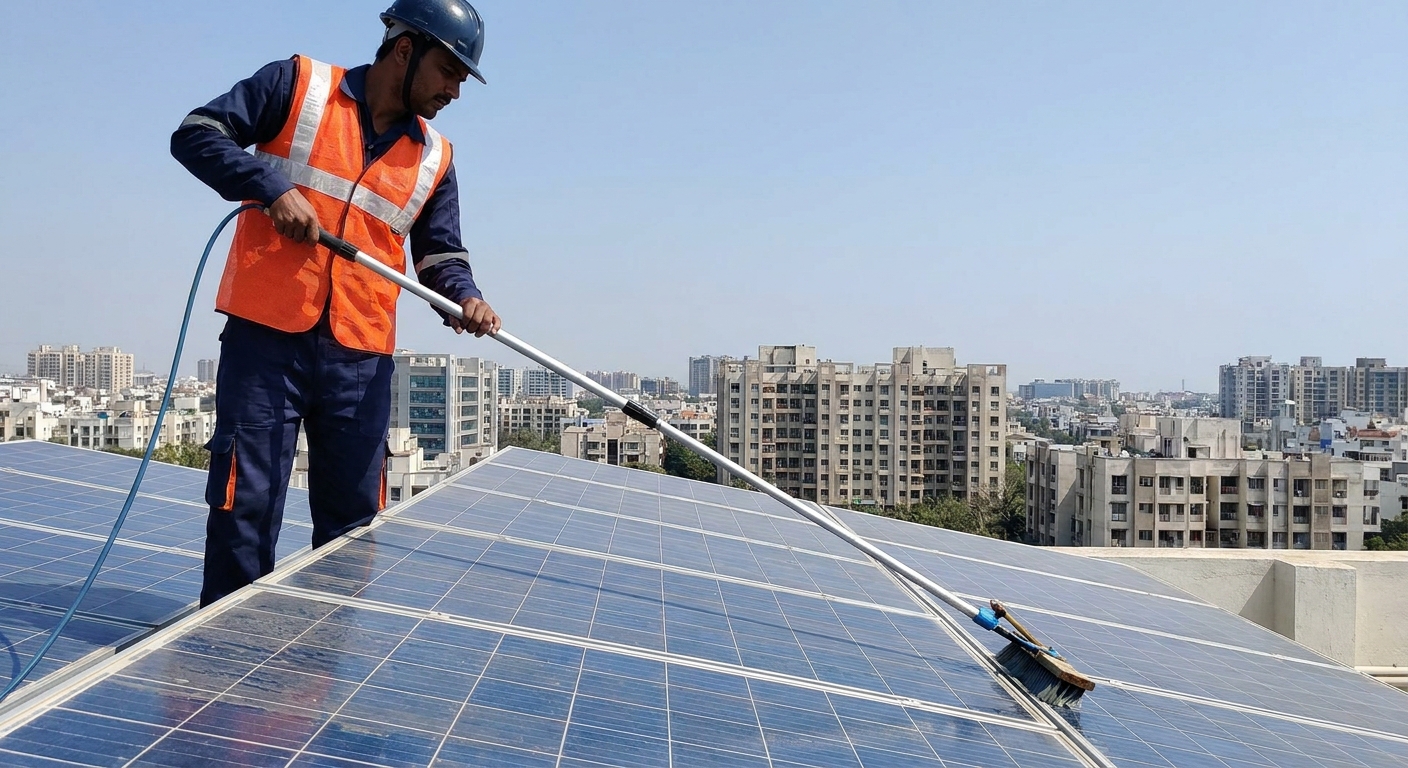
Cleaning frequency depends on your location, local dust levels, and the tilt angle of your panels. As a general guideline for India:
-
High-dust regions (Rajasthan, Gujarat, parts of Maharashtra): Every 15-20 days during the dry season
-
Urban areas with air pollution: Every 20-30 days year-round
-
Coastal areas: Every 30-45 days, with attention to salt deposits
-
Monsoon season: Inspect after heavy rains; clean if soiling persists
Automated cleaning systems are available for large installations, but for most commercial and residential systems, scheduled manual cleaning by trained technicians remains the most cost-effective approach. Our regional guide to solar cleaning in India provides location-specific recommendations for every climate zone.
Q22: What does a preventive maintenance visit include for solar systems?
A comprehensive preventive maintenance solar visit should cover the following activities:
-
Visual inspection of all panels for cracks, discoloration, and physical damage
-
Panel cleaning and wiping
-
Inverter inspection, cleaning, and firmware update check
-
String balancing and DC loss measurement
-
Tightening of all electrical connections and hardware
-
Inspection of mounting structures for corrosion or loosening
-
Cable and conduit inspection for damage or UV degradation
-
Review of monitoring data for anomalies
-
Thermal imaging (recommended at least annually)
Intello’s maintenance teams document every visit with photographic reports, customer signatures, and location timestamps through their mobile app, ensuring full accountability and traceability for every maintenance activity.
Q23: What is a solar AMC and is it worth the cost?
A Solar AMC (Annual Maintenance Contract) is a service agreement with an O&M provider that covers scheduled maintenance visits, monitoring, and often repairs for a fixed annual fee. For most solar asset owners in India, an AMC is absolutely worth the investment. Here’s why:
-
Predictable solar maintenance costs with no surprise repair bills
-
Scheduled preventive maintenance that prevents costly breakdowns
-
Priority response for faults and emergencies
-
Professional documentation for warranty claims
-
Continuous monitoring that protects solar ROI
The cost of an AMC is typically a fraction of the revenue lost from a single month of significant underperformance. For commercial installations, the ROI on a well-structured solar AMC India is almost always positive. To understand the full scope of what O&M services should include, read our complete guide to solar O&M services and best practices.
Q24: How do I handle warranty claims for underperforming solar panels?
Handling solar warranty claims in India requires careful documentation. Most panel manufacturers offer a 25-year linear performance warranty and a 10-12 year product warranty. To make a successful claim, you need: detailed generation records showing the performance shortfall; maintenance logs proving the system has been properly maintained; results from a professional inspection or performance audit; and clear evidence that the underperformance is due to a manufacturing defect rather than external factors. Intello’s warranty claim management service handles this entire process on behalf of asset owners, from documentation to coordination with manufacturers.
Q25: What should I look for in a solar O&M provider in India?
Choosing the right O&M provider is one of the most important decisions a solar asset owner can make. Look for these key qualities:
-
Integrated monitoring capability: The provider should offer real-time remote monitoring, not just periodic visits
-
Experienced field teams: Look for providers with certified technicians and a proven track record in India
-
Transparent reporting: Every maintenance visit should be documented with photos, timestamps, and detailed reports
-
Comprehensive service scope: The provider should handle everything from cleaning and preventive maintenance to repairs and warranty claims
-
Scalability: If you manage multiple sites, the provider should be able to handle multi-location asset management
-
Response time SLAs: Clear commitments on fault response and resolution times
If you’re evaluating whether to manage O&M in-house or outsource it, our detailed comparison of in-house vs outsourced solar O&M in India will help you make the right decision for your situation.
Solar Performance Recovery: Your Action Plan
After working through these 25 questions, you now have a comprehensive understanding of what drives solar performance issues and how to address them. Here is a practical action plan to implement immediately:
Immediate Steps (This Week)
-
Pull your last 3 months of generation data and compare it against your system’s design report
-
Calculate your current Performance Ratio and compare it against the 75-80% benchmark
-
Visually inspect your panels for visible soiling, damage, or shading
-
Check your inverter display or monitoring portal for any active fault codes
Short-Term Actions (Next 30 Days)
-
Schedule a professional cleaning if panels have not been cleaned in the last 30 days
-
Arrange a preventive maintenance visit to check connections, strings, and inverter health
-
Ensure your monitoring system is active and generating alerts for anomalies
-
Review your current O&M arrangement and assess whether it meets your needs
Long-Term Strategy (Ongoing)
-
Establish a structured solar AMC with a qualified O&M provider
-
Set up automated performance benchmarking through a real-time monitoring platform
-
Schedule annual thermal imaging inspections to catch hidden faults
-
Review your solar ROI quarterly against your original investment projections
“Solar performance is not a one-time achievement, it is the result of continuous monitoring, proactive maintenance, and expert intervention when issues arise. The asset owners who protect their solar ROI are the ones who treat their solar system as a living asset, not a static installation.”
Intello has been helping solar asset owners across India protect and maximize their solar performance for over five years. With 150+ solar experts, a proprietary IoT-enabled monitoring platform, and a full suite of O&M and solar AMC India services, Intello takes complete responsibility for your solar system’s output. From real-time fault detection to on-ground maintenance teams, every aspect of your system’s health is managed through a single, integrated platform. To learn more about Intello’s approach to solar operations and maintenance, visit the Intello about page.
If your solar system is underperforming, every day of delay is revenue lost. Don’t let solar performance issues quietly erode your investment. Take the first step toward restoring your system’s full potential today. Request a free solar performance assessment from Intello and get expert recommendations tailored to your specific installation, location, and performance goals.
