
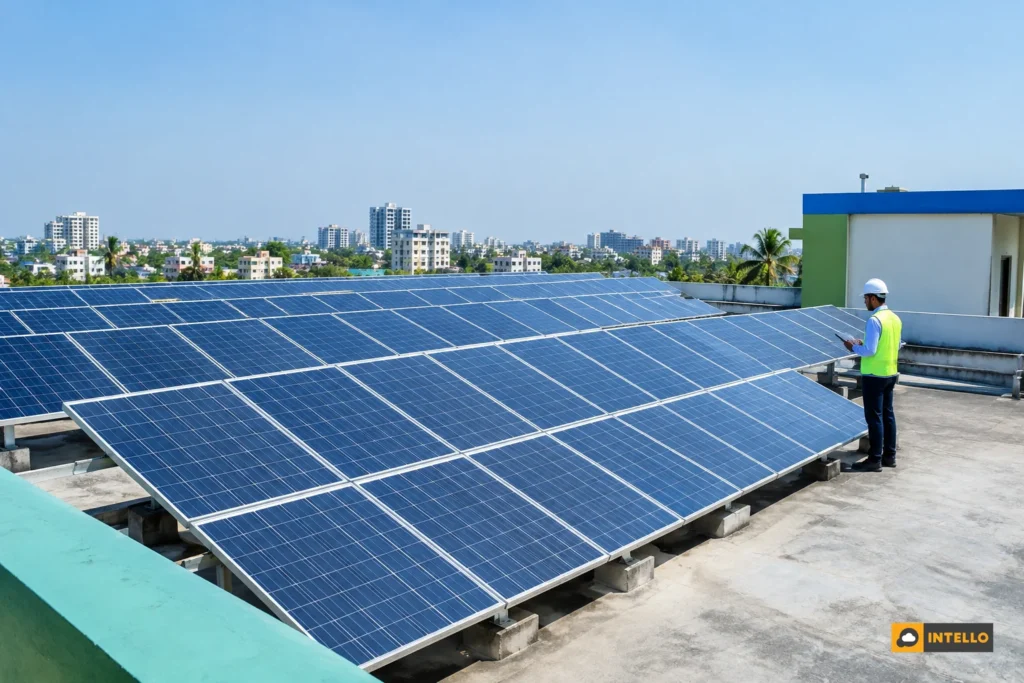
Most solar panels in India last 25 to 30 years, but they do not switch off on a set date. Their output slowly declines, and heat, dust, hotspots, weak earthing and physical damage decide whether a plant reaches that age or loses output years earlier. Good maintenance and monitoring protect both lifespan and warranty.
Key Takeaways
- Lifespan is a slow decline: a panel ages through gradual loss of output, not sudden failure, so “end of life” is when output no longer justifies the roof space.
- Warranty norms: crystalline modules typically carry a product warranty and a separate, longer performance warranty; they cover different things.
- Indian heat matters: IIT Bombay’s NCPRE surveys found modules in hot climates degrade faster, with cell cracks, hotspots and junction box failures among the failure modes.
- Most damage is preventable: cleaning, thermal checks, earthing tests and alert-based monitoring catch problems before they spread.
- Records protect claims: dated service reports show a manufacturer that the plant was cared for.
Solar Panel Lifespan at a Glance
| Question | Short answer |
|---|---|
| Typical lifespan | 25 to 30 years of useful output |
| How panels age | Gradual yearly decline in output, not abrupt failure |
| Product warranty (general norm) | Around 10 to 12 years for crystalline modules |
| Performance warranty (general norm) | 25 to 30 years, guaranteeing roughly 80 to 87 per cent of rated power at the end |
| Biggest Indian stressors | Heat, dust and soiling, monsoon moisture, bird droppings |
| Common failure modes | PID, cell cracks, interconnect wear, hotspots, junction box faults |
| Best protection | Scheduled cleaning, inspection, earthing checks, monitoring |
How Long Do Solar Panels Last in India?
Quality panels installed in India usually keep producing useful power for 25 to 30 years. Lifespan is set by degradation, not sudden failure, so a panel can keep running well past its warranty term at reduced output.
A NCPRE survey programme at IIT Bombay found that modules in hot climates degrade faster, which is why Indian owners should treat 25 years as a target to protect, not a promise. A panel in Leh and one in Jodhpur do not age the same way.
Published guidance puts the usual warranty promise at 25 years with a limited loss of output. That figure is a floor set by manufacturers, not a measurement of your own roof.
What Does Normal Yearly Degradation Look Like?
Normal degradation is a small, steady loss of power each year, strongest in the first year and slower afterwards. Exact rates depend on module technology and the datasheet, so check your own module’s warranty document rather than a generic number.
Warranties usually guarantee a minimum share of rated power at the end of the term, commonly in the 80 to 87 per cent range, as industry coverage notes in describing annual degradation specified by technology. Your plant sits somewhere on that curve.
Degradation versus a fault
Degradation is smooth. A fault is a step. If generation on a clear day falls suddenly, or one string runs below its neighbours, you are not seeing ageing. You are seeing a defect, dirt or a loose connection, and that is worth a site visit.
Product warranty versus performance warranty
The product warranty covers defects in the module itself. The performance warranty covers the output guarantee over time. They are not interchangeable, and a claim under either needs evidence. Our guide to the warranty claim process in India covers the paperwork.
What Shortens Solar Panel Life in Indian Conditions?
Heat, soiling, hotspots, poor earthing and physical damage shorten panel life most. Each one either stresses the cells directly or hides a fault until it spreads. Most are visible early if someone is looking.
Heat
High cell temperature speeds up wear. NCPRE’s work across Indian sites links hot climates to higher degradation, including failure mechanisms such as cell cracks and hotspots. Airflow behind rooftop panels and clean surfaces both help keep temperatures down.
Soiling and bird droppings
Dust alone mostly costs output, not life. The danger is uneven dirt. A patch of droppings shades part of a cell, which can heat up and damage it. See our notes on bird droppings and panel damage and the cleaning guide by climate zone.
Hotspots
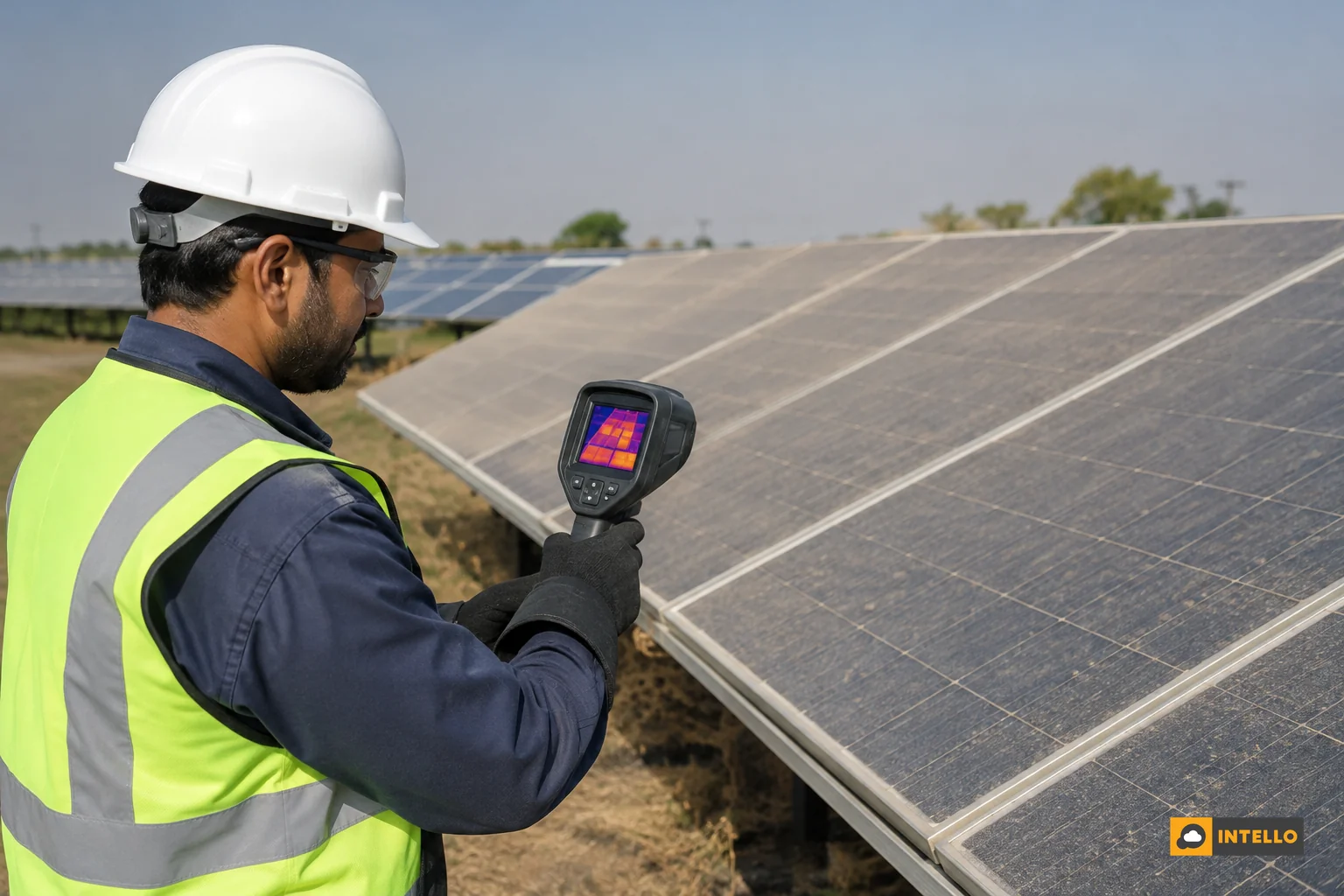
A hotspot is a cell running far hotter than its neighbours, often from shading, cracks or a bad solder joint. Left alone, it can burn the backsheet and encapsulant. A thermal camera finds them in minutes.
Poor earthing
Weak earthing leaves frames and structures without a safe path for fault current and surges. It raises shock risk, and it can contribute to inverter trips and surge damage. Earth resistance should be tested at least once a year.
Physical damage and discoloration
Careless cleaning, falling tools, hail and cable abrasion cause micro-cracks that grow with thermal cycling. Research on Indian modules has also linked encapsulant discoloration to hot cells and electrical degradation. Walk-on-panel habits are a common avoidable cause.
How Do Maintenance and Monitoring Protect Warranty and Output?
Maintenance removes the causes of early ageing, and monitoring shows when something has changed. Together they keep output close to the warranty curve and give you dated proof of care if you ever need to raise a claim.

Monitoring is where lifespan is won. A string that quietly underperforms for six months is a string that may be running hot. Alerts at string level turn that into a repair ticket in days. Read more on how IoT sensors detect faults early.
Records matter too. Manufacturers can ask whether the plant was cleaned and inspected as required. Time-stamped, photo-backed reports from each visit are far stronger than a verbal assurance. Intello’s mobile app captures location, timestamp, customer signature and photos for exactly this reason.
Before the rains, use our monsoon maintenance checklist to check mounting, cable glands and drainage.
A Simple Lifespan Protection Checklist
- Keep the datasheet and warranty papers for every module and inverter on file.
- Clean on a schedule that fits local dust, using soft methods and no standing on panels.
- Run a thermal scan at least once a year and after any storm.
- Test earth resistance and check lightning protection annually.
- Tighten connectors and inspect cables for UV wear and rodent damage.
- Watch string-level data and investigate any step drop, not just totals.
- Store every service report with date, photos and signatures.
When Should You Repair or Replace?
Repair a single faulty module, junction box or string. Consider replacement when many modules show visible damage or output sits well below the warranty curve despite clean panels and sound wiring. My rule: fix isolated faults at once, and only plan a replacement after a full inspection rules out cheaper causes.
One thing is not settled: how much extra life routine care adds on a given roof. Data varies by site and module type, so we will not invent a number. The repair or replace decision guide walks through the choice.
FAQ
Do solar panels stop working after 25 years?
No. They usually keep producing at reduced output. The 25-year mark is generally the end of the performance warranty, not the end of the panel’s useful life.
How often does a panel need servicing?
Plan at least one full inspection a year, with cleaning at a frequency set by your dust levels. Larger commercial plants benefit from monthly checks and continuous monitoring.
Does cleaning extend lifespan?
Cleaning mainly restores output, but removing droppings and heavy dust patches also reduces hotspot risk, which does protect the cells.
Protect Your Plant’s Next 25 Years
Intello provides remote monitoring, preventive maintenance, cleaning and repairs for solar plants across India. If you want a baseline inspection and a service plan built around your panels’ warranty, request a quote. Existing customers can open the portal login, and you can read about the Intello team before you decide.
