A solar tracking mechanism works by using a controller, a sensor or sun-position algorithm, and a motor-driven frame to rotate solar panels so they face the sun directly from sunrise to sunset. Because sunlight hits a panel hardest when it strikes at 90 degrees, tracking can add 15% to 30% more energy than a fixed-tilt array on the same site.
Key Takeaways
- The core loop is sense, compute, move: a sensor or astronomical clock tells the controller where the sun is, the controller calculates the needed angle, and a motor or actuator physically rotates the panel frame.
- Yield gain is real but site-dependent: trackers can lift output by 15% to 30%, with the higher end tied to dual-axis systems in strong, direct-sun regions.
- Single-axis is the commercial default: it moves panels east to west on one pivot, costs less, and needs fewer moving parts than dual-axis designs.
- Moving parts mean more O&M attention: actuators, gearboxes, and sensors wear and drift out of calibration in ways fixed racking never does.
- Rooftop sites in India rarely use tracking: the structural load and space needed for a pivoting frame suit open ground-mounted land far better than a commercial rooftop.
At a Glance: Solar Tracking Mechanism Basics
| Mount Type | Movement | Typical Yield Gain | Moving Parts | Maintenance Load |
|---|---|---|---|---|
| Fixed-tilt | None | Baseline | None | Lowest |
| Single-axis tracker | East to west | Around 15-25% | One motor, one slew drive per row | Moderate |
| Dual-axis tracker | East-west plus tilt | Up to 30% | Two motors, two pivot joints | Highest |
| Passive (thermal) tracker | East to west, gas-driven | Lower than active single-axis | No motor, fluid canisters | Low, but less precise |
| Best suited to | – | – | – | Open ground-mounted utility or industrial land |
What Is a Solar Tracking Mechanism?
A solar tracking mechanism is the hardware and control logic that keeps a panel aligned with the sun instead of sitting at one fixed angle all day. A fixed-tilt panel is set once, usually optimized for solar noon, and loses output steadily as the sun moves away from that angle.
That loss comes from basic geometry. A panel captures the most energy when sunlight strikes it perpendicular to its surface, meaning straight on. Every degree the sun drifts off that line reduces how much light actually lands on the cells. A fixed panel only hits that perfect angle for a short window near midday; for the rest of daylight hours, it is working at a discount.
How Does a Solar Tracking Mechanism Work, Step by Step?
A solar tracking mechanism works in a repeating loop: a sensor or algorithm determines where the sun sits in the sky, a controller calculates the matching panel angle, and a motor rotates the frame to that position before the cycle repeats minutes later.
Here is that loop broken into the stages a technician would actually see on a working system:
- Position detection: The system either reads live light sensors mounted on the panel frame, or it runs an astronomical algorithm that calculates sun position from GPS coordinates, date, and time of day, as described by SolarVision AI’s tracker guide.
- Angle calculation: The onboard controller converts that sun-position data into a target tilt and rotation angle for the panel frame.
- Actuation: A motor, usually paired with a gearbox or linear actuator, pushes or rotates the mounting structure to the calculated angle.
- Feedback and correction: Many systems check the new position against the sensor reading again, adjusting slightly if the panel overshot or undershot the target.
- Repeat: This cycle runs every few minutes through daylight hours, then the array resets to an east-facing start position before dawn.
Some lower-cost systems skip live sensing entirely and rely only on the astronomical clock, moving on a fixed schedule rather than reacting to real-time cloud cover or haze. Either way, the mechanical result is the same: a frame that keeps rotating in small steps all day long.
The Core Components Behind the Movement
Five parts do almost all the work in a tracking system, and each one is a potential point of failure an O&M team needs to watch.
- Light sensors or photosensors: Small photodiodes that detect brightness and direction, used in active sensor-driven designs.
- Controller unit: The onboard computer that runs either the sensor logic or the astronomical calculation and issues movement commands.
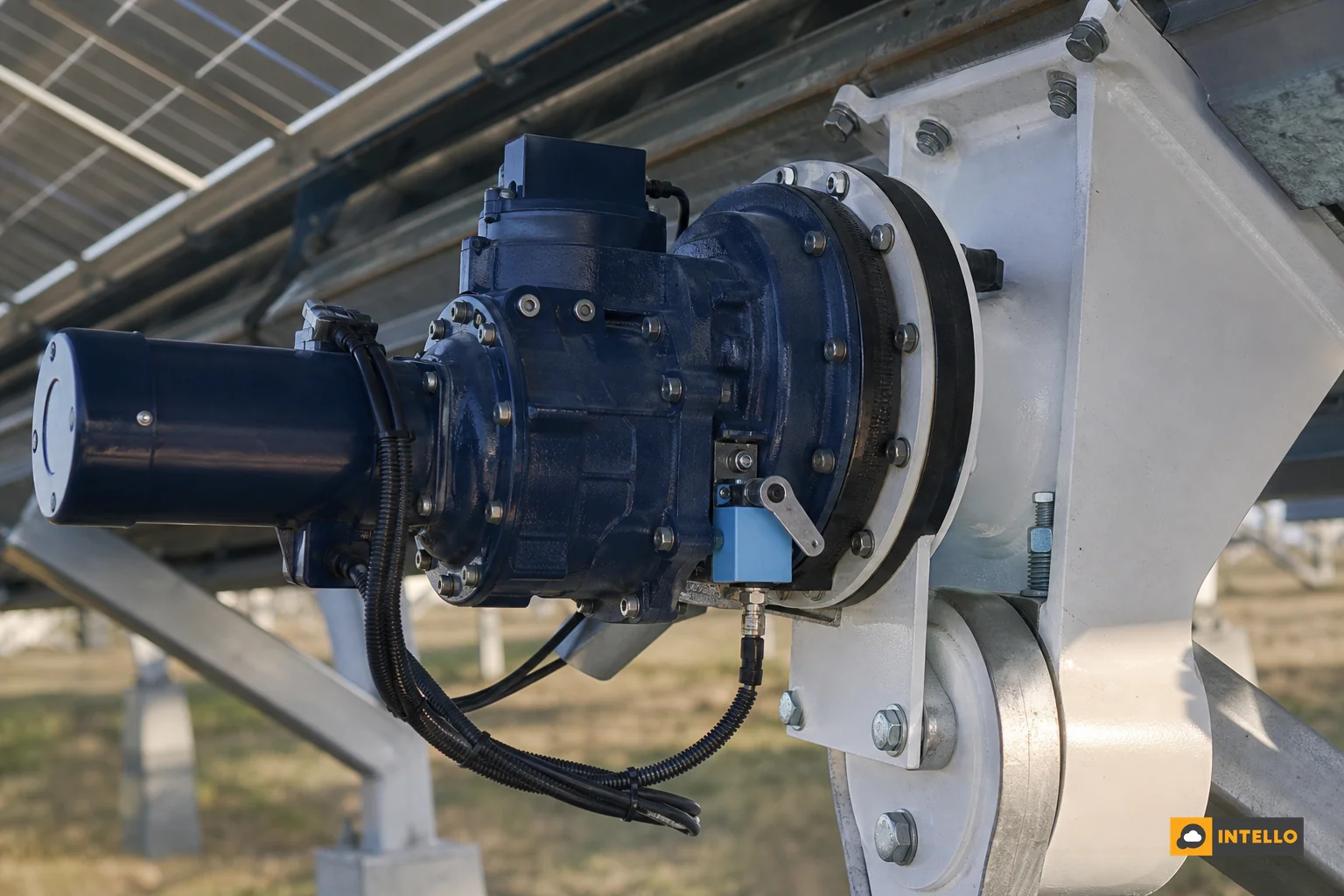
- Motor or actuator: Usually a slew drive for single-axis rows or a linear actuator for smaller dual-axis units; this is the part that physically moves the structure.
- Gearbox: Reduces motor speed into the slow, precise rotation a tracker actually needs, since panels move only a few degrees at a time.
- Structural frame and torque tube: The steel backbone that the panels sit on and that the motor rotates as one connected row.
On a multi-row ground-mounted plant, a single motor and controller often drive an entire row of panels through a shared torque tube, which keeps the system’s parts count and cost manageable compared to motorizing every individual module.
Passive vs Active Tracking Methods
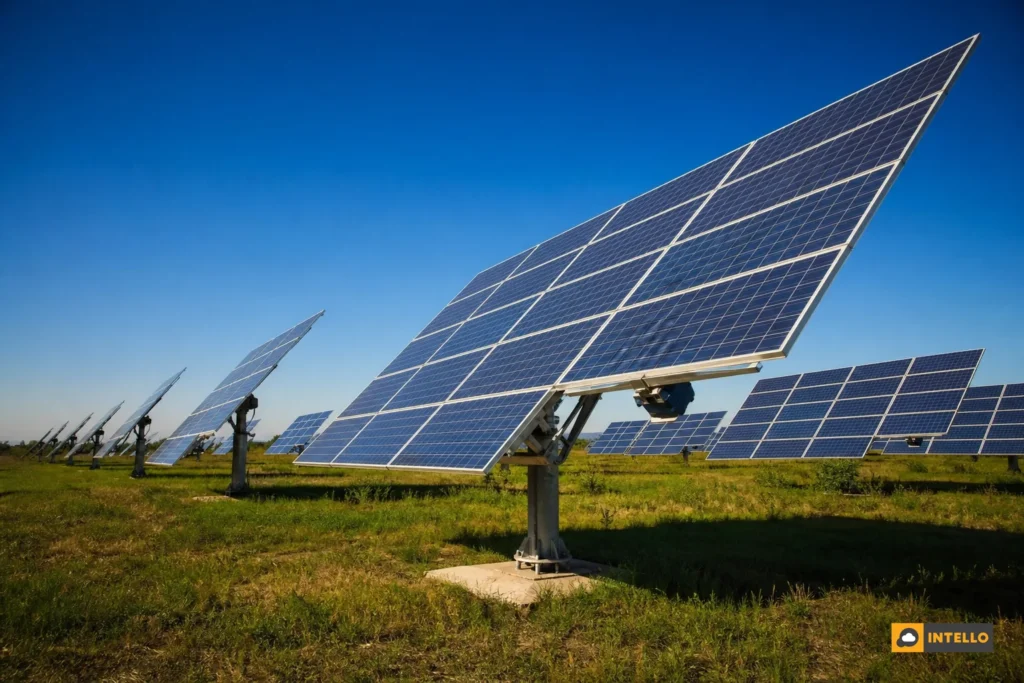
Active trackers use electronic sensors and motors to move the panel; passive trackers use a sealed fluid that expands in sunlight and shifts weight to tilt the frame without any motor at all.
Active systems dominate commercial and utility installations because they track more precisely and keep working regardless of temperature swings. Passive, gas-driven trackers cost less upfront and have no motor to fail, but they respond more slowly and lose accuracy in cold weather when the fluid moves sluggishly.
For large Indian ground-mounted sites, active single-axis designs are by far the more common choice, largely because the yield gain needs to justify the added mechanical complexity, and an active controller delivers that gain more reliably.
Single-Axis vs Dual-Axis Trackers: What’s the Difference?
A single-axis tracker rotates panels along one line, typically east to west, following the sun’s daily arc. A dual-axis tracker adds a second pivot that also adjusts tilt for the sun’s seasonal height, capturing more light but doubling the mechanical parts that can wear out.
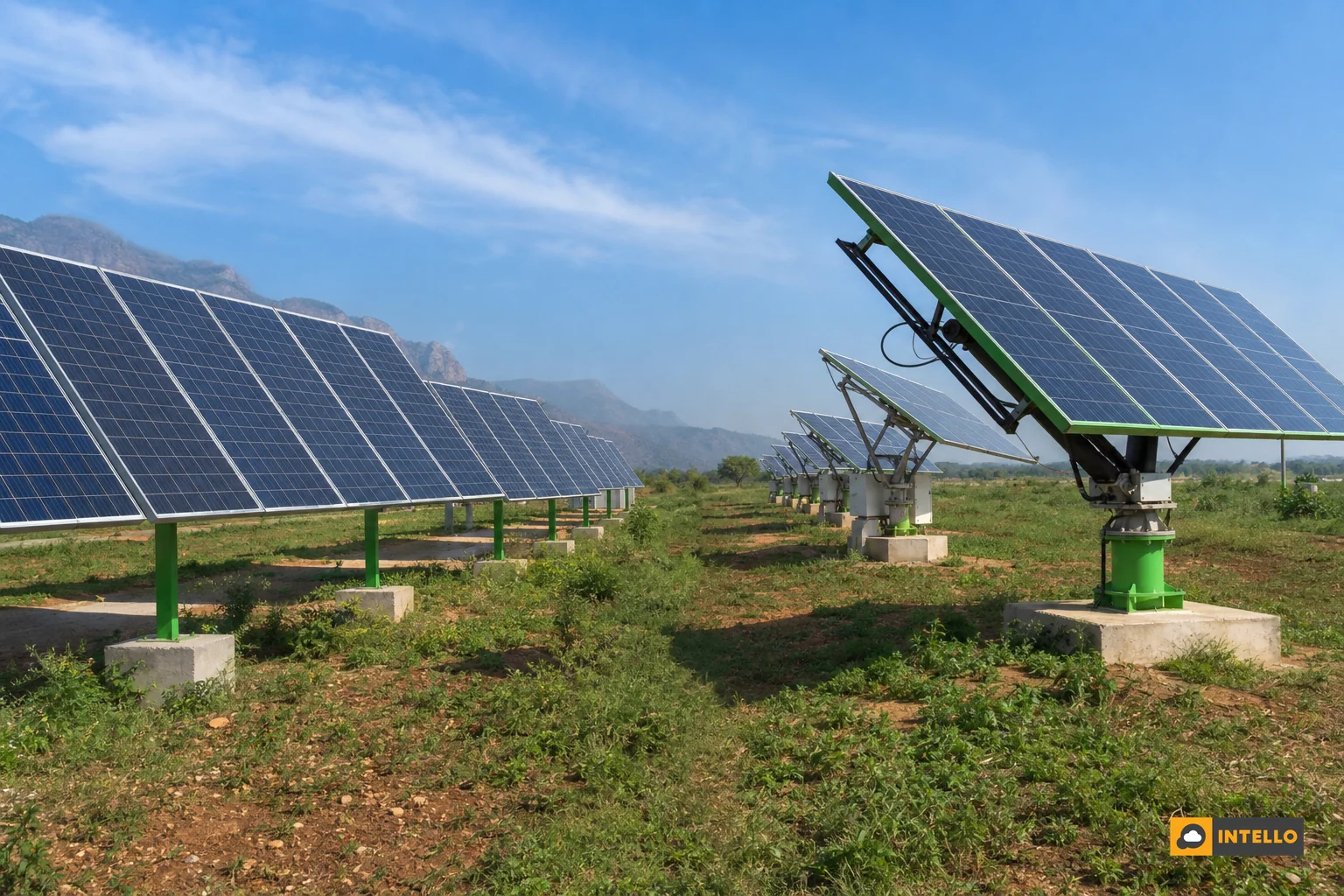
Research comparing the two designs has found dual-axis systems can meaningfully outperform single-axis setups in energy yield, though the gap varies by latitude, season, and local climate, according to a review of fixed, single-axis, and dual-axis tracker performance. The catch is maintenance: a dual-axis tracker has two motors, two sets of bearings, and two control loops to keep calibrated, against one for single-axis.
For most commercial and industrial sites in India, single-axis trackers hit the more practical balance. They capture most of the available tracking gain at a fraction of the mechanical risk that comes with a second axis of movement. Dual-axis systems tend to show up in research installations or concentrated solar projects where every extra percentage point of yield matters more than upkeep cost.
Why Does Tracking Affect Energy Yield So Much?
Tracking boosts yield because it keeps the panel closer to perpendicular to the sun for more hours of the day, rather than only around solar noon. That extends the window of near-peak output on both ends of the day, not just at the middle.
A fixed panel essentially earns full marks for a couple of hours and partial marks the rest of the time. A tracker stretches that full-marks window across most of daylight hours. Field data from a large-scale outdoor comparison of fixed and single-axis subfields found the tracking rows outperformed their fixed counterparts by a double-digit margin over a full year, reinforcing why the 15-30% figure shows up consistently across different climates and panel technologies.
That gain compounds on ROI. More kilowatt-hours from the same panel footprint means a shorter payback period, assuming the extra mechanical cost and upkeep don’t eat into the gain. That tradeoff is exactly what an asset owner needs to run the numbers on before committing capital to tracking hardware.
Is a Solar Tracking Mechanism Right for Your Commercial Site in India?
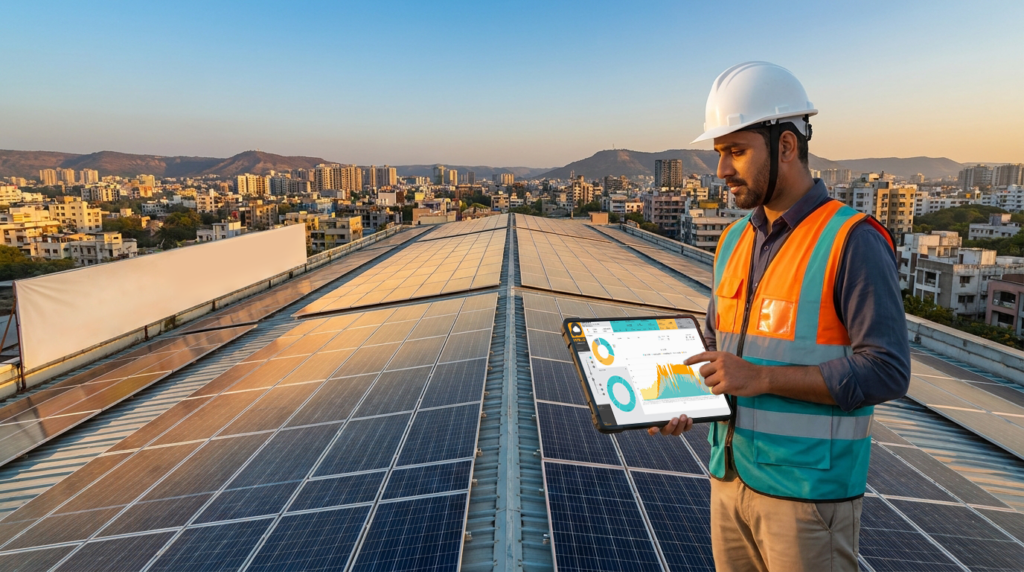
A tracking mechanism suits open, ground-mounted commercial or industrial land with ample space and strong direct sunlight, not a typical rooftop. Rooftop structures usually can’t carry the extra load or footprint a pivoting frame needs, so fixed-tilt racking remains the default there.
If you’re evaluating a ground-mounted plant, the decision usually comes down to three questions: how much unused open land you have, how strong and consistent the direct sunlight is at your location, and whether your O&M budget can absorb a higher repair frequency.
Western and central Indian states with high direct normal irradiance, think open plots in Rajasthan, Gujarat, or parts of Maharashtra, tend to show the strongest case for tracking because clear-sky conditions let the mechanism actually use its full range of motion most days.
Cloudy or heavily diffused-light regions see smaller gains from tracking, since there’s less of a defined “sun direction” to chase on an overcast day. Before signing off on tracking hardware, it’s worth working through a decision framework similar to how you’d weigh repairing versus replacing existing equipment: compare the incremental generation gain against the added capital and maintenance cost over the plant’s lifetime.
Maintenance Challenges Unique to Tracking Systems
Tracking systems carry maintenance risks that fixed-tilt arrays simply don’t have, because every moving part is a wear item. Motors, actuators, gearboxes, and sensors all degrade with use, and a tracker that gets stuck in one position quietly turns into a very expensive fixed panel.
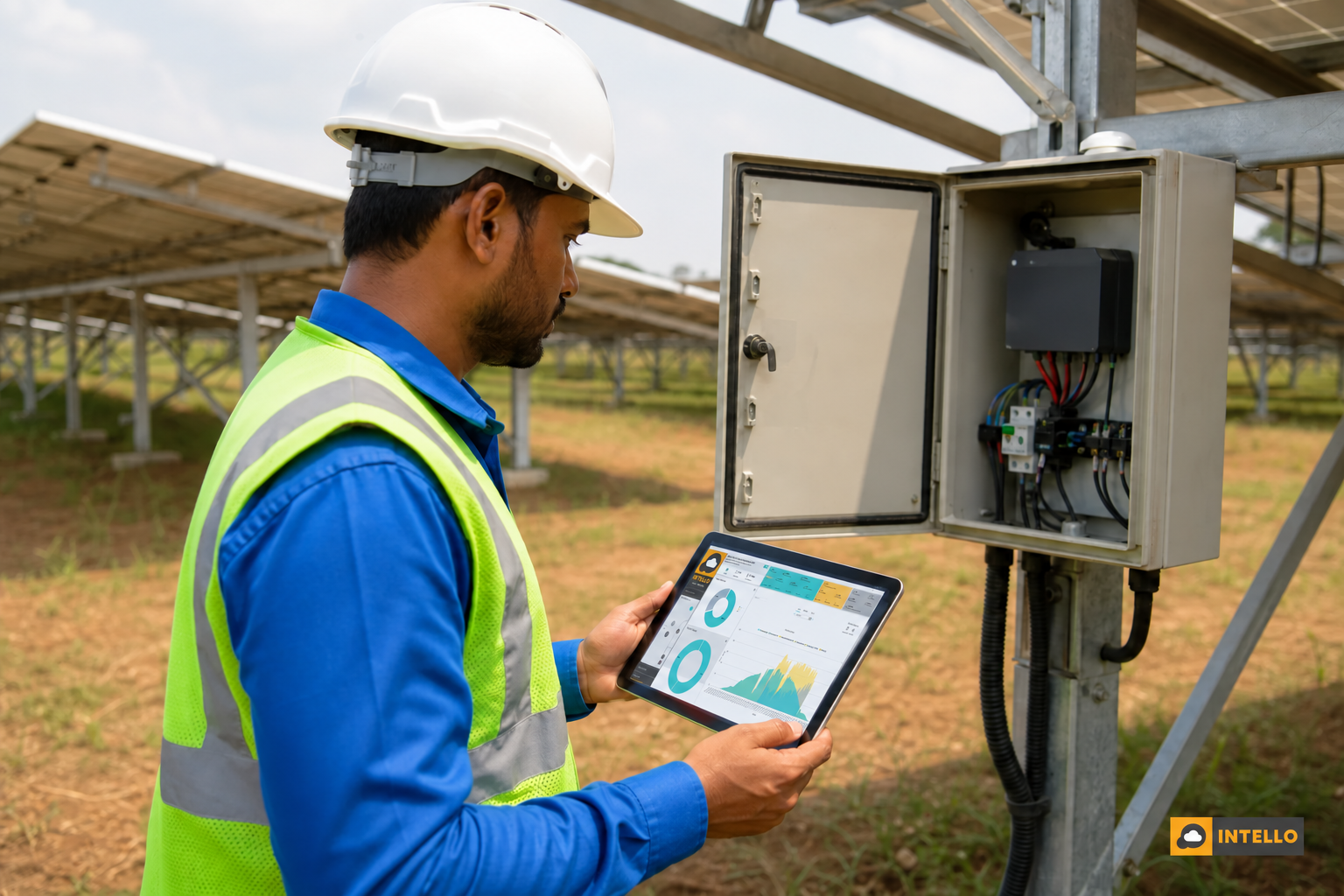
The failure modes worth watching for include:
- Actuator or motor wear: Constant daily cycling eventually fatigues the motor and its bearings, especially in dusty or high-heat environments common across Indian plants.
- Sensor calibration drift: A dirty or misaligned light sensor can feed the controller bad position data, causing the tracker to chase the wrong angle.
- Gearbox lubrication loss: Without regular servicing, gearboxes run dry and grind, shortening their working life.
- Cable fatigue: Wiring that flexes with every rotation cycle is more prone to chafing and failure than static cabling on a fixed array.
- Stuck or stalled rows: A single failed motor can leave an entire row locked at one angle, silently losing the tracking advantage without tripping an obvious alarm.
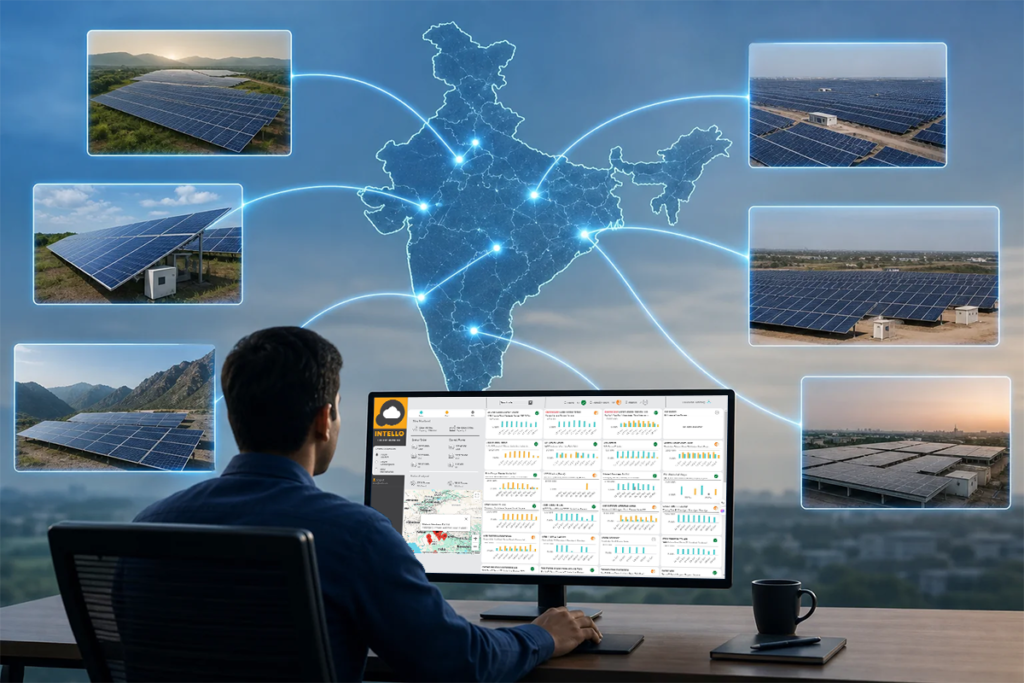
This is exactly the kind of fault that’s easy to miss without continuous IoT-based monitoring, since a stuck tracker still generates some power, just less than it should, and the shortfall can go unnoticed for weeks on a manual-check schedule.
A centralized dashboard that flags underperformance by row, rather than just by inverter, is one of the few practical ways to catch a tracking fault before it costs a full season of lost yield. Intello’s monitoring dashboard is built to surface exactly this kind of string-level and row-level deviation early, alongside the seasonal checks that keep moving components lubricated and sealed against India’s monsoon humidity.
FAQs
Does solar tracking still work on cloudy days?
Yes, but the benefit shrinks. On overcast days, sunlight scatters so evenly that chasing a precise sun angle matters far less, since there’s no strong direct beam for the panel to align with.
How much does adding a tracking mechanism cost compared to fixed racking?
Tracking hardware costs more upfront than fixed mounting because of the motors, gearboxes, and controllers involved, and it also raises long-term operations and maintenance spend. Exact pricing depends on your site size, tracker type, and vendor, so it’s best to request a detailed quote against your specific plant layout.
Do tracking systems need more maintenance visits than fixed panels?
Generally yes. Mechanical components like actuators, gearboxes, and sensors need periodic inspection and lubrication that a fixed array never requires, which typically means more frequent preventive maintenance visits over the system’s lifetime.
Can an existing fixed-tilt array be retrofitted with tracking?
Retrofitting is technically possible but often impractical, since it usually means replacing the entire mounting structure and foundation, not just adding a motor. Most tracking decisions are made at the design stage of a new ground-mounted plant rather than after installation.
Whether your plant runs on fixed racking or a tracking mechanism, the yield gains only hold up if the hardware behind them stays in good working order. If you’re weighing whether tracking technology fits your next ground-mounted project, or you already run tracked panels and want a second opinion on their current performance, request a quote from Intello for a site assessment.
Existing customers can check row-level generation and fault alerts anytime through the Intello portal login, and you can read more about how the company supports solar asset owners across India on the Intello about page.