A DG-PV synchronization controller lets a diesel generator and a solar array feed the same power bus at the same time without the generator tripping or the engine getting damaged. Any commercial or industrial site in India that runs solar alongside a diesel genset, whether as backup or as a parallel source, needs one before commissioning. Skipping it usually shows up later as nuisance generator trips, wasted diesel, or a burnt-out alternator.
Key Takeaways
- Function: The controller senses generator load in real time and ramps solar output up or down so PV never backfeeds power into the DG.
- Load sharing accuracy matters most: Look for controllers with response times under 2-3 seconds and load-sharing tolerance within 5%, otherwise the genset “hunts” and trips repeatedly.
- Protection is non-negotiable: Reverse power protection, frequency ride-through, and a defined fail-safe behavior on communication loss are the three checks that separate a reliable controller from a liability.
- Dashboard integration saves site visits: A controller that reports DG-PV events to your existing monitoring dashboard turns a black-box protection device into a diagnosable asset.
- Vendor support beats price: Local spare parts, commissioning support, and an AMC that covers the controller (not just the inverter) determine how much downtime you avoid over five years.
At a Glance: DG-PV Synchronization Controller Selection Criteria
| Criteria | What to Check | Why It Matters |
|---|---|---|
| Load sharing accuracy | Response time under 2-3 seconds, tolerance within 5% | Prevents generator hunting and nuisance trips |
| Reverse power protection | Trip threshold configurable, typically 2-5% of DG rating | Stops PV from backfeeding into the alternator |
| Frequency/voltage ride-through | IEEE 1547 or IEC 61727 aligned settings | Avoids unnecessary disconnection during minor grid swings |
| Communication protocol | Modbus RTU/TCP, RS485, or open API | Determines dashboard and SCADA compatibility |
| Fail-safe behavior | Defaults to safe curtailment on comms loss | Prevents blackout or damage if the link drops |
| DG size range supported | Match to your genset kVA rating with headroom | Undersized controllers misjudge load transients |
| Local support | Spare parts and technician availability in-region | Cuts mean time to repair during a fault |
What Does a DG-PV Synchronization Controller Actually Do?
Think of it as a referee sitting between two power sources that were never designed to share a bus. A diesel generator produces power at a fixed frequency set by its governor. Solar inverters produce power based on sunlight, which changes every few minutes. Left alone, a cloud passing overhead can cause PV output to swing hard, and the generator’s governor has to react instantly or the frequency drifts out of range.
The dg pv synchronization controller watches the generator’s real-time load, calculates how much headroom exists, and sends a ramp command to the solar inverter so PV output rises or falls smoothly. It never lets solar output exceed what the generator load can absorb, which is what stops backfeed into the DG windings. This is a different job from a standard zero export solar setup, which only prevents export to the utility grid. A zero export device solar configuration has no idea a diesel generator even exists on site, so DG-mixed installations need a purpose-built synchronization controller on top of, or instead of, standard export limiting.
Why C&I Sites Running Diesel Gensets Can’t Skip This
Most Indian commercial and industrial sites don’t run on grid power alone. Manufacturing units in Gujarat’s industrial belts, IT parks in Bengaluru, and cold storage facilities across Punjab all keep diesel gensets for load shedding hours or as pure backup. When these sites add rooftop or ground-mounted solar, the two sources end up sharing the same LT panel during genset-running hours.
Without proper synchronization, three things happen repeatedly. First, the generator’s alternator windings get stressed by reverse power flow, shortening its service life. Second, protection relays trip the genset mid-run, which cuts power to critical loads exactly when the backup was needed. Third, the diesel savings that justified the solar investment in the first place shrink, because the plant curtails PV output manually out of caution instead of running it at full capacity.
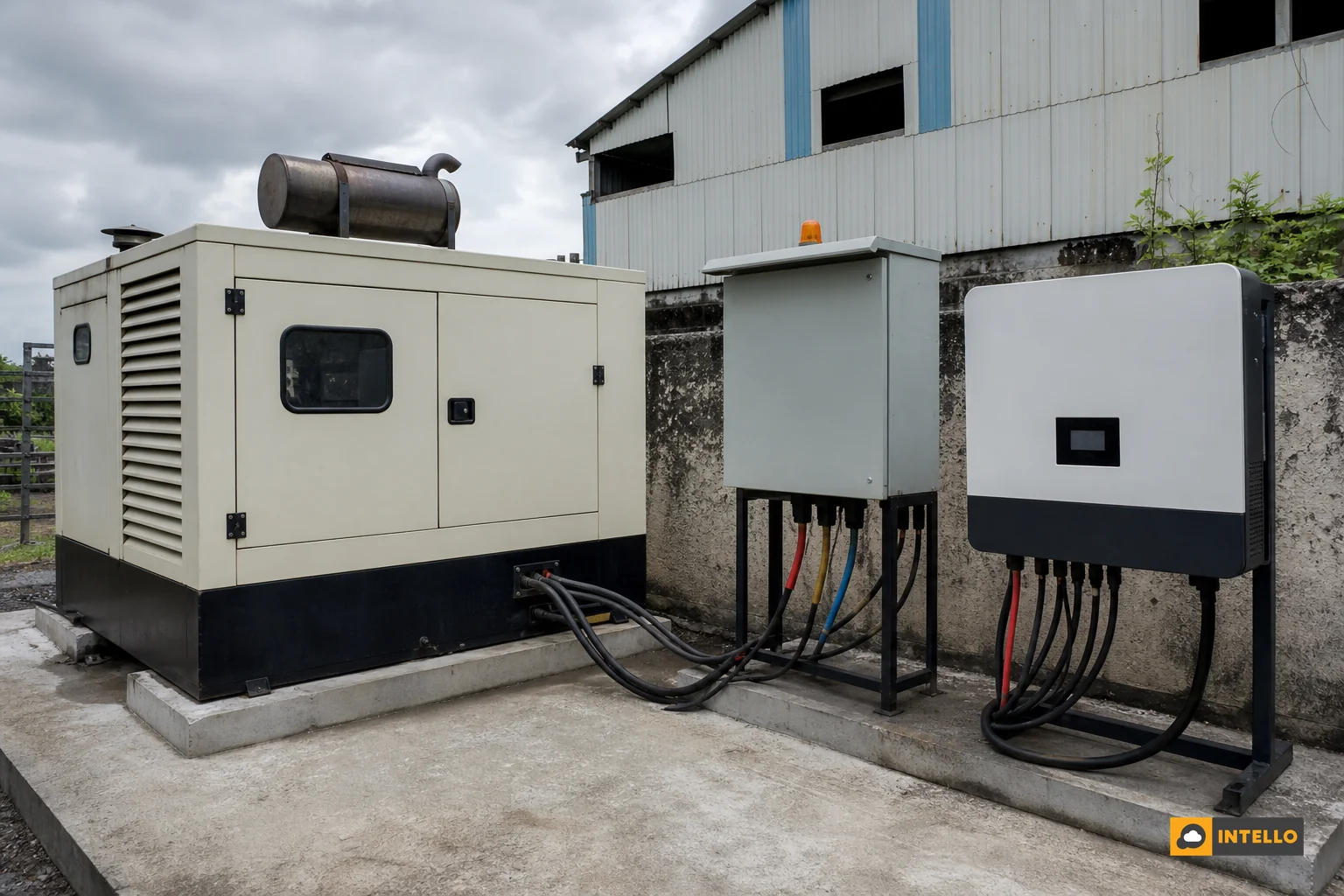
Our field teams at Intello see this most often at sites that installed solar as a retrofit onto an existing genset setup, where synchronization wasn’t part of the original design. The fix usually costs far less than a single generator overhaul, but it has to be sized and configured correctly from the start.
1. Load Sharing Accuracy: The First Filter
Load sharing accuracy is the single number that determines whether a controller will work quietly in the background or become a source of daily complaints. A controller with a slow response time, say five seconds or more, cannot react fast enough to a sudden cloud transient. The generator’s governor overcorrects, frequency oscillates, and downstream equipment sees voltage flicker.
Ask any vendor for two figures in writing: the control loop response time and the load-sharing tolerance band. A response time under 2-3 seconds and a tolerance within 5% of rated load is a reasonable baseline for Indian C&I sites. Anything slower should be tested with a load bank before you commit, not after installation.
2. Protection Features to Check Before You Buy
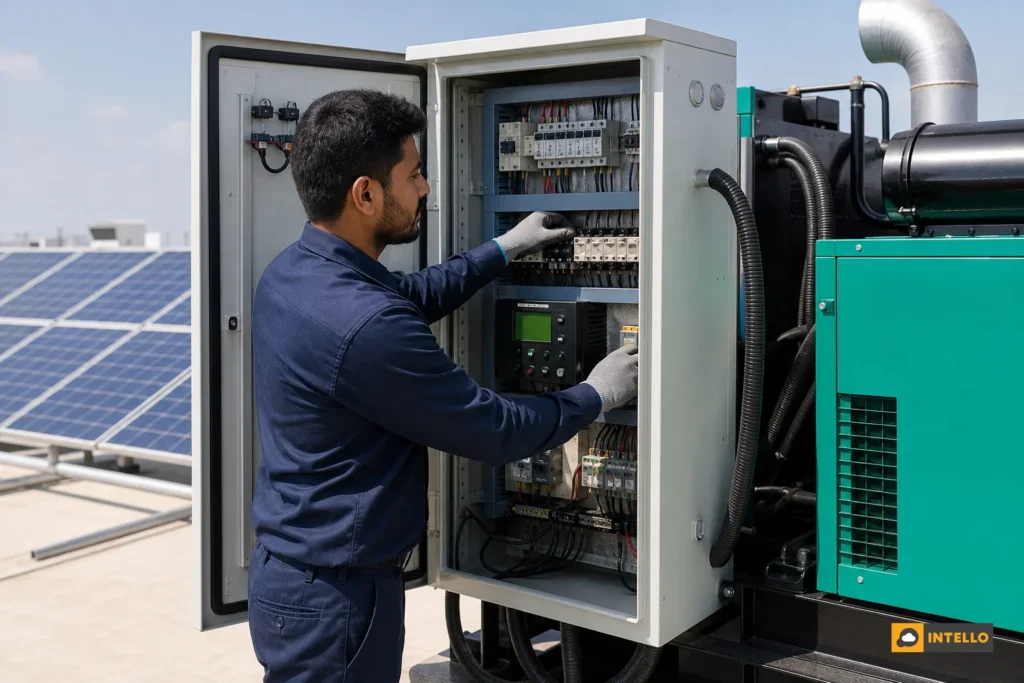
A synchronization controller is fundamentally a protection device wearing an efficiency hat. The features below decide whether it protects your genset or just adds another point of failure:
- Reverse power protection: Confirm the trip threshold is configurable, usually 2-5% of DG rating, and that it can be tuned to your specific genset’s tolerance.
- Frequency and voltage ride-through: The controller should tolerate brief frequency dips without disconnecting solar entirely, following IEC 61727 or equivalent guidance, so a minor fluctuation doesn’t cause an unnecessary full shutdown.
- Over/under frequency and voltage trips: These should be independently adjustable, since Indian genset governors vary widely in how tightly they hold 50 Hz.
- Fail-safe on communication loss: If the link between controller and inverter drops, the system must default to curtailing solar to zero, not freezing at the last known setpoint. This single spec has caused more site incidents than any other in our maintenance records.
These same protection principles overlap heavily with what our earlier explainer on zero export device requirements covers for grid-tied sites, but DG synchronization adds the reverse power and frequency layers that a grid-only setup never has to handle.
3. Integration With Existing Monitoring Dashboards
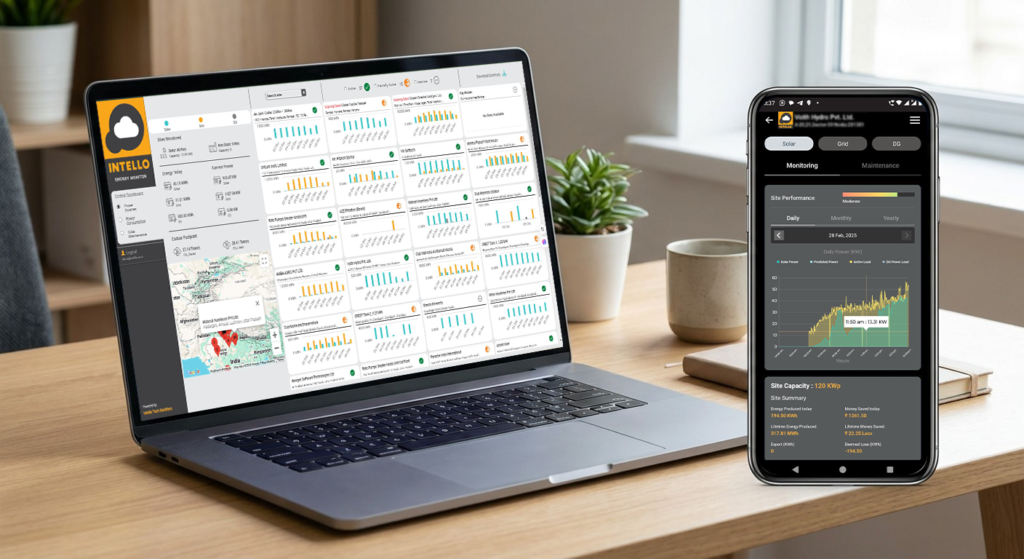
A controller that works in isolation but reports nothing to your dashboard is a black box. When a trip happens at 2 a.m., your O&M team needs to see why, not just that solar output dropped. Look for Modbus RTU or Modbus TCP support at minimum, and ideally an open API that your existing platform can pull data from.
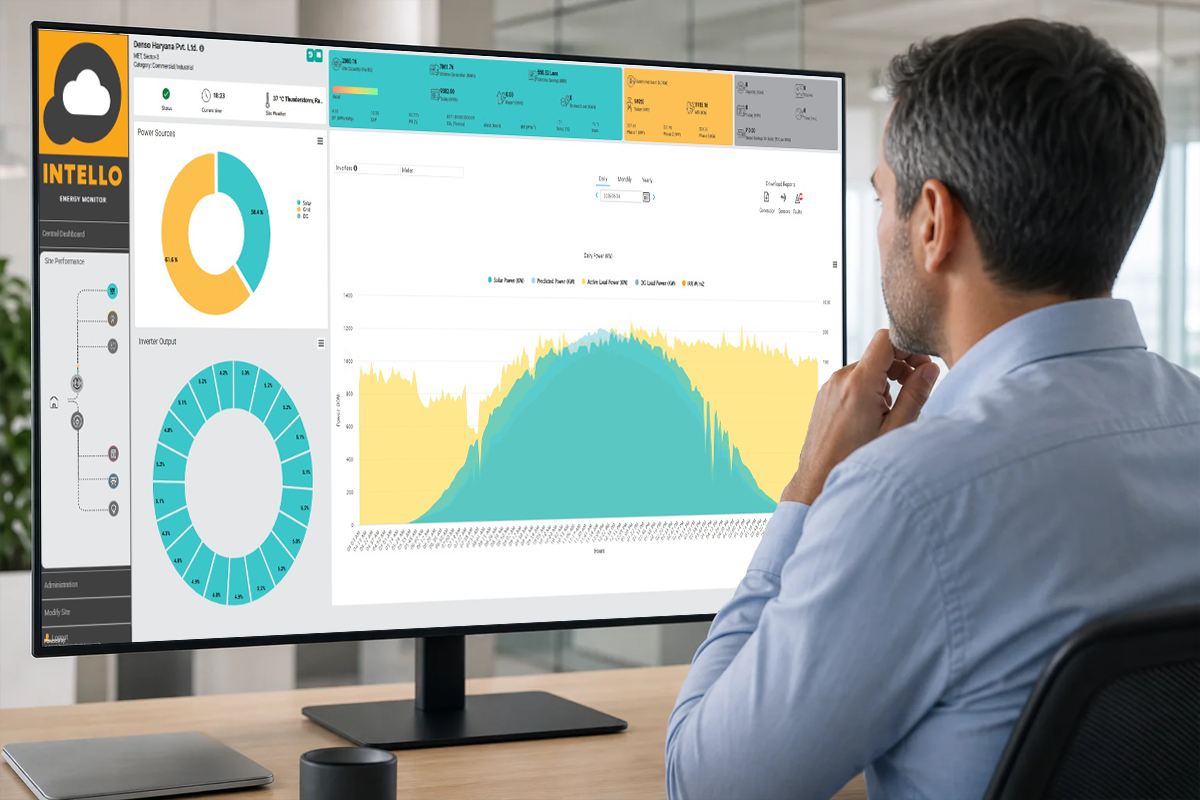
At Intello, we push DG-PV synchronization events, including trip logs, ramp rate history, and reverse power alarms, straight into the same dashboard our clients already use for panel-level and inverter-level monitoring. That’s the same principle behind our guide on centralized solar monitoring across multiple sites: one screen, not five separate vendor portals. If you’re comparing hardware options for the data layer itself, our comparison of RTU vs datalogger solar monitoring is a useful companion read before you finalize a controller that also needs to talk to your logging hardware.
4. Comparing Controller Types Available in India
Three broad categories are sold in the Indian market, and they aren’t interchangeable:
| Controller Type | Typical Use Case | Response Speed | Cost Position |
|---|---|---|---|
| PLC-based custom logic | Large industrial sites with unique load profiles | Moderate, depends on programming | Higher upfront, flexible long-term |
| Dedicated hybrid sync controller | Standard C&I rooftop plus DG backup sites | Fast, purpose-built loop | Mid-range, most common choice |
| Inverter-integrated logic | Smaller sites using a single inverter brand throughout | Fast but brand-locked | Lower upfront, less flexible if you multi-source inverters |
PLC-based systems make sense when a site has unusual load-shedding patterns or multiple gensets running in parallel. For most standard commercial rooftops with one or two diesel gensets, a dedicated hybrid controller strikes the right balance between reliability and cost. Inverter-integrated logic works only if you’re committed to a single inverter brand across the site’s life, which is rarely realistic once expansions happen.
5. Vendor and Installation Considerations
The controller’s spec sheet is only half the decision. The other half is who commissions it, who stocks spares, and who answers the phone when it trips during a load-shedding window. Before signing a purchase order, confirm:
- The vendor or their local partner can physically reach your site within a defined response window, not just over email.
- Commissioning includes a documented load bank test, not just a paper configuration.
- Spare relay boards or control modules are stocked in India, not shipped from overseas on a multi-week lead time.
- The controller is included in your ongoing solar AMC or O&M contract, not treated as a separate device nobody owns.
This last point trips up more asset owners than any technical spec. If your AMC provider services the inverter and panels but has never touched the DG synchronization controller, you effectively have an unmaintained protection device sitting between two expensive machines. Preventive checks on the controller belong in the same visit as your string balancing and inverter servicing, as covered in our piece on preventive versus breakdown solar maintenance.
Common Mistakes EPCs and Asset Owners Make
The most frequent error is buying purely on unit price without asking for load sharing response time in writing. A controller that’s 15% cheaper but reacts two seconds slower can cause enough nuisance trips over a year to erase that saving in diesel wastage and technician callouts.
The second mistake is skipping a proper load bank test at commissioning. Simulation on paper doesn’t reveal how the controller behaves when a real cloud transient hits a real generator under real load. A thirty-minute load bank test at handover catches problems that would otherwise surface during the first monsoon.
Third, some EPCs configure DG synchronization and DISCOM zero export rules as two unrelated systems, when in practice both curtailment layers need to agree on priority. If the DG synchronization controller and the zero export device both try to control the same inverter without a clear hierarchy, you get conflicting commands. Get this resolved during design, not after the first fault report.
Frequently Asked Questions
Is a DG-PV synchronization controller mandatory in India?
There’s no single national mandate specific to DG-PV controllers, but genset manufacturers’ warranty terms and most DISCOM interconnection rules effectively require it wherever solar and diesel share a bus. Skipping it risks both generator warranty voidance and unsafe backfeed conditions.
How is this different from a zero export device?
A zero export device stops solar power from flowing back into the utility grid. A DG-PV synchronization controller manages the interaction between solar and a diesel generator specifically, including reverse power and frequency protection the generator needs that a grid-only zero export setup doesn’t address.
What size diesel generator needs synchronization?
Any DG that runs in parallel with solar during normal operating hours needs it, regardless of kVA rating, though the controller itself must be sized to the generator’s kVA rating with adequate headroom for load transients.
Can an existing genset-plus-solar site retrofit a controller?
Yes. Retrofits are common and generally less disruptive than people expect, since the controller sits at the LT panel level rather than requiring changes to the inverter or generator internals themselves.
If your site is running solar and diesel together without a properly commissioned synchronization controller, the risk isn’t theoretical, it shows up as generator trips, wasted diesel, and shortened equipment life. Intello’s O&M teams evaluate existing DG-PV setups, recommend the right controller class for your load profile, and fold ongoing checks into your existing monitoring dashboard so nothing gets left as an orphaned device. Request a quote to get your site assessed, or learn more about how our monitoring and maintenance platform works. Existing clients can check controller status anytime through the portal login, and if you have questions before committing, contact us directly.