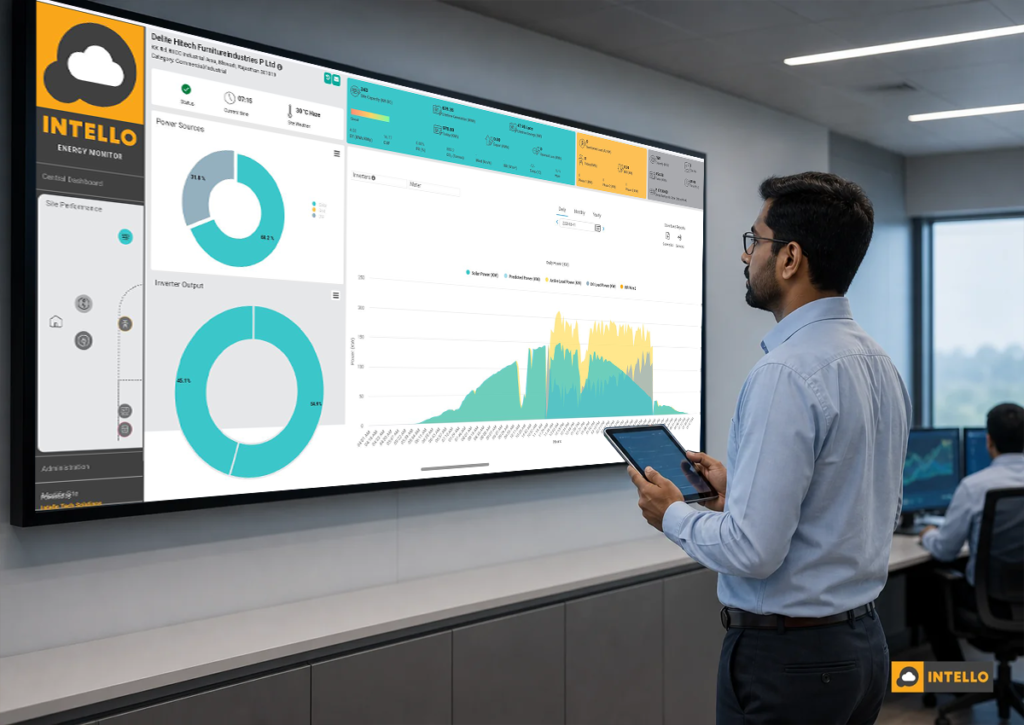
A solar plant that loses 15% of its output to an undetected string fault doesn’t send a warning email. It just quietly generates less power, month after month, until someone finally compares the bill to last year’s and asks why. That silence is the real difference between preventive vs breakdown solar maintenance: one catches the problem in week one, the other finds it in month four, after the losses are already unrecoverable.
Key Takeaways
- Cost structure differs fundamentally: Preventive maintenance is a fixed, budgeted annual cost. Breakdown maintenance is variable and compounds with every week a fault goes unnoticed.
- Detection speed decides the damage: A string fault caught within days costs a repair visit. The same fault left for weeks can drag down performance ratio and stress the inverter into early failure.
- Emergency repairs carry a premium: Rush parts, urgent callouts, and after-hours labor typically push breakdown repair costs well above a scheduled service of the same job.
- Lost generation is gone forever: Downtime during peak sun hours cannot be recovered later. It’s not delayed revenue, it’s revenue that never existed.
- Monitoring converts reactive to preventive: IoT sensors and remote terminal units flag drift from expected output early enough to fix issues before they become breakdowns.
At a Glance: Preventive vs Breakdown Solar Maintenance
| Factor | Preventive Maintenance | Breakdown Maintenance |
|---|---|---|
| Cost pattern | Fixed annual cost, budgeted in advance | Variable, spikes unpredictably per incident |
| Fault detection time | Hours to days (monitoring-led) | Weeks to months (bill-shock or site visit-led) |
| Typical trigger | Scheduled inspection or monitoring alert | Total outage or customer complaint |
| Common repair scope | Cleaning, string balancing, hardware tightening | Inverter replacement, string rewiring, module replacement |
| Labor cost per visit | Standard scheduled rate | Emergency callout premium, often 2-4x higher |
| Warranty impact | Documented service history supports claims | Delayed detection can complicate or void claims |
| Downtime exposure | Minimal, caught before failure | Extended, often days before diagnosis and parts arrival |
| ROI outcome | Protects expected generation and payback timeline | Erodes ROI through lost units and repair spend |
What Preventive vs Breakdown Solar Maintenance Actually Means
Preventive maintenance is scheduled work done before anything fails. It includes panel cleaning, string balancing, inverter servicing, hardware tightening, and routine inspection of cabling, earthing, and combiner boxes. The point is simple: catch the small issues, a loose connector, a slightly underperforming string, before they turn into an outage.
Breakdown maintenance, sometimes called reactive maintenance, is the opposite approach. There’s no schedule and often no monitoring. Someone calls a technician after the inverter has already tripped, after the bill has already spiked, or after a customer has already complained about a dark rooftop system. The work only starts once something has visibly gone wrong.
A surprising number of solar asset owners across India still default to the reactive model, not because it’s cheaper, but because it looks cheaper. There’s no monthly line item, no AMC invoice, nothing to justify to a finance team. The cost only shows up later, buried inside a higher electricity bill or a large one-time repair invoice that gets treated as a one-off surprise rather than what it actually is: the predictable result of skipping upkeep. Our related piece on AMC vs O&M contracts in India breaks down how these service models are typically structured and priced.
The Hidden Cost of Waiting: How Breakdowns Actually Add Up
The sticker price of a repair is rarely the full cost. Four things stack on top of it, and most owners only count the first one.
- Lost generation during the undetected window: A string fault that cuts output by 10-15% doesn’t announce itself. It runs quietly for as long as nobody is watching, and every kWh not generated during that window is gone permanently.
- Emergency callout premiums: A technician dispatched same-day for an inverter that’s completely down costs more than one scheduled two weeks out. Rush freight on a replacement part adds further margin.
- Compounding damage: An unbalanced string left in place doesn’t stay a minor issue. It can push extra thermal and electrical stress onto the inverter, turning a string-level fix into an inverter-level failure.
- Warranty complications: Manufacturers and installers often ask for maintenance records and prompt fault reporting before honoring a claim. A fault reported three months after it likely began is a harder conversation than one reported within the week. Our guide on the solar panel warranty claim process in India covers what documentation actually protects an owner.
None of these are hypothetical. They are the standard shape of a breakdown-maintenance bill once every hidden cost is added back in.
Preventive Maintenance vs Breakdown Maintenance: The Cost Comparison
Put the two approaches side by side on the same task, and the pattern repeats. Preventive work is a smaller, scheduled cost. Breakdown work is a larger, unscheduled one, usually for the exact same underlying problem.
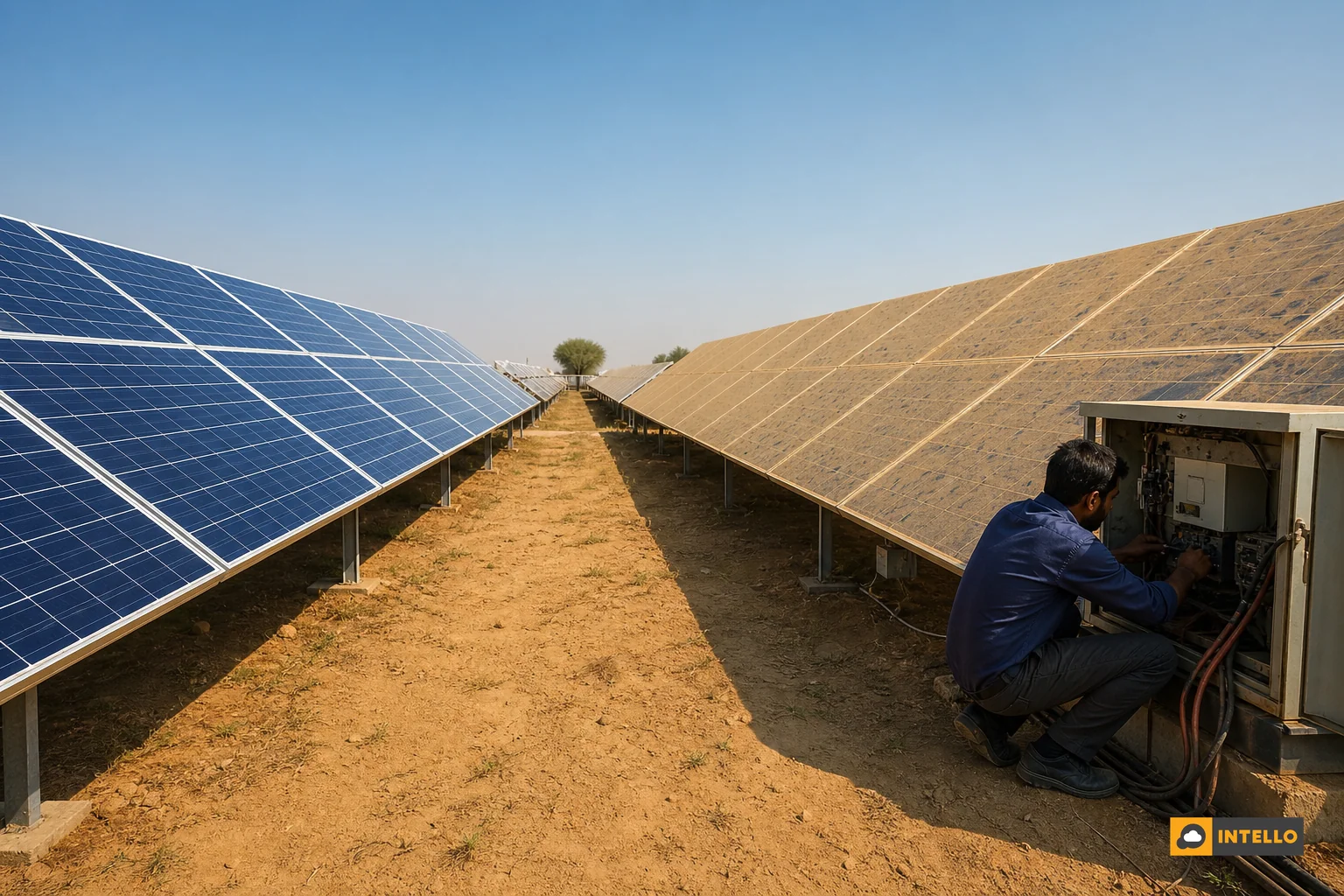
Cleaning vs Soiling Loss
A scheduled cleaning visit is a modest, predictable cost. Left unmanaged, dust and soiling losses accumulate month over month, and by the time someone notices the drop in output, the plant has already lost weeks or months of avoidable generation. This is regional too: dusty zones like Rajasthan and parts of Gujarat see soiling losses accumulate far faster than coastal regions, a pattern we cover in detail in Solar Cleaning India: Regional Guide by Climate Zone.
String Balancing vs String Fault Repair
Correcting a mismatched string during a routine visit is a quick, low-cost fix. Ignore it, and the imbalance can degrade the weakest modules faster, eventually requiring a fuller string-level repair or replacement, at a fraction of the value actually lost in generation along the way.
Inverter Servicing vs Inverter Replacement
Routine inverter servicing, checking fans, connections, firmware, and thermal performance, is a standard maintenance line item. An inverter that fails outright because a smaller fault was never addressed often needs a costlier repair or a full replacement, plus the downtime while the unit is diagnosed, sourced, and installed. Our comparison on solar inverter replacement vs repair in India lays out exactly where these warranty traps sit.
The pattern holds across every category: preventive maintenance addresses the same fault at a fraction of the cost, timeline, and generation loss that breakdown maintenance requires for an identical repair.
Why Detection Speed Is the Real Differentiator
Cost is only half the story. The other half is time, specifically, how long a fault runs before anyone knows about it.
Preventive maintenance backed by IoT monitoring relies on sensors placed at the string and inverter level, feeding readings to a remote terminal unit every few minutes. When a string’s output drifts from its expected baseline, an alert goes out immediately, often before a human would ever notice a dip on a monthly bill. This is the entire premise behind how IoT sensors detect solar faults before they cost you: speed of detection is what actually protects the asset.
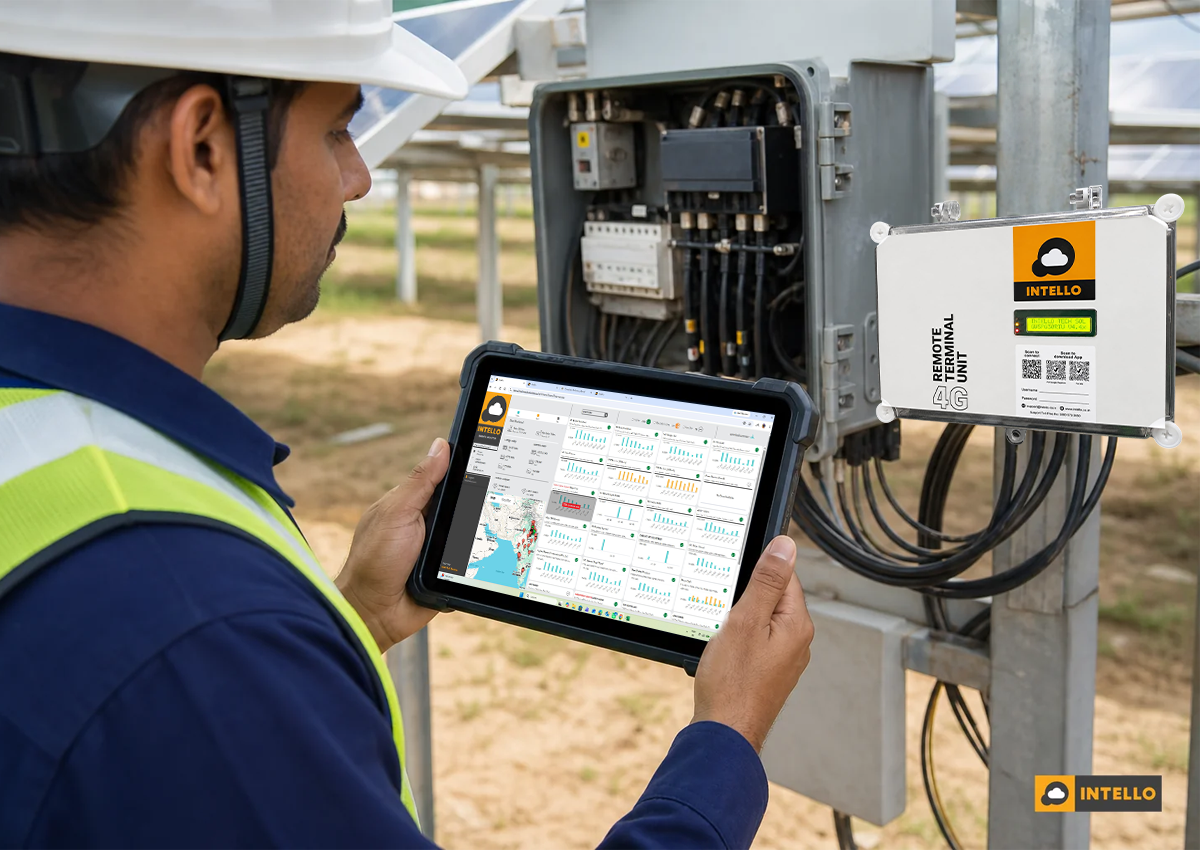
Breakdown maintenance has no such early signal. Detection depends on someone noticing a high electricity bill, a customer complaint, or a total outage. By the time any of those trigger a call, the fault has usually been active for weeks. For a commercial rooftop system, that gap is the difference between a same-week fix and a quarter of depressed performance ratio that never gets recovered.
This gap matters even more for installations running alongside diesel generators, where zero-export solar setups and DG-PV synchronisation logic depend on accurate real-time data to switch load sources safely. A monitoring blind spot there isn’t just a generation loss, it’s an operational risk.
What This Looks Like Across Commercial, Residential, and Ground-Mounted Assets
The preventive-versus-breakdown gap plays out differently depending on the type of asset, but the direction of the cost is always the same.
Commercial rooftop owners tend to lose ROI silently. A 200 kW system running at 12% below expected output for two months doesn’t look dramatic on a single bill, but multiplied across a year of contracted electricity rates, it becomes a significant erosion of the payback timeline nobody flagged in real time.
Residential owners often check performance even less. Many homeowners look at their solar system once a year, if that, and only notice a problem when the electricity bill jumps back toward pre-solar levels. By then, the fault has usually been active for months. Our piece on residential solar AMC benefits in India covers what a properly monitored first year actually looks like by comparison.
Ground-mounted plants carry additional risk categories entirely: vegetation growth shading rows of panels, rodents damaging cabling inside combiner boxes, and earthing faults that go unnoticed without a scheduled inspection. These issues rarely show up as a total shutdown; they show up as a slow, distributed underperformance across the site. The ground-mounted solar plant maintenance checklist covers the specific failure points site teams miss most often.
Across all three categories, the owners who catch problems early share one thing in common: they have a monitoring system or maintenance partner actively watching for drift, not waiting for a complaint.
How to Shift From Breakdown to Preventive Maintenance
Moving from a reactive to a preventive model doesn’t require ripping out existing infrastructure. It requires four specific changes.
- Install string-level monitoring. A dashboard that only shows total plant output hides exactly the kind of fault that causes the most damage. String-level and inverter-level visibility is what actually catches problems early. See RTU vs Datalogger Solar Monitoring Comparison for the tradeoffs between monitoring hardware options, and how to choose a solar monitoring system in 2026 for a fuller checklist.
- Sign an AMC that includes scheduled preventive tasks, not just breakdown callouts. Some AMC contracts are little more than a phone number to call when something breaks. Check the fine print before assuming preventive work is included; our guide on what’s included in a solar AMC contract in India lists the exact clauses to check.
- Set clear alert thresholds and assign accountable technicians. A monitoring dashboard is only useful if someone is responsible for acting on its alerts within a defined window, not just watching the numbers.
- Review performance ratio monthly, not annually. Waiting for an annual review to catch degradation means an entire year of losses can pass before anyone notices. Multi-site owners managing several installations should also look at centralized solar monitoring across multiple sites in India to avoid the reporting gaps that come from juggling separate inverter apps for each location.
Solar EPC companies handing off completed projects face this decision too: whether to build in-house O&M capacity or partner with a specialized provider. That tradeoff is covered in In-House vs Outsourced Solar O&M in India 2026.
Frequently Asked Questions
Is preventive maintenance worth it for small residential systems?
Yes. Even a 3-5 kW residential system loses real money to unnoticed soiling and small faults over a year. The scheduled cost of an AMC is almost always smaller than the electricity bill increase caused by months of quiet underperformance.
How much can breakdown maintenance actually cost over five years?
The exact figure depends on system size, fault frequency, and region, but the pattern is consistent: emergency repairs, lost generation, and warranty complications stack up to far more than a scheduled AMC fee across the same period. The specific repair categories are covered in our comparisons on inverter replacement vs repair costs.
Does preventive maintenance protect warranty claims?
Documented, regular service history strengthens a warranty claim because it shows the system was maintained per manufacturer guidance. Gaps in maintenance records, or faults reported long after they likely began, can complicate or delay a claim.
Can I switch from breakdown to preventive mid-contract?
Most O&M providers can transition an asset onto a preventive schedule at any point, starting with a baseline inspection to assess current string health, inverter condition, and cleaning needs before setting up ongoing monitoring and scheduled visits.
The math on preventive vs breakdown solar maintenance isn’t close once lost generation, emergency repair premiums, and warranty complications are counted honestly. Intello’s monitoring dashboard and on-ground maintenance teams are built specifically to catch string faults, inverter issues, and soiling losses before they become an emergency callout. If your solar asset is currently running on a reactive, wait-for-the-bill-to-spike model, request a quote to see what a preventive AMC would look like for your specific system size and site. Existing customers can check current performance data anytime through the Intello portal login, and asset owners comparing providers can learn more about Intello’s approach or simply contact us to discuss your site’s maintenance history.