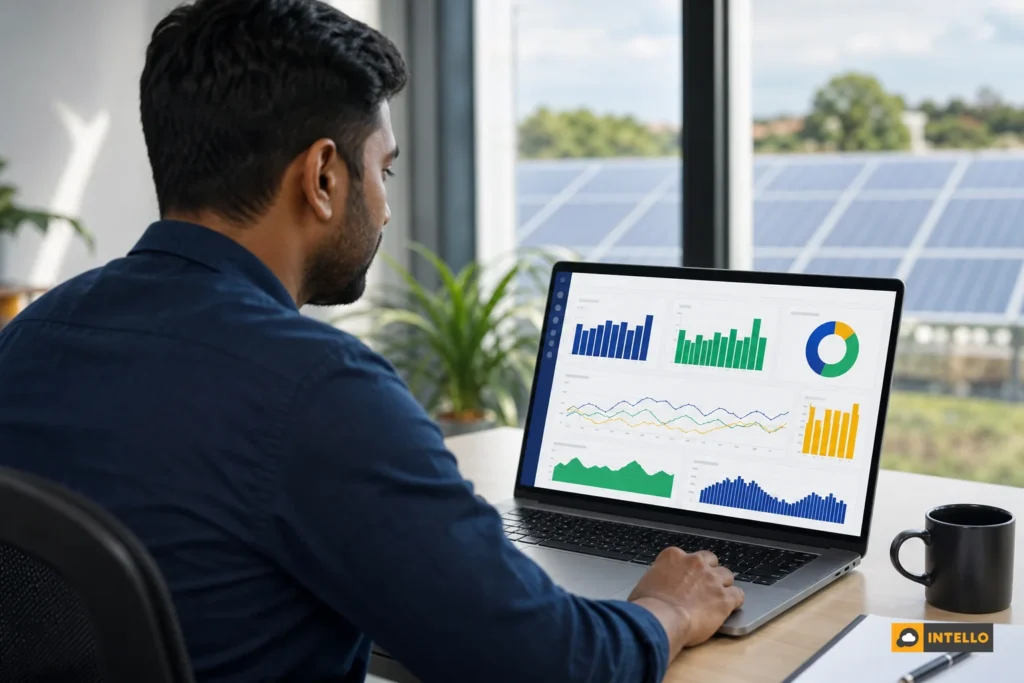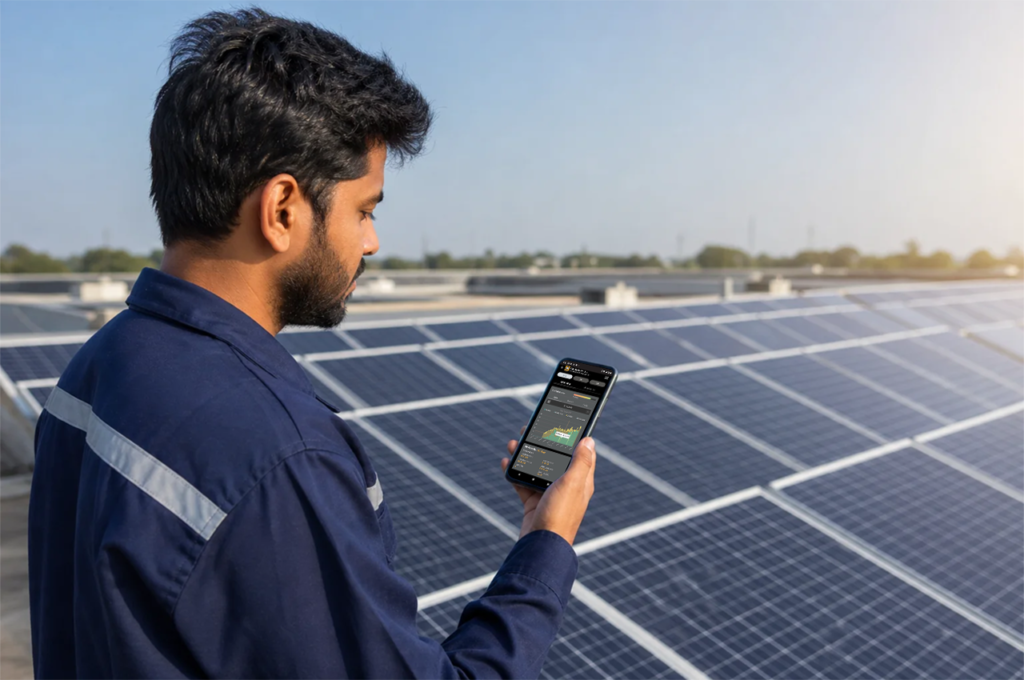
A technician in Aurangabad climbs onto a rooftop at 9 a.m. with a checklist, a camera, and a paper form that needs three signatures before the visit counts as “closed.” By the time he gets back to the office, half the photos are missing, the customer’s signature is smudged, and the office team is calling the site manager to ask what actually happened. This is not a rare story. It is the daily reality for thousands of solar O&M technicians across India who are still working around tools built for buyers, not for the people doing the fieldwork.
Most conversations about a solar monitoring mobile app focus on what a procurement manager wants to see in a demo: a clean dashboard, some graphs, maybe a generation summary. But the technician standing at the inverter with dust on his hands needs something different. He needs the app to confirm he was on-site, capture proof of work in seconds, and sync a report before he moves to the next location. This article looks at the solar monitoring mobile app must-have features from that angle: the field technician’s daily workflow, not the sales pitch.
Why a Technician’s Mobile App Matters More Than a Buyer’s Checklist
Solar asset owners in India often evaluate monitoring platforms based on the dashboard alone. They look at graphs, alerts, and reports without asking a simpler question: does the field team actually use this app, or does it sit unused while technicians rely on WhatsApp and paper forms? A dashboard is only as good as the data feeding it, and that data starts with a technician standing at a panel, an inverter, or a combiner box.
Across states like Maharashtra, Rajasthan, Gujarat, and Tamil Nadu, O&M teams manage sites that range from a 5 kW residential rooftop to a 5 MW ground-mounted plant. The technician visiting each of these sites needs the same core toolkit, whether he is working for an EPC company servicing client installations or an in-house O&M team. The features that matter are the ones that reduce friction between “I did the work” and “the office knows I did the work, with proof.”
This is also where a mobile app connects directly to what asset owners see later on their solar monitoring dashboard. If the field data going in is incomplete or delayed, the dashboard output will always lag behind reality, no matter how sophisticated the analytics look.
1. Location Tagging That Confirms the Technician Was Actually On-Site
GPS-based check-in and check-out is one of the simplest features on this list, and one of the most argued-about when it is missing. Without location tagging, an asset owner has no independent way to confirm a technician actually visited the site during a scheduled maintenance window. Disputes over missed visits, rushed inspections, or “ghost” service calls are common in this industry, and they erode trust between O&M providers and clients.
With location tagging built into the app, every visit gets a timestamped GPS coordinate the moment the technician arrives and again when he leaves. This protects both sides. The O&M provider has proof of service delivery. The asset owner has confidence that the visit actually happened at the scheduled site, not somewhere else entirely.
For O&M providers managing dozens of sites spread across multiple states, this feature becomes operational infrastructure, not just a nice-to-have. It is the same logic behind centralized monitoring for multiple sites: you cannot manage what you cannot verify, and location data is the simplest form of verification available.
2. Timestamped Photo Reports for Before/After Proof
Ask any experienced solar technician what the most common dispute is with a client, and photo documentation almost always comes up. An asset owner asks, “Did you actually clean the panels?” or “Was the string repair completed before or after the fault was reported?” Without timestamped photos, the answer depends on memory and trust. With them, it is a matter of record.
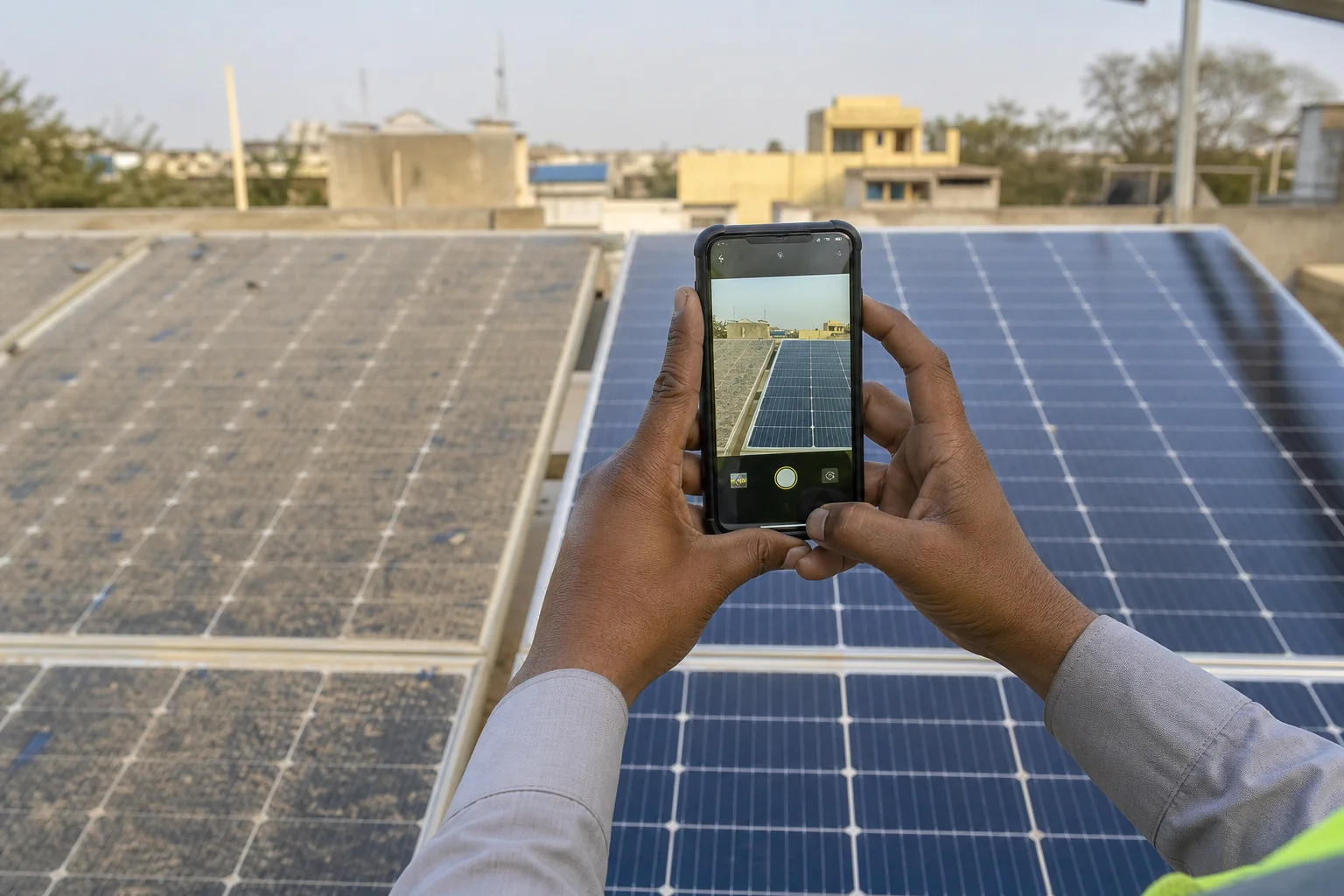
A well-built app captures photos with an embedded timestamp and, ideally, the same GPS tag used for check-in. In daily use, this looks simple: the technician photographs the panels before cleaning, dust and bird droppings visible, then photographs the same row after cleaning. Both images upload with the visit record, so the office and the client see a complete, dated story without any manual paperwork.
This same feature does heavy lifting during warranty claim documentation. Manufacturers and EPCs frequently ask for photographic evidence of a fault condition before approving a claim. A technician who already has timestamped photos from the original site visit skips an entire round of follow-up requests, which can otherwise stretch a claim from weeks into months.
3. Digital Signatures That Close the Loop On-Site
Paper-based sign-off forms create a strange gap in solar maintenance workflows. The technician completes the job, but the paperwork proving completion often takes days to reach the office, if it arrives at all. Forms get left in vehicles, signatures get smudged, and clients sometimes forget they signed anything at all.
A digital signature feature closes this gap immediately. The customer, facility manager, or site representative signs directly on the technician’s phone or tablet before he leaves the site. The signed record attaches to the visit report along with the photos and location data, creating a single, complete file the moment the visit ends.
This matters most for AMC billing cycles and renewal conversations. When an O&M provider can show a client a complete, signed record of every visit across the year, renewal discussions become far easier. There is no ambiguity about how many visits happened or whether the scope of work was completed. For a deeper look at how AMC scope and documentation should work in India, see Solar AMC vs O&M Contract in India: Key Differences.
4. Offline Data Capture for Low-Connectivity Sites
Ground-mounted solar plants in parts of Rajasthan, Madhya Pradesh, and rural Karnataka often sit in areas with weak or inconsistent mobile network coverage. A technician who finishes an inspection only to find his app cannot upload the report because there is no signal has effectively lost that data, unless the app was built to handle this from the start.
A must-have feature here is local data storage with automatic sync once connectivity returns. The technician completes his checklist, captures photos, tags the location, and collects a signature, all of which save to the device. When he drives back into network range, the app syncs everything to the central system without requiring him to redo any part of the visit.
This sounds like a minor technical detail, but for O&M providers servicing remote ground-mounted assets, it is the difference between reliable field data and gaps in the maintenance record that show up months later during an audit or a dispute.
5. Live Fault Alerts Pushed Directly to the Technician’s Phone
Solar downtime is expensive, and the gap between a fault occurring and a technician responding to it is where most of that cost accumulates. A monitoring app that pushes live alerts, string faults, inverter trips, or communication loss, directly to the assigned technician’s phone changes how quickly a team can respond.
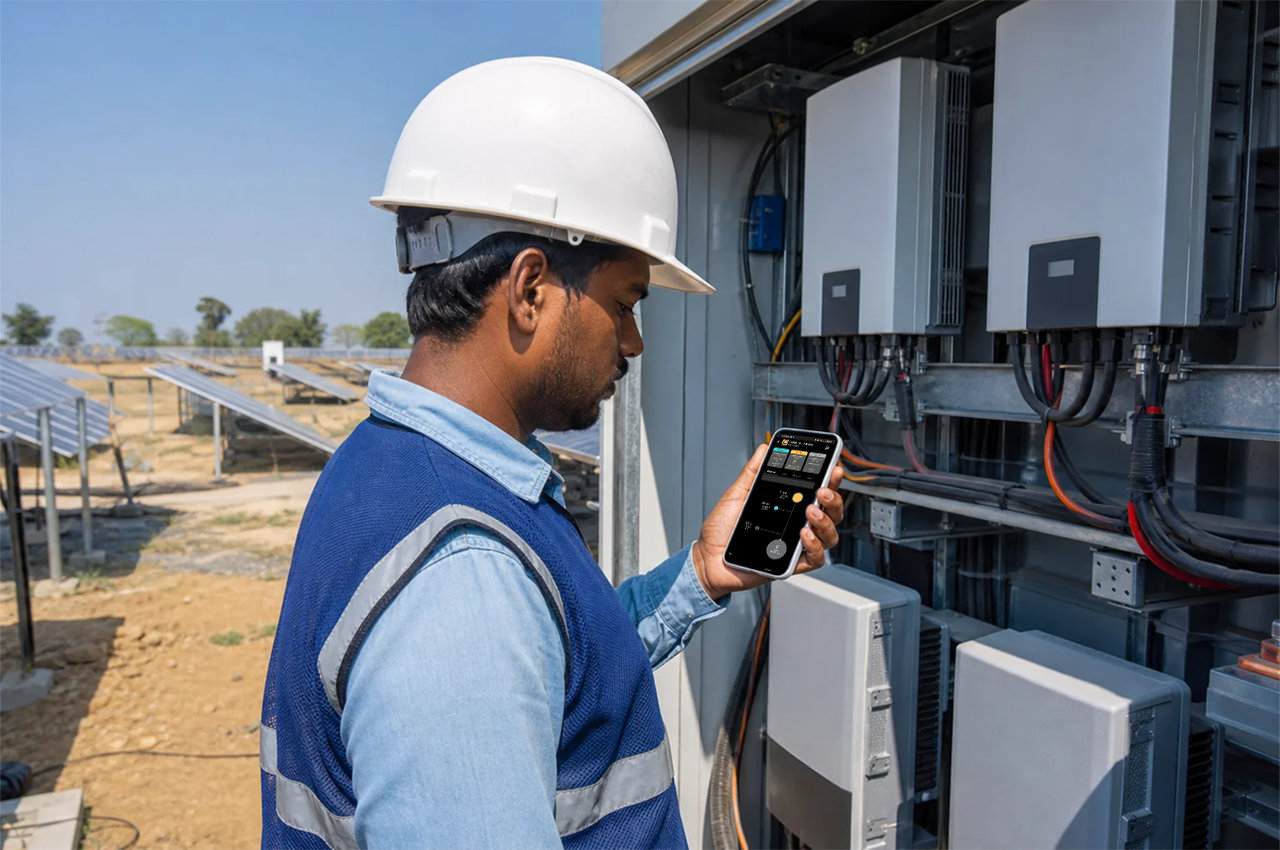
In practice, this means a technician can see that String 4 on Inverter 2 has dropped output before he even reaches the site, based on an alert generated by the RTU or datalogger feeding the monitoring platform. He can prioritize which site to visit first if he is managing multiple locations in a day, and he arrives already knowing which combiner box or string to inspect first, instead of starting from scratch.
This kind of proactive alerting is central to reducing solar downtime and catching solar string faults early, before they compound into larger losses. If you want a broader view of how alerting fits into system selection, How to Choose a Solar Monitoring System in 2026 covers this in more depth. And if you are trying to decide between hardware options that generate these alerts in the first place, RTU vs Datalogger Solar Monitoring Comparison is a useful companion read.
6. Digital Checklists Mapped to AMC Scope of Work
Preventive maintenance only works if it is consistent. Inverter servicing, string balancing, hardware tightening, and panel cleaning all need to happen on schedule and in the correct sequence, visit after visit, regardless of which technician is assigned to the site. A generic checklist on paper is easy to skip steps on, especially when a technician is rushing between multiple sites in a day.
A mobile app with digital checklists tied directly to the AMC scope of work removes this guesswork. Each visit type, whether it is a routine cleaning, a quarterly preventive maintenance check, or a post-monsoon inspection, comes with its own structured task list inside the app. The technician cannot mark the visit complete without addressing each item, and the completed checklist becomes part of the permanent site record.
This standardization matters more than it might seem for larger O&M providers with dozens of technicians working across different regions. It ensures a rooftop system in Pune gets the same quality of preventive maintenance as a ground-mounted plant in Gujarat, because the checklist, not individual habit, drives the work.
7. Ticket and Work Order Management in One Place
When a fault is detected, whether through a live alert or a client complaint, someone has to log it, assign it, track its progress, and confirm it is resolved. Many O&M teams still manage this through a mix of phone calls, spreadsheets, and email threads, which creates delays and makes it hard to know the real status of an open issue at any given moment.
A mobile app that includes ticket and work order management lets a technician receive an assigned ticket, update its status from the field, attach photos and notes directly to that ticket, and close it out once the fix is verified. The asset owner or EPC client can see the same ticket update in near real time, without needing to call the O&M provider’s office for a status check.
This feature is particularly valuable for solar O&M companies managing warranty claims, where a slow paper trail can delay a claim by weeks. Faster ticket resolution directly supports better solar ROI for the asset owner, since every day a fault sits unresolved is a day of lost generation.
8. Historical Site Data Accessible From the Field
A technician arriving at a site cold, with no context on its maintenance history, is working at a disadvantage. If a string has shown recurring imbalance over the past three visits, or if a particular inverter has a pattern of nuisance trips, that history should be available on the technician’s phone before he starts diagnosing the problem in front of him.
Apps that give field staff access to historical performance data, past fault records, and previous cleaning schedules let technicians diagnose recurring issues faster. Instead of starting an investigation from zero, a technician can compare current readings against past trends and identify whether a fault is new or part of an ongoing pattern, such as gradual solar degradation or a recurring string imbalance.
This reduces repeat visits, which matters both for cost control and for asset owners who want faster resolution rather than a cycle of inspect-diagnose-return-fix that stretches across multiple weeks.
How These Features Translate Into Fewer Disputes and Faster ROI for Asset Owners
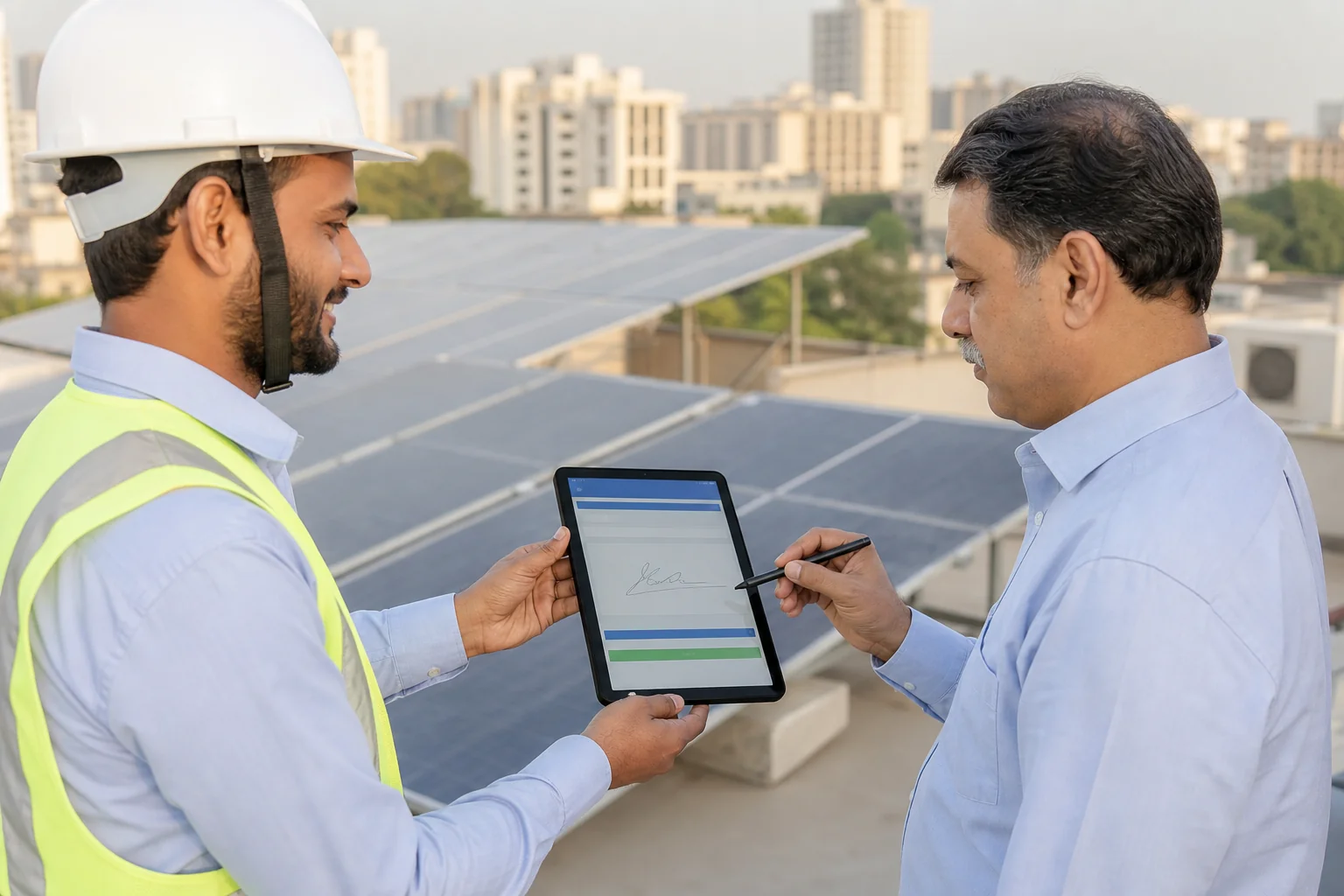
Every feature on this list solves a specific field problem, but together they solve a business problem that affects every solar asset owner in India: the gap between what maintenance work is supposed to happen and what actually gets documented. Location tagging confirms visits happened. Photo timestamps prove work was completed to standard. Digital signatures close the loop without paper delays. Offline capture protects data at remote sites. Live alerts speed up fault response. Checklists standardize preventive maintenance. Ticket management keeps repairs moving. Historical data speeds up diagnosis.
Intello built its mobile app around exactly this field-first logic, capturing location, timestamp, customer signatures, and photographic reports as a standard part of every site visit, whether it is a residential rooftop AMC visit or a preventive maintenance check at a ground-mounted commercial plant. For EPC companies servicing client installations across multiple states, or for commercial and residential asset owners who simply want proof that their solar investment is being properly maintained, this level of field documentation is what separates a monitoring platform from a genuinely integrated O&M provider.
If you are currently comparing providers or trying to decide whether to keep O&M in-house, it is worth reading In-House vs Outsourced Solar O&M in India 2026 alongside this piece, since the technology a provider’s field team uses is often a better indicator of service quality than the sales pitch. Regional maintenance needs also vary considerably, and the Solar Cleaning India regional guide by climate zone is a useful reference if you manage sites across different parts of the country.
Frequently Asked Questions
What is a solar monitoring mobile app used for?
A solar monitoring mobile app is the field-facing counterpart to a monitoring dashboard. It lets technicians log site visits, capture photo evidence, record GPS location, collect digital signatures, receive fault alerts, and manage work orders directly from a phone or tablet while on-site, rather than relying on paper forms or delayed office reporting.
Do mobile apps work without internet at remote solar sites?
A well-designed app should support offline data capture. Technicians can complete checklists, take photos, and record signatures without a live connection, and the app syncs everything automatically once network coverage returns. This is essential for ground-mounted plants in low-connectivity areas.
How do photo timestamps help with warranty claims?
Manufacturers and EPCs typically require photographic proof of a fault condition before approving a warranty claim. Timestamped photos taken at the moment of inspection remove ambiguity about when the issue occurred and speed up the claims process, since the evidence is already documented instead of requested after the fact. See the step-by-step warranty claim process guide for more detail on how this documentation is used.
Is a mobile app different from a solar monitoring dashboard?
Yes. A dashboard is typically used by asset owners or O&M managers to view performance data, alerts, and reports remotely. A mobile app is built for field technicians actively working on-site, capturing the ground-level data, photos, signatures, and checklists, that ultimately feeds into that dashboard.
Why does location tagging matter for AMC contracts?
Location tagging gives both the O&M provider and the asset owner independent proof that a scheduled visit actually took place at the correct site. It reduces disputes over missed or incomplete visits and supports transparent AMC reporting.
Choosing a monitoring platform based on dashboard features alone only tells half the story. The features that make the biggest difference to solar panel efficiency, uptime, and dispute-free service are often the ones your field technicians use every single day. If your current O&M setup still relies on paper forms, missed photos, or delayed sign-offs, it may be time to see what an integrated platform looks like in practice. Request a quote from Intello to discuss how our monitoring and maintenance platform, backed by over 150 solar experts across India, supports field teams with the tools they actually use. Existing clients can check current site activity anytime through the Portal Login, and if you want to understand more about how Intello approaches solar O&M end to end, you can learn more about our approach or simply contact us to discuss your site’s specific needs.