
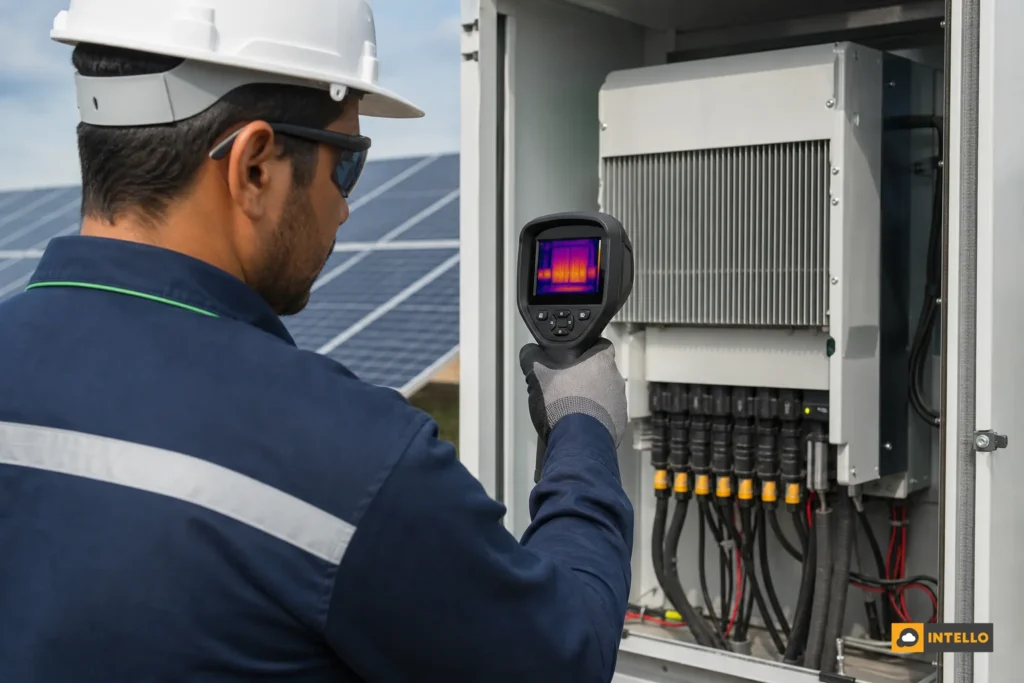
A quarterly preventive maintenance visit at a 2 MW ground-mounted solar plant in Maharashtra caught a problem early. A technician found an overheating inverter module. It sat three weeks before it would have failed for good. The technician’s thermal scan flagged a hot IGBT board, a key power-switching part inside the inverter. The team swapped it during a scheduled window. The plant never lost a single day of generation. This case study preventive maintenance saved solar plant story shows what that early catch was actually worth.
Key Takeaways
- Early detection window: Thermal imaging during a routine visit found an overheating IGBT board about three weeks before it would have failed.
- Cost avoided: A reactive inverter card swap usually means a multi-day outage plus a rushed part order. This was a same-week scheduled fix instead.
- Inverters are the highest-risk part: Inverters cause 30-40% of solar outages, industry data shows. That makes them the natural focus of any preventive maintenance plan.
- Proactive-to-reactive ratio matters: Best practice says to spend about 80% of maintenance hours on preventive work. Only 20% should go to reactive repairs.
- Monitoring plus boots on the ground wins: The IoT dashboard flagged a mild efficiency dip first. The on-site technician’s thermal camera confirmed the cause. Neither tool alone would have caught it in time.
At a Glance: The Case Study Numbers
| Detail | Value |
|---|---|
| Plant type and size | Ground-mounted, commercial, 2 MW |
| Location | Maharashtra, India |
| Maintenance cadence | Quarterly preventive visits plus continuous remote monitoring |
| Fault found | Overheating IGBT module inside a string inverter |
| Detection method | Thermal imaging camera during scheduled inspection, confirmed by dashboard efficiency dip alert |
| Repair action | Scheduled board replacement within the same maintenance window |
| Outage avoided | Zero unplanned downtime days |
| Comparable industry inverter failure share | 30-40% of outages, per Blu Banyan |
The Plant: A 2 MW Ground-Mounted Site Under Routine Watch
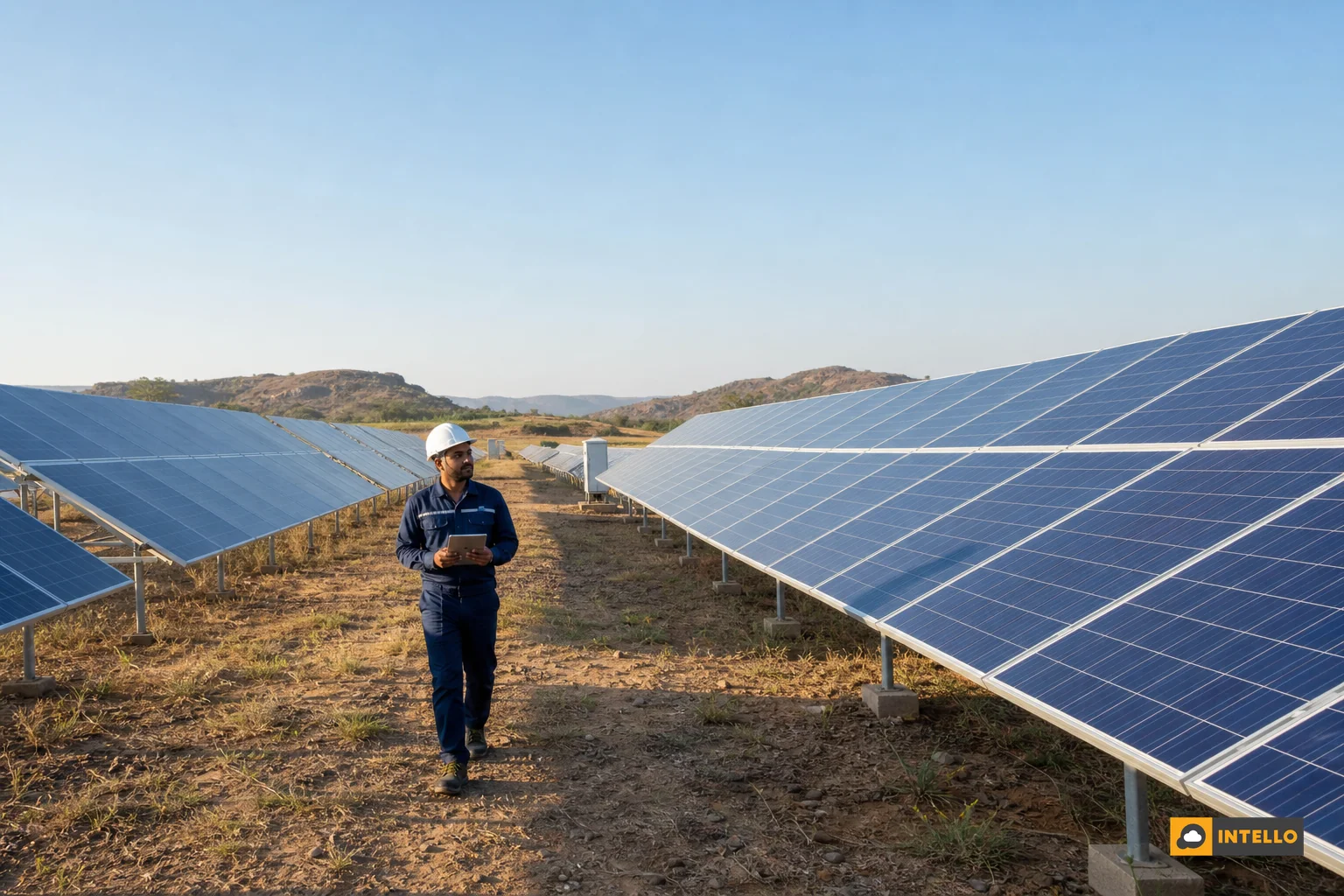
The site sits on open land outside a mid-sized Maharashtra town. It feeds a commercial power purchase deal. It runs on central string inverters, tied into a remote monitoring dashboard. That dashboard reports generation and string-level data around the clock.
The owner had signed up for quarterly on-site preventive maintenance alongside the digital monitoring. That combination made the difference here. A dashboard alone flags a drop in numbers. It rarely tells you which physical part is about to fail.
[[ ]]
]]
Ground-mounted plants face their own stresses compared to rooftop systems. They deal with more dust, longer DC cable runs, and inverter cabinets sitting in direct sun most of the day. Heat cycling on outdoor inverter enclosures is a common early warning sign technicians look for. That is exactly what showed up here. For a broader look at what makes ground-mounted upkeep different, see this ground-mounted solar plant maintenance checklist.
What the Preventive Maintenance Visit Found
The technician’s quarterly checklist included a thermal scan of every inverter cabinet. This is standard procedure, whether or not the dashboard flagged anything unusual. One string inverter’s heat sink ran noticeably hotter than its neighbors. A visible hot spot showed up around one IGBT module on the thermal camera.
[[]]
The team then checked the monitoring dashboard. It showed a small but real dip in that inverter’s conversion efficiency over the previous two weeks. That change was too subtle to trigger an automatic alert on its own. Paired with the thermal reading, it pointed clearly to a failing power module, not a wiring or firmware issue.
Left alone, an overheating IGBT usually gets worse until it shorts out. Or the inverter’s built-in safety system shuts the unit down entirely, often during peak sun hours when the loss hurts most. Catching this while the unit still worked, just running hot, is the whole point of a preventive maintenance visit.
Why Inverters Fail Without Warning (And How This One Didn’t)
Inverters carry the heaviest electrical load of any part in a solar plant. They switch DC power to AC power nonstop, under sun-driven heat. That mix of heat stress and electrical stress is why inverters cause 30-40% of solar plant outages, more than any other single cause, according to Blu Banyan’s analysis of solar panel lifecycle data.
Most owners only learn an inverter is struggling once it stops producing entirely. A reactive callout at that point means a manual diagnostic visit. Blu Banyan estimates that costs around $500 per trip, before any repair cost is even counted. And that assumes the team diagnoses the problem correctly on the first visit.
A fixed inverter servicing schedule changes that sequence. Thermal scans, connection checks, and fan or filter inspections happen on a calendar, not in response to a breakdown. Warning signs like a hot IGBT module get caught while the unit still generates power, not after it goes silent.
What Would a Reactive Repair Have Cost?
A reactive repair would have cost more in lost generation than in parts. The failure likely would have surfaced mid-cycle, with no spare board on site. That gap between a scheduled fix and an emergency one is where preventive maintenance pays for itself.
| Factor | Reactive repair (after failure) | Preventive fix (this case) |
|---|---|---|
| Diagnosis time | Site visit plus troubleshooting, often 1-2 days | Identified during a scheduled inspection, same day |
| Downtime while awaiting parts | Days to weeks, depending on spare board availability | None; part replaced in the same maintenance window |
| Generation loss | Full inverter string offline until repaired | Zero, string stayed online throughout |
| Diagnostic visit cost | ~$500 per manual visit, per Blu Banyan | Included in the standard quarterly visit |
| Risk of secondary damage | Higher, an overheated IGBT can damage adjacent components before it trips | Low, module swapped before failure |
The gap widens further on a 2 MW plant. Even one string offline during peak sun hours removes a real chunk of that day’s revenue. That is the ROI case for preventive maintenance in one table. A scheduled visit costs little next to what an unplanned string outage costs on a commercial-scale plant.
How Preventive Maintenance Actually Caught This Early
Two systems worked together here, not one. The remote monitoring platform logged a small efficiency dip. That dip alone would not have triggered a standalone alert. The on-site technician’s thermal imaging camera, run as part of a routine checklist, turned that unclear signal into a confirmed fault.
This mirrors a pattern seen elsewhere in Indian solar O&M (operations and maintenance). In a separate case study from Agni Solar Systems, a 996 kWp rooftop plant in Chakan, Pune recovered 41.1% of lost generation. Technicians traced severe soiling to industrial varnish fumes and applied a targeted chemical cleaning fix. In both cases, the fix only happened because someone went looking for a specific, physical cause instead of accepting an unexplained dip in the numbers.
Industry best practice says roughly 80% of maintenance hours should go toward proactive, preventive work. Only 20% should go toward reacting to breakdowns. Plants that flip that ratio, spending most of their time firefighting, tend to rack up avoidable downtime and shorten equipment life. Continuous, IoT-enabled monitoring paired with scheduled site visits makes an 80/20 split possible at scale. You can see how the underlying sensor technology supports this in this guide on how IoT sensors detect solar faults before they cost you.
What Is Solar Preventive Maintenance, and How Often Should It Happen?
Solar preventive maintenance is a scheduled program of inspections, cleaning, and hardware checks. It aims to catch faults before they cause an outage, rather than fixing equipment after it fails. For most commercial and ground-mounted plants in India, that means quarterly on-site visits at minimum, backed by continuous remote monitoring in between.
The exact schedule depends on plant size, local dust and heat conditions, and inverter age. A checklist typically covers string balancing, module cleaning, hardware tightening, thermal scans of inverter cabinets, and DC cable inspection. Cleaning frequency varies widely by region. A plant in a dusty industrial belt may need monthly cleaning, while one in a cleaner coastal zone can go longer between washes. For a city-by-city breakdown, see this regional guide to solar cleaning by climate zone.
Soiling alone can cut annual generation by up to 25% if left unmanaged, based on figures cited by Blu Banyan. That is why cleaning schedules sit alongside inverter servicing as a core part of any preventive program, not an afterthought.
How Do You Calculate the ROI of Preventive Maintenance?
The ROI (return on investment) of preventive maintenance equals the money you save by catching a fault early, minus the fee for the scheduled visit itself. In this case, the savings were a multi-day string outage plus an emergency callout, avoided by a routine quarterly inspection already on the contract.
Scale that logic across a portfolio and the math gets more compelling. A separate 495 kW industrial rooftop O&M project in Pune shows the same idea applied continuously. Steady plant performance depends on maintaining generation reliability month over month, not chasing faults after the fact. Ground-mounted plants in water-scarce regions add another layer to this math. A 40 MW project in Rajkot, Gujarat switched to waterless cleaning because reactive logistics for water-based cleaning were becoming unworkable at scale.
None of this removes every risk. Even the best preventive schedule can miss a fault that develops between visits. That is exactly why continuous IoT monitoring between site inspections matters as much as the inspection itself.
Frequently Asked Questions
What is solar panel maintenance and why does it matter for commercial plants?
Solar panel maintenance covers cleaning, electrical inspection, and component servicing that keeps a plant generating at its expected output. For commercial plants, it matters because even a small, unnoticed drop in performance adds up to major lost revenue over a year.
How does solar service differ from a one-time repair visit?
Solar service is an ongoing, scheduled relationship covering cleaning, inspection, and servicing on a calendar. A one-time repair visit only happens after something has already failed. The case in this article shows why the scheduled model catches problems the reactive one misses entirely.
Can solar monitoring apps alone prevent inverter failure?
No, a monitoring app alone usually cannot prevent inverter failure. Subtle efficiency dips don’t always cross an automated alert threshold. This case needed a technician’s physical thermal scan to confirm what the dashboard only hinted at.
How often should ground-mounted solar plants be serviced in India?
Ground-mounted plants in India typically need on-site preventive maintenance at least quarterly. High-dust or high-heat regions need more frequent visits. Continuous remote monitoring should run between visits to catch changes as they happen, rather than waiting for the next scheduled check.
A plant owner reading this case study has a clear next step. Check when your inverters were last thermally scanned. Ask whether your current maintenance contract actually covers that kind of proactive inspection, or only responds after a fault trips. If you are weighing what belongs in that contract, this comparison of Solar AMC vs O&M contracts in India is a useful starting point. This breakdown of preventive versus breakdown maintenance costs lays out the numbers in more detail.
Intello runs quarterly preventive visits backed by round-the-clock IoT monitoring across commercial and ground-mounted solar plants in India. That is the exact combination that caught this fault before it became an outage. Request a quote to see what a preventive maintenance schedule would look like for your plant. Or log in to the portal if you’re already an Intello client checking your latest inspection report. To learn more about how the monitoring and maintenance platform fits together, visit the about page.
