Three years in, a solar inverter starts telling you things: a louder fan, a fault code that keeps reappearing, a generation number that looks a little off. Most solar inverter problems after 3 years trace back to five causes: rising heat and fan wear, recurring fault codes, falling generation, unstable grid voltage, and warranty status nobody checked. None of them are emergencies if you catch them early.
Key Takeaways
- Year 3 is the inflection point: string inverters are rated for 10-15 years, but the first real symptoms typically appear well before that, often between years 2 and 4.
- Fault codes matter more than one-off glitches: a code that reappears more than once or twice a week points to a developing fault, not a fluke.
- A generation drop past 15% is a hard signal: quietly degrading inverters can shed 10-15% of output before failing outright, so catching the decline early protects your bill savings.
- Warranty coverage is not automatic: most Indian inverter warranties start from the manufacture date, not the installation date, which quietly shortens effective coverage.
- Preventive maintenance changes the outcome: a monitored system flags a fault the same day; an unmonitored one is often discovered only when the bill spikes.
At a Glance: Solar Inverter Problems After 3 Years
| Symptom | Likely Cause | Typical Action |
|---|---|---|
| Fan noise or heat increase | Dust in vents, aging fan bearing, capacitor stress | Clean vents; inspect if noise persists beyond a week |
| Recurring fault code | Loose DC connection, grounding issue, firmware bug | Log the code, restart once, call a technician if it repeats |
| Generation drop over 15% | Failing power electronics, string fault, MPPT drift | Compare to monitoring baseline; schedule inspection |
| Frequent tripping | Unstable grid voltage, undersized wiring, overheating | Check grid voltage logs; consult installer on settings |
| Solid or flashing red LED | Active fault condition | Do not ignore; note the pattern and contact support |
| App shows no data | Communication failure, dongle or Wi-Fi drop | Restart router/dongle; check RTU or datalogger connection |
| Warranty status unclear | No record kept since installation | Locate invoice, confirm registration date with manufacturer |
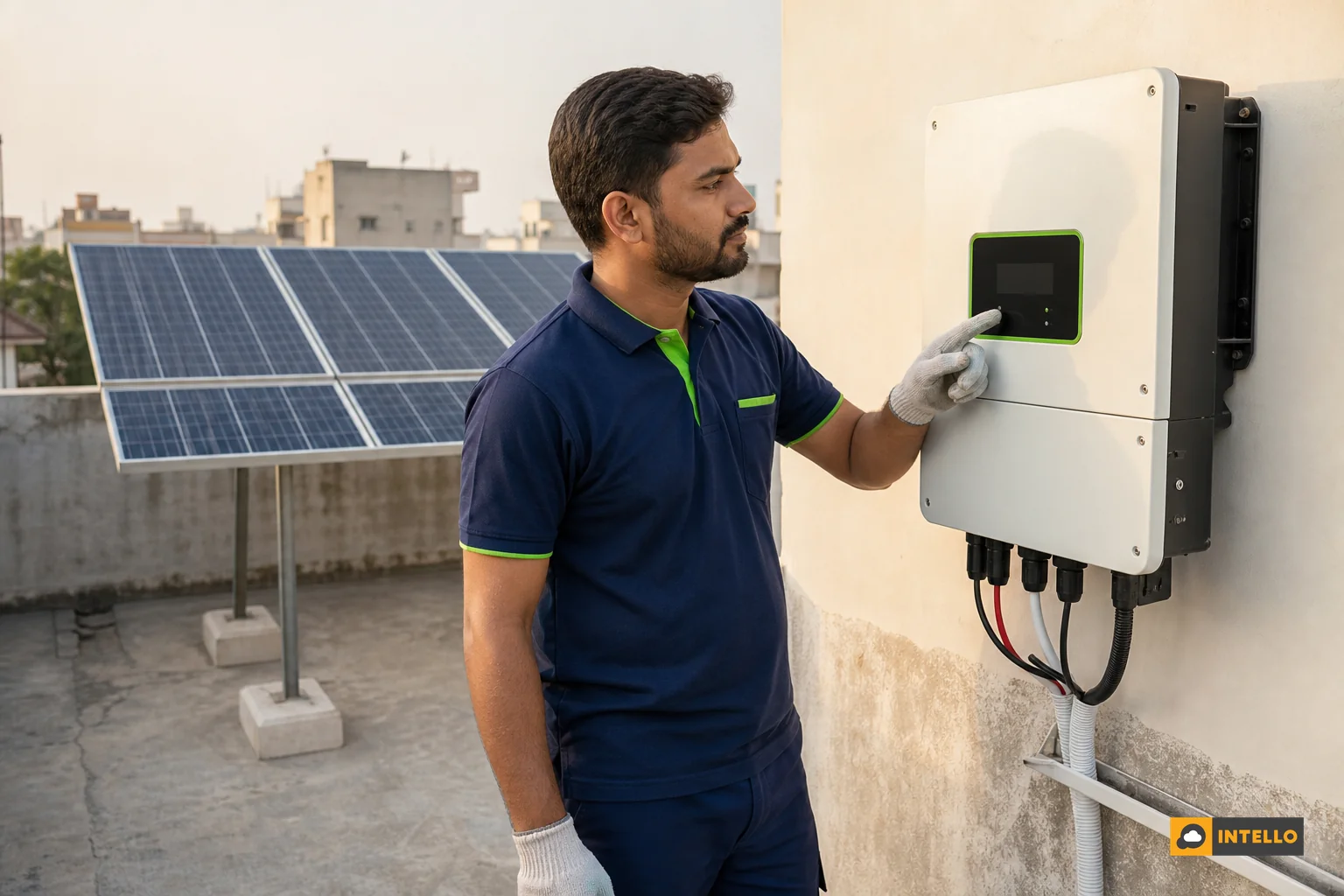
Why the 3-Year Mark Matters for Solar Inverters
String inverters, the type installed in most Indian homes between 2010 and 2020, carry a typical lifespan of 10 to 15 years. That sounds far off at year 3, but internal components don’t age at a uniform rate. Capacitors and cooling fans, the parts under the most electrical and thermal stress, are usually the first to show wear, often within the first three to five years of continuous outdoor duty.
This is also when the warranty conversation gets real. Many Indian inverter warranties are marketed as five or ten years, but the clock often starts from manufacture, not installation, which quietly eats into the coverage window before a homeowner ever notices a problem. If your system has been running for three years without a single documented check, that’s the gap worth closing now, before a fault turns into a dispute over who pays.
For a deeper walk-through of individual fault types, see this troubleshooting guide for asset owners.
1. Fan Noise and Overheating
A little fan hum is normal on a hot afternoon. A noise that gets louder every month, or a case that’s warm to the touch even in cooler weather, usually means the cooling system is losing ground.
Dust buildup in the vents is the most common and cheapest cause to fix. Wipe the exterior, check that nothing is blocking airflow, and see if the noise settles. If it doesn’t, a capacitor or fan bearing may be wearing out, and that’s worth a technician visit rather than a DIY fix, since it involves opening a live electrical enclosure.
2. Fault Codes and Warning Lights
Every inverter has a status LED, and most manufacturers keep the same basic color logic: green for healthy, amber or flashing red for a detected fault, solid red for something more serious. This LED is the single most reliable early indicator that something has changed inside the unit.
A code that shows up once, after a grid blip or a brief power cut, isn’t necessarily a problem. A code that returns two or more times a week is different. That pattern usually points to a loose DC connection, a grounding issue, or an MPPT tracking fault that’s only getting worse.
If your inverter has stopped reporting to its monitoring app at all, that’s a separate issue: a communication failure between the inverter and its dongle or RTU. Our guide on solar monitoring dongles covers what to check first.
3. Falling Generation Output
A quietly failing inverter often shows up as a number, not a sound. Daily generation trends a little lower than it used to, without a change in weather or shading.
The decline threshold to watch for is a drop of more than 15% against your usual baseline. Below that, it’s often soiling, shading, or a seasonal irradiance dip. Above it, especially if sustained over a few weeks, the inverter’s power electronics may be degrading.
Before assuming it’s the inverter, rule out the two most common lookalikes: dust accumulation and shadow patterns from new construction or tree growth. Our shading loss diagnosis guide and the broader piece on why generation drops suddenly walk through the checks in order.
4. Voltage Fluctuations and Tripping
In many Indian localities, grid voltage swings more than inverters are designed to tolerate gracefully. When that happens, the inverter trips off as a protective measure, sometimes several times a day.
Occasional tripping during a storm or a known local outage isn’t unusual. Repeated tripping on a clear, stable day is different, and it puts extra thermal and electrical stress on the same components already under strain at year 3. If tripping is frequent, ask your installer or O&M provider to check the inverter’s voltage window settings against your local grid conditions, since these can sometimes be adjusted within safe limits.
5. Capacitor Wear and Component Aging
Capacitors are the part of a string inverter most likely to degrade first, and India’s climate doesn’t help. Heat, humidity during monsoon, and dust all accelerate the electrolytic breakdown inside these components.
This is largely invisible until it isn’t: a slowly rising hum, a slightly warmer casing, then a fault code, then a failure. Preventive checks that measure capacitor health and clean internal dust buildup are one of the few things that genuinely extend an inverter’s working life past the standard 10-to-15-year range.
6. Warranty and Spare Parts Status
It’s worth pulling out your original invoice at year 3, not year 9. Confirm the registration date with the manufacturer, check whether the warranty is manufacture-dated or installation-dated, and note what it actually covers: parts, labour, or both.
Systems installed by companies that have since closed, or running on non-BIS or discontinued inverter models, face a harder version of this problem: no spare parts, no warranty honoured, and a repair that turns into a full replacement by default. Checking this now, while the system is still running fine, avoids a scramble later. If a claim does get denied, our warranty claim process guide covers the documentation you’ll need.
Is It Time to Repair or Replace? A Simple Decision Rule
Run a quick check across five points: generation decline past 15%, fault codes more than twice a week, rising heat or noise, expired or unclear warranty, and discontinued spare parts. Repair if only one point fails and the unit is still under warranty. Replace if three or more fail together.
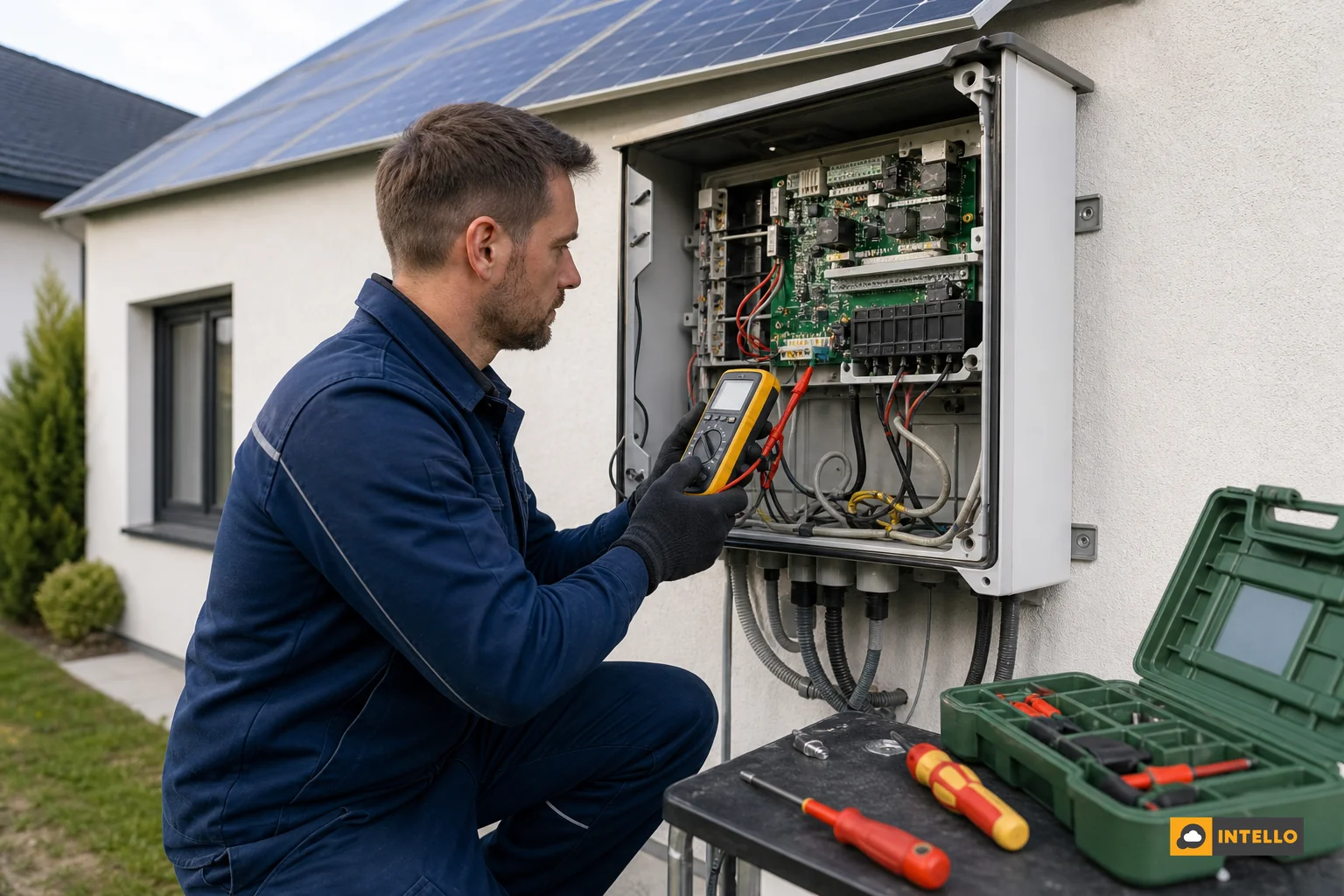
A single failed check, like an isolated fault code that clears after a reset, usually means a repair or a firmware update is enough. Multiple failed checks stacking up together, especially with an expired warranty, tips the balance toward replacement, since patching an aging unit repeatedly often costs more over two years than one clean swap. For a fuller framework, see our repair or replace decision guide.
How Preventive Maintenance Changes the Picture
None of these problems are hard to catch. They’re hard to catch late, when a homeowner only checks the app after noticing a high electricity bill. Remote monitoring flips that timeline: a fault code, a generation dip, or a communication drop gets flagged the same day it happens, not weeks later.
This is the gap an Annual Maintenance Contract (AMC) is built to close. A residential AMC typically bundles inverter servicing, string balancing, panel cleaning, and hardware checks on a fixed schedule, timed around India’s climate stress points: pre-monsoon dust load, post-monsoon humidity, and peak summer heat. Intello runs this through an IoT-enabled dashboard and an on-ground technician network, so a fault at year 3 gets a documented visit rather than a guess.
If you’re weighing whether to manage this in-house or bring in a provider, our comparison of in-house vs outsourced solar O&M in India lays out the trade-offs by system size and location.
Homeowners already on an AMC can check inverter status anytime through the Intello portal login, without waiting for a scheduled visit to confirm something looks off.
Frequently Asked Questions
How does a solar tracking mechanism work?
A solar tracking mechanism tilts panels through the day to follow the sun’s angle, which is separate from the inverter issues covered here. Most Indian rooftop residential systems use fixed-tilt mounting rather than trackers, so tracking faults are rare on the systems this article addresses.
How long do solar inverters actually last in India?
String inverters generally last 10 to 15 years, though installation quality, ventilation, and how well the unit is maintained all affect where in that range a given system lands. Units that run hot with poor airflow tend toward the shorter end.
Is fan noise from my inverter always a problem?
Not always. A soft hum on a hot day is normal cooling behaviour. Steadily rising noise over weeks, or noise combined with a warm casing, is the pattern worth having checked rather than the noise alone.
What does a solid red light on my inverter mean?
A solid or flashing red LED means the inverter has detected an active fault condition. It should not be ignored, even if the system still appears to be generating power, since some faults get worse the longer they run unaddressed.
Can I just wait if my inverter is still under warranty?
A system still covered by an active warranty can often afford to wait out a minor early warning sign, since the manufacturer bears the repair cost either way. Once the warranty has lapsed, the same symptom is worth acting on sooner, before it becomes a full replacement.
A three-year-old inverter that’s showing one or two of these signs isn’t a crisis, it’s a checklist. Confirm the warranty, log the fault pattern, and compare current generation against your own baseline before deciding anything. If you’d rather have that checking done for you on a fixed schedule, request a quote for a residential AMC, or learn more about how Intello’s monitoring and maintenance model works before your inverter tells you the hard way.