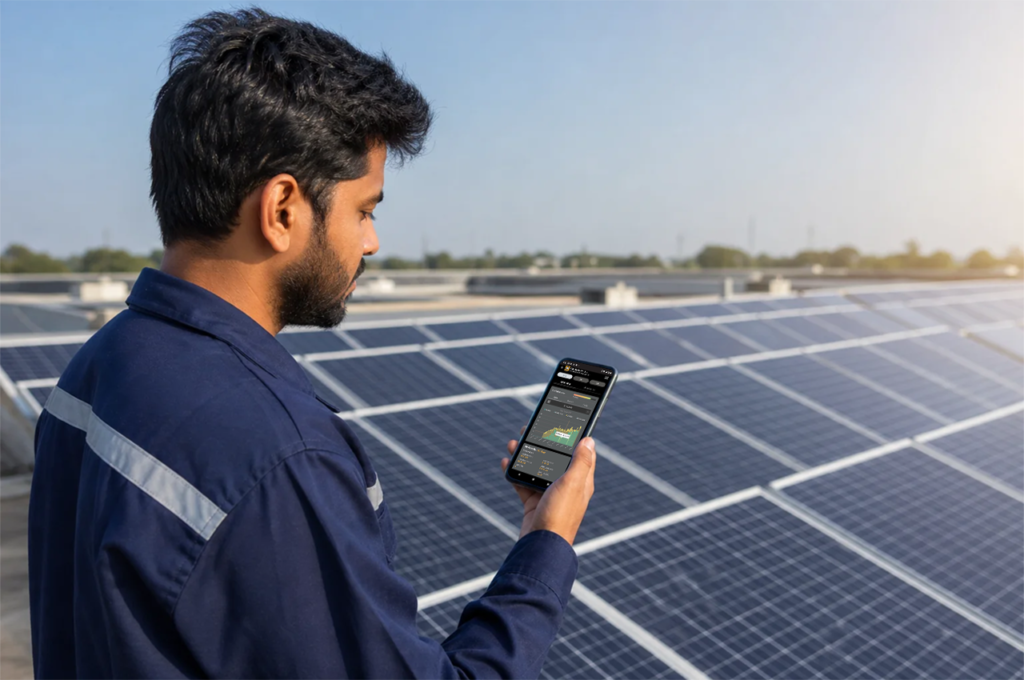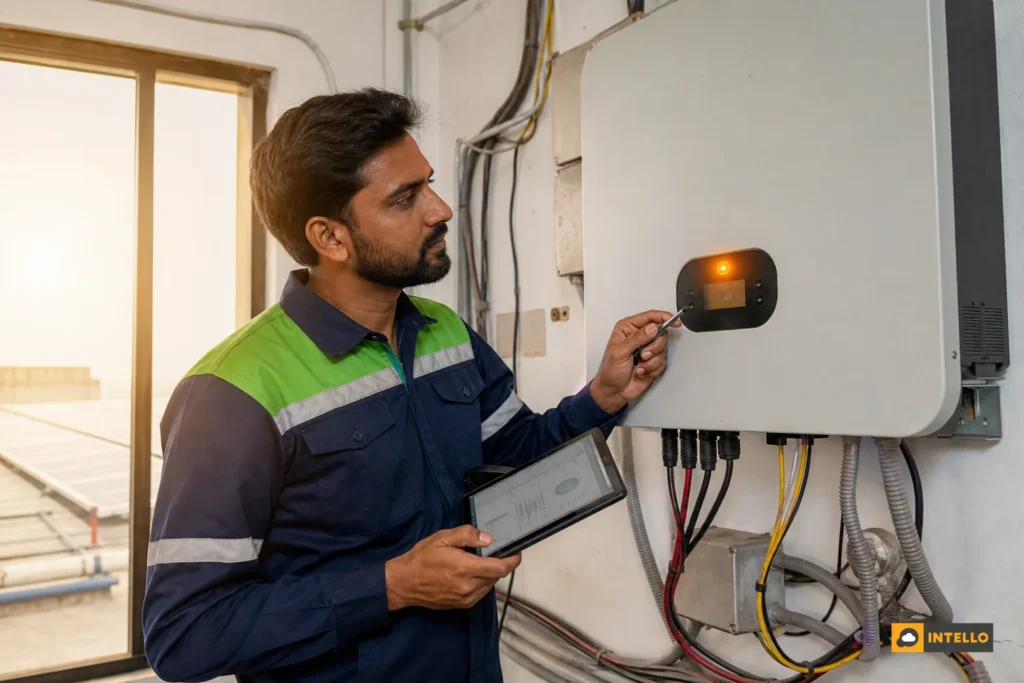
A sudden drop in solar generation is rarely the panels aging overnight. In most cases it traces back to one of seven fixable issues: new shading, soiling buildup, a string fault, inverter derating, grid curtailment, a DG-PV synchronisation glitch, or isolated module damage. Checking these in order, starting with monitoring data, usually finds the cause within a day.
Key Takeaways
- Check monitoring data before the panels: String-level and inverter-level logs usually isolate the fault location faster than a physical walk-through.
- Shading and soiling explain most cases: A new construction, a growing tree, or three weeks without cleaning can cut output by 10-25% overnight-feeling drops that show up gradually.
- A one-string drop is a fault, not degradation: Normal panel degradation is 0.5-0.8% a year; a sudden 10%+ dip points to a connector, fuse, or cable issue, not aging cells.
- Grid-side causes are invisible without data: Voltage rise on the DISCOM feeder can trigger inverter curtailment that looks identical to an equipment fault from the owner’s side.
- Escalation order matters: Rule out shading, soiling, and inverter fault codes first, since those are same-day fixes, before assuming a warranty claim is needed.
At a Glance: Seven Causes and How to Check Each
| Cause | How to Confirm It | Typical Fix Time |
|---|---|---|
| New or growing shading | Walk the site at different hours; compare string yields | Same day to a few weeks (pruning, panel relocation) |
| Heavy soiling | Visual inspection; compare with last cleaning date | Same day (cleaning visit) |
| String fault or loose DC connection | String-level monitoring shows one string flatlined | 1-2 days |
| Inverter derating | Inverter display or dashboard shows temperature/fault code | Same day to 1 week |
| Grid curtailment or voltage rise | Inverter logs show export limiting despite clear sky | Depends on DISCOM; device-level fix possible |
| DG-PV synchronisation issue | Drop coincides with generator switching on | 1-3 days (controller tuning) |
| Module or hotspot damage | Thermal imaging or IV curve test on the affected string | Warranty claim timeline, weeks |
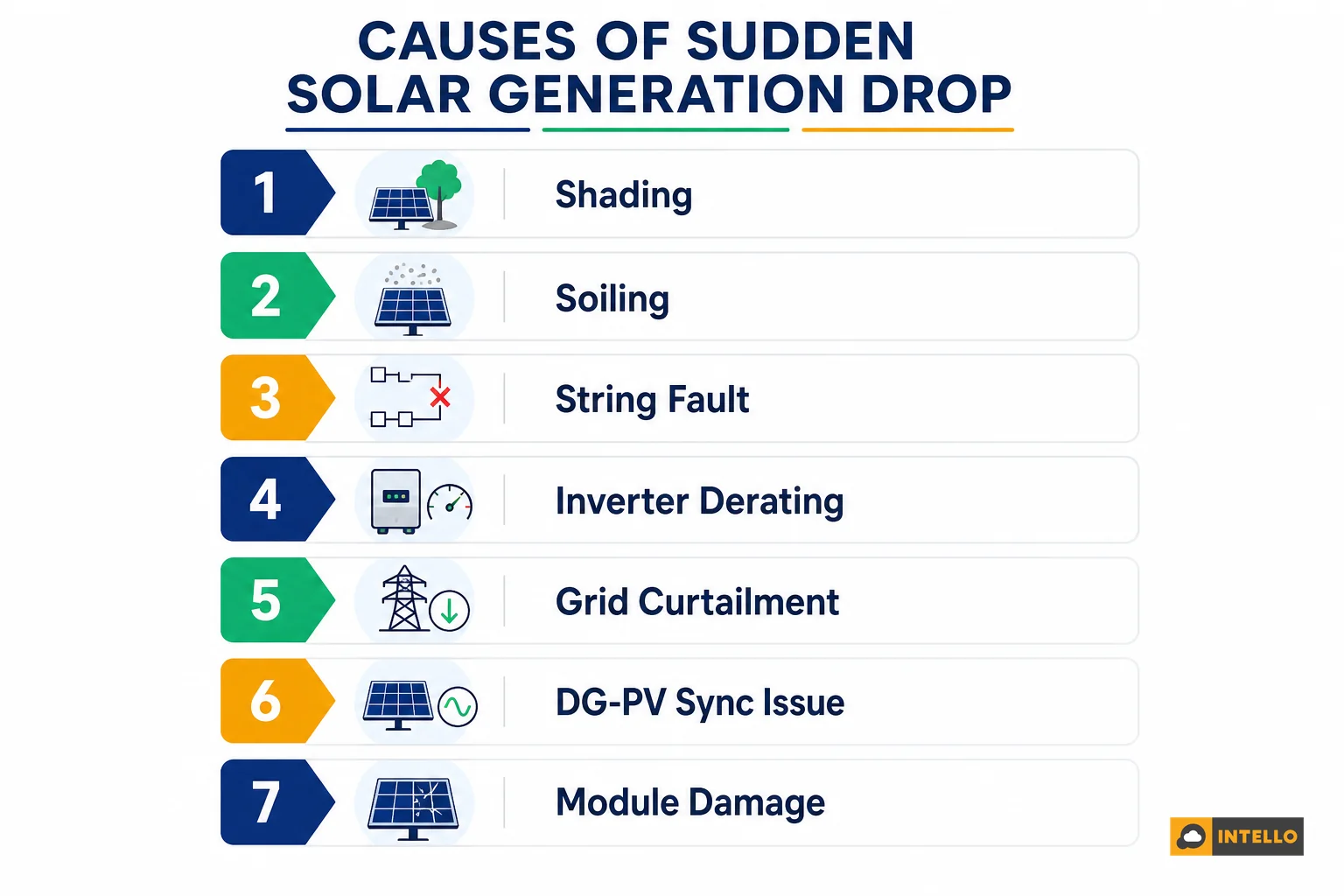
Owners across India, from a rooftop plant in Pune to a ground-mounted array in Rajasthan, ask a version of the same question when the monthly generation number looks off: why is my solar generation dropping suddenly, and is it something I need to worry about? The honest answer is that it depends on where in the system the drop starts, and that’s exactly what a structured check tells you.
1. New or Growing Shading on the Array
Shading is the single most common reason for a sudden-looking drop that was actually building for weeks. A tree that grew a few feet, a new water tank on the neighbouring roof, or scaffolding from nearby construction can all shade a section of the array that was clear last season.
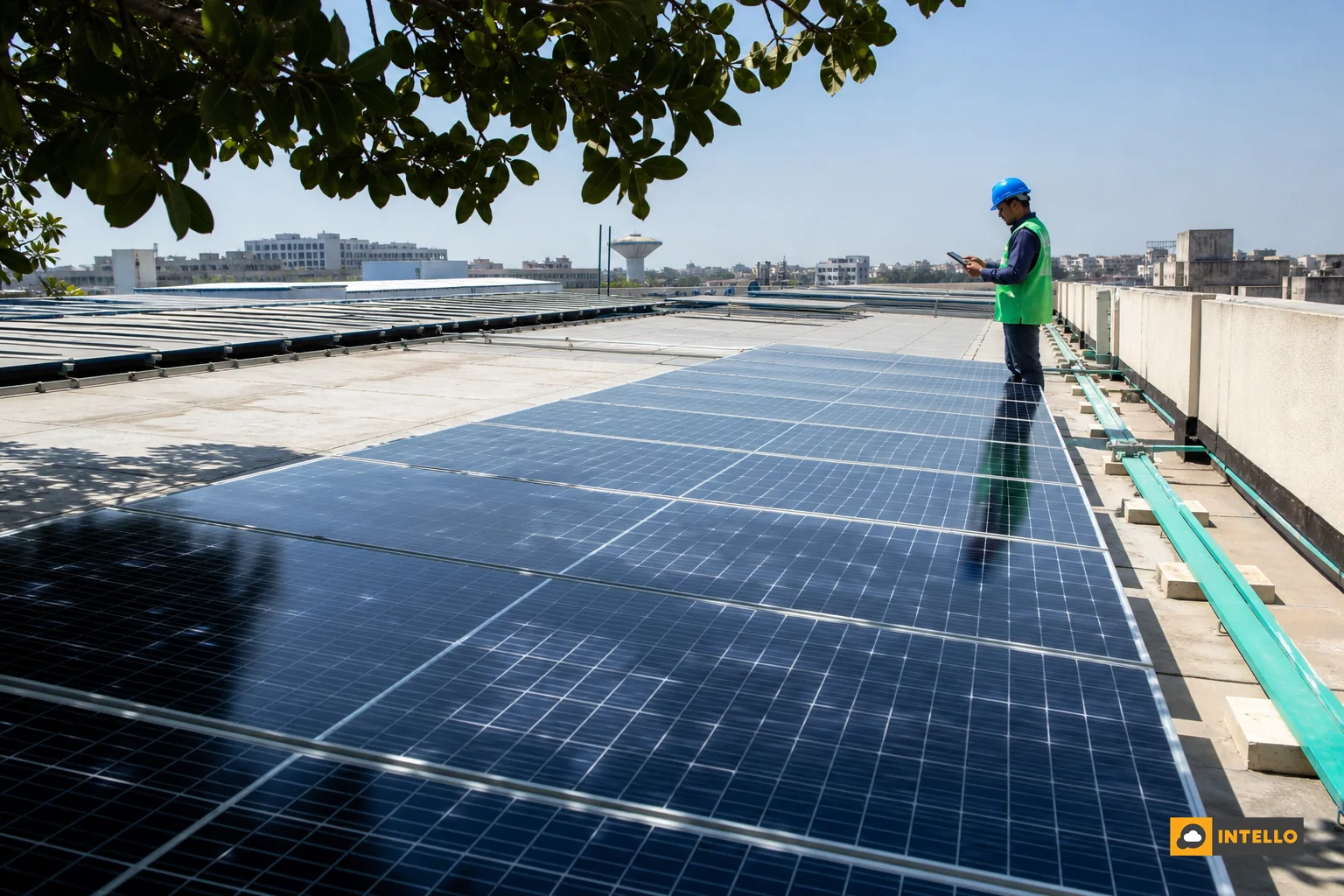
Even partial shade on one cell in a series string can pull down the output of the whole string, not just the shaded panel. This is why a small obstruction produces an outsized drop in the numbers. Walk the site at 9am, noon, and 3pm to catch shadows that move through the day.
If your monitoring shows one string consistently underperforming its neighbours by the same percentage regardless of weather, shading is the leading suspect. Our solar dashboard guide explains which daily metrics make this comparison easy to spot.
2. Heavy Soiling Since Last Cleaning
Dust, pollen, construction debris, and bird droppings accumulate on glass faster in India than most owners expect, and the rate varies sharply by city and season. A plant near a highway or a cement plant can lose 5-8% within two to three weeks of dry weather.
Cleaning frequency should match local conditions, not a fixed calendar. Coastal sites deal with salt film, dry-belt sites deal with dust storms, and post-monsoon sites often need an unscheduled clean after the first heavy rain leaves mud spots. Our regional cleaning guide by climate zone breaks down realistic intervals city by city.
If your last cleaning was more than three weeks ago and the drop lines up roughly with dry, dusty weather, soiling is worth ruling out before anything more technical.
3. A String Fault or Loose DC Connection
When output drops sharply and stays flat, rather than fluctuating with the weather, look at individual strings instead of the whole plant. A blown in-line fuse, a loose MC4 connector, or a cable nicked during a cleaning visit can silently take one string offline while the rest of the plant keeps producing normally.
This is different from gradual panel degradation, which affects the whole array evenly over years. A string fault shows up as a step change, often within a single day, and it is exactly the kind of fault that IoT sensors are built to catch before they cost you weeks of lost generation.
Without string-level monitoring, this fault type often goes unnoticed until the next billing cycle, since the overall plant is still generating, just less than it should.
4. Inverter Derating Due to Overheating or Fault Code
Inverters automatically reduce their output when internal temperatures cross a safety threshold, a behavior called derating. In peak summer, an inverter installed in a poorly ventilated room, or one facing direct afternoon sun on its enclosure, can throttle output by 10-20% during the hottest hours.
Check the inverter’s display or app for a temperature warning or fault code before assuming a hardware failure. Many derating events resolve on their own once the ambient temperature drops in the evening, which is a useful clue: if generation recovers after sunset heat eases, the inverter is the likely cause.
Recurring derating usually means the inverter room needs better airflow or the unit needs servicing. A regular inverter troubleshooting routine catches these patterns before they become a habit that quietly caps your plant’s ceiling every afternoon.
5. Grid Curtailment or Voltage Fluctuation
Sometimes the fault isn’t on your side of the meter at all. When the DISCOM feeder voltage rises above the inverter’s allowed range, often because too much solar is exporting into the same local grid, the inverter automatically curtails its output to stay within safe limits.
This shows up as a drop that happens on perfectly clear, sunny days, with no shading and no fault codes anywhere in the plant. It’s frustrating precisely because it looks identical to an equipment problem from the owner’s side, but the fix lives outside your installation.
Sites using a zero export device or reviewing net metering setup sometimes see this resolve once export limits are configured correctly with the DISCOM. It’s worth logging the exact time and voltage reading when this happens, since that data is what your DISCOM will ask for if you escalate.
6. DG-PV Synchronisation Issues at Sites Running Diesel Backup
Commercial and industrial sites that run solar alongside a diesel generator sometimes see solar output drop the moment the DG kicks in. If the synchronisation controller isn’t tuned correctly, it can throttle the PV contribution more aggressively than necessary to protect the generator.
If your drop correlates with power cuts or DG start times rather than weather, this is worth checking. Our DG-PV synchronisation controller guide covers what correct tuning looks like and where sites commonly get this wrong.
7. Panel or Module-Level Damage (Not Gradual Degradation)
Normal panel degradation is slow and predictable, typically 0.5-0.8% per year, and it never explains a sudden double-digit drop. A sudden module-level loss usually points to a specific event instead: hail impact, a hotspot from a manufacturing defect, delamination, or micro-cracks from someone stepping on a panel during cleaning.
A thermal imaging scan or an IV curve test on the affected string will confirm module-level damage far more reliably than a visual check alone. If damage is confirmed and the panel is still within warranty, start the claim process quickly, since manufacturers require documentation close to the event date. Our warranty claim process guide walks through what documentation to gather first.
How Should I Diagnose a Sudden Drop in Solar Generation?
Start with your monitoring dashboard, not a site visit. Compare string-level and inverter-level data against the previous week to isolate whether the drop is plant-wide, inverter-specific, or limited to one string, then match that pattern against the seven causes above.
A plant-wide drop on a clear day points toward grid curtailment or a widespread soiling event. A single-string drop points toward shading or a DC-side fault. An inverter-specific drop with a fault code points toward derating or a hardware issue. This narrowing process, done with data first, typically takes minutes instead of the hours a blind site inspection would need.
How Often Should I Get My Solar System Serviced to Catch This Early?
Most commercial plants need a full preventive maintenance visit, covering inverter servicing, string balancing, and hardware tightening, every three months, with cleaning on a separate, city-specific schedule. Catching loose connectors and early derating patterns during these visits prevents the sudden drops from happening at all.
A quarterly service schedule combined with continuous remote monitoring closes the gap between “the bill was high this month” and “we caught the fault three days after it started.” That gap is where most avoidable ROI loss actually happens, not in dramatic equipment failures. Our complete guide to solar O&M in India covers what a well-run maintenance cadence looks like across residential, commercial, and ground-mounted installations.
FAQ
Is a 10% drop in generation normal during summer?
A moderate drop during peak summer afternoons can be normal if it’s driven by inverter derating in heat, but it shouldn’t persist through cooler mornings and evenings too. If the 10% loss holds all day regardless of temperature, treat it as a fault to investigate, not seasonal variation.
Can weather alone explain a sudden drop in solar output?
Cloud cover, haze, and dust storms can cause real day-to-day swings of 15-30%, so compare your drop against actual weather records before assuming an equipment fault. A drop that persists on clear, sunny days after a cloudy spell has passed is the signal that something other than weather is responsible.
How fast should an O&M provider respond to a generation alert?
A well-run O&M setup should acknowledge a generation alert within hours and dispatch a technician within one to two business days for anything beyond a remote fix. Slower response times usually mean the provider is relying on monthly reports instead of real-time monitoring, according to the Ministry of New and Renewable Energy’s guidance on solar plant performance standards (mnre.gov.in).
Chasing a sudden solar generation drop with guesswork wastes days that a proper diagnostic dashboard would save in minutes. Intello’s remote monitoring platform flags string-level and inverter-level anomalies as they happen, and our on-ground technicians act on those alerts instead of waiting for the next billing cycle to reveal the loss. If your plant’s numbers look off right now, request a quote for a diagnostic visit, or check your existing site data through the Intello portal login before assuming the worst. To see how our monitoring and maintenance model works end to end, learn more about Intello.