A DG synchronization panel is the control cabinet that checks voltage, frequency, phase angle and phase sequence between an incoming diesel generator and a live bus before it allows a breaker to close. Get the panel right and a commercial solar-diesel site switches power sources without a flicker. Get it wrong, or skip it, and you risk burnt alternator windings, tripped inverters, and generators that fight each other for load.
Key Takeaways
- What it does: A DG synchronization panel matches an incoming generator’s voltage, frequency and phase to the bus it’s joining, then controls the breaker close and the load-sharing afterward.
- Why hybrid sites need it: Commercial sites running solar plus diesel need coordinated switching so solar inverters and DG sets don’t trip each other or fight for reactive power during grid outages.
- What fails without it: An out-of-sync breaker close can damage generator windings, while poor anti-islanding control risks feeding a “dead” grid section, a safety hazard for utility crews.
- Manual vs automated: A manual changeover switch only toggles one source at a time; a true synchronizing panel lets two or more sources run in parallel safely.
- Cost drivers: Number of DG sets, automation level (relay-based vs PLC-based), protection features, and whether solar inverters need to be integrated all move the price.
At a Glance: DG Synchronization Panel Essentials
| Aspect | What to Know |
|---|---|
| Core function | Matches voltage, frequency, phase angle, phase sequence before closing generator breaker |
| Key protection device | Sync-check relay (ANSI 25), independent of any PLC logic |
| Who needs it | Sites running 2+ DG sets in parallel, or solar plus DG hybrid setups |
| Manual changeover switch | Only one source live at a time, no parallel operation |
| Hybrid synchronizing panel | Adds solar inverter and grid coordination to standard DG sync logic |
| Main risk without one | Out-of-phase breaker closure damaging alternator windings; inverter trips |
| Typical buyers | Commercial solar asset owners, EPC companies, large campuses, factories |
| Maintenance need | Periodic relay testing, breaker inspection, firmware/logic checks |
What Is a DG Synchronization Panel?
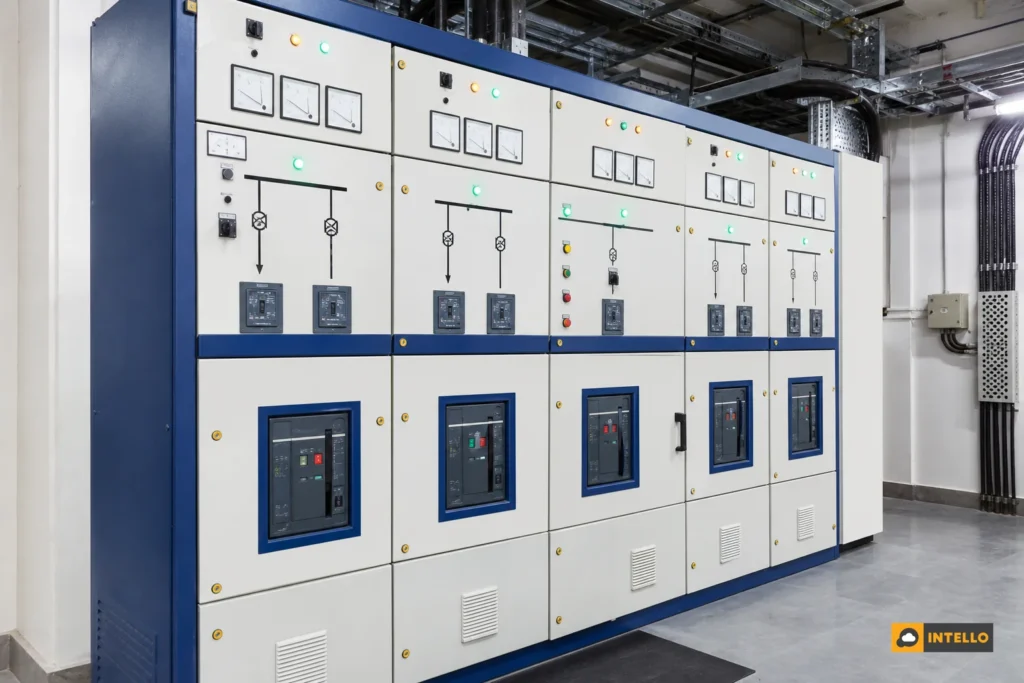
A DG synchronization panel is the electrical control and protection interface that sits between a diesel generator and the bus it needs to join. It does not generate power itself. Instead, it measures the incoming generator against the running bus and decides, moment by moment, whether it is safe to close the breaker.
That measurement covers four things: voltage magnitude, frequency, phase angle, and phase sequence. A commonly cited tolerance is that voltage must match within about 5 percent before the breaker is allowed to close, alongside frequency and phase angle windows narrow enough to avoid a jolt when the two sources connect, per a field guide on DG synchronization panel working.
Once the breaker closes, the panel’s job isn’t over. It then manages how multiple generators (or a generator and solar inverter) share kW and kVAr load, so one machine doesn’t end up carrying the bulk of the load while another idles, as explained in that same load-sharing guide.
How Does a DG Synchronization Panel Work?
A DG synchronization panel works by continuously comparing the incoming generator’s electrical signature to the live bus, using a sync-check relay to block any breaker close that falls outside a safe tolerance window. Only once every condition clears does the breaker get permission to shut.
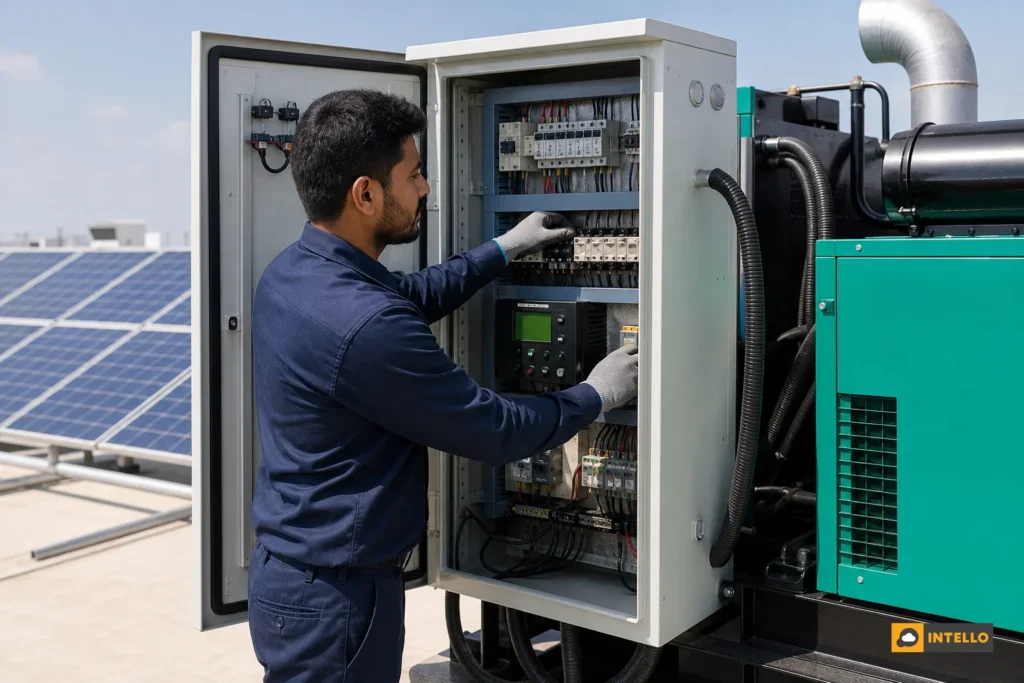
Inside the cabinet, three layers typically work together. The generator controller handles start, stop and basic engine protection. The governor and automatic voltage regulator (AVR) nudge the incoming machine’s speed and excitation until it lines up with the bus. And the sync-check relay, commonly an ANSI 25 device, independently verifies that voltage, frequency and phase angle sit inside the permissive window, according to a field guide on generator paralleling and synchronization.
That independence matters. A programmable logic controller (PLC) can run the automatic synchronizing sequence, but reputable engineering guidance is firm that a dedicated sync-check relay must always sit in series with the breaker close circuit as a hard permissive, never bypassed, regardless of what the PLC logic says.
After the breaker closes, the panel shifts to a second job: load sharing. It allocates real power (kW) and reactive power (kVAr) between the paralleled sources so each one runs within its safe operating band, a function explained in detail by Risentric’s breakdown of control and breaker logic.
Why Commercial Solar Sites in India Need One
Commercial solar sites in India need a DG synchronization panel because grid outages are routine, and most such sites already run a diesel generator as backup. When the grid drops and the generator kicks in, something has to decide how the DG, the solar inverter and (once the grid returns) the utility feed all share the same bus without tripping each other.
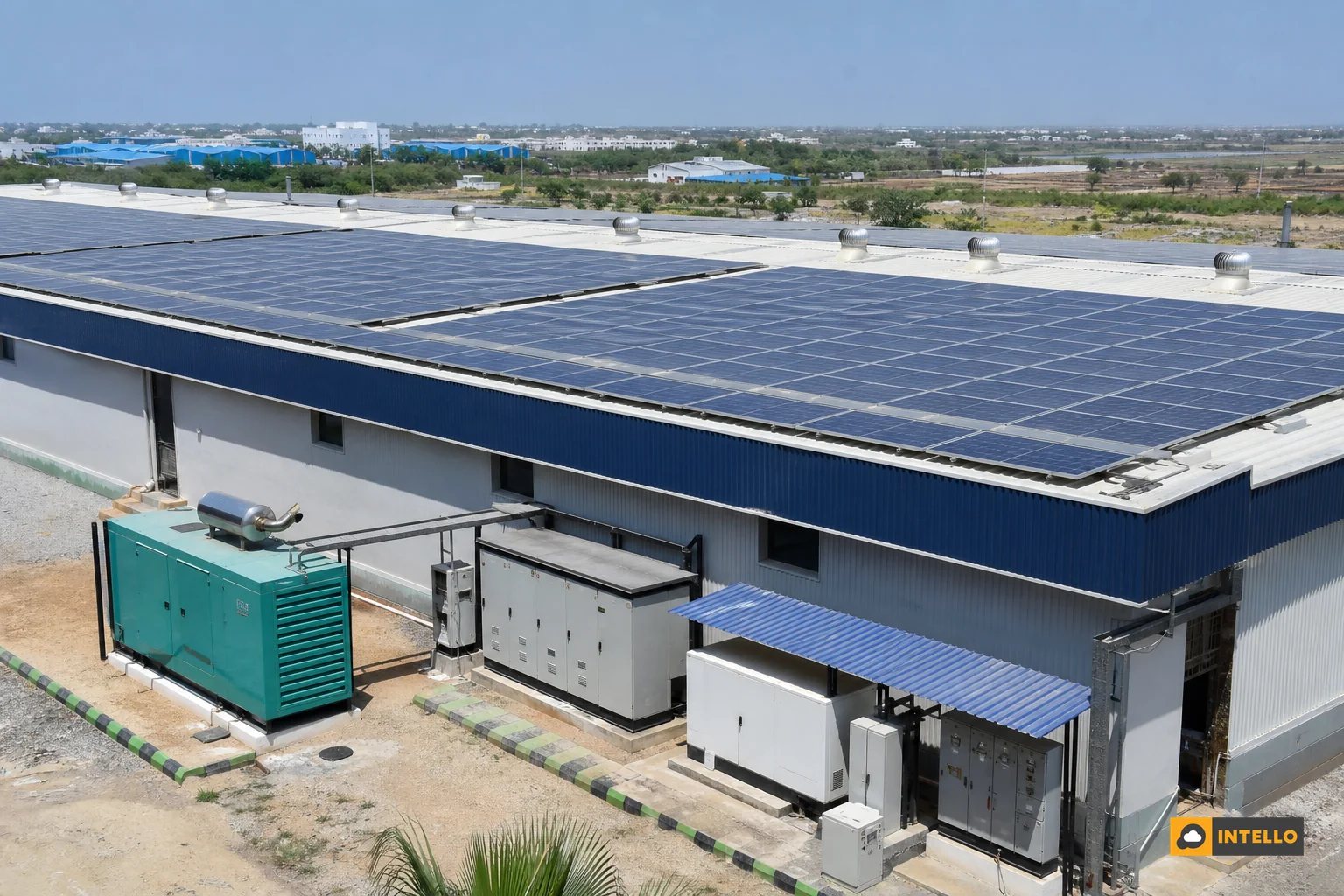
Without that coordination layer, facility teams fall back on manual switching: shut the inverter down, bring the DG online, and hope nobody forgets to bring solar back when the grid recovers. That’s slow, it wastes diesel, and it’s exactly the failure pattern covered in how DG-solar synchronization fails on hybrid sites.
A hybrid synchronizing panel extends the same logic to solar. It acts as the control layer that lets solar, DG and grid operate together safely and predictably, a function described by Synchro Electricals’ overview of hybrid power synchronizing panels. Without it, even a well-designed hybrid system can become unstable the moment one power source drops or returns.
For EPC companies handing solar plants over to commercial clients, this is often the single most support-heavy issue post-handover, as detailed in why EPC clients keep running into DG synchronization problems with solar. Clients blame “the solar” when the actual fault sits in the synchronization logic, not the panels.
What Goes Wrong Without Proper Synchronization
Without proper synchronization, closing a generator breaker out of phase can physically stress the alternator windings and the prime mover, shortening equipment life or causing an immediate fault trip. The further out of tolerance the close, the harder the mechanical and electrical shock to the machine.
There’s a second, subtler risk on hybrid sites: islanding. If a section of the grid goes dead for maintenance and a solar inverter or DG keeps energizing that section without anyone’s knowledge, utility crews working on what they believe is a de-energized line face a real safety hazard. Anti-islanding protection exists specifically to detect this condition and disconnect automatically, a requirement reflected in standards such as IEEE 1547 for interconnecting distributed resources.
Reverse-power conditions cause a related problem. If a paralleled generator is accidentally motored (power flows into it instead of out), reverse-power protection, commonly an ANSI 32 relay, needs to trip that set before damage occurs. A synchronization panel without this protection, or with it badly tuned, leaves generators exposed every time load conditions shift suddenly.
On the solar side, a poorly synchronized hybrid setup often shows up as nuisance inverter trips every time the DG starts or stops, rather than catastrophic failure. That’s still expensive: lost generation, a site team chasing phantom faults, and a maintenance backlog that preventive maintenance is specifically designed to avoid.
DG Synchronization Panel vs Hybrid Synchronizing Panel vs Manual Changeover
These three approaches sit on a spectrum from basic to fully automated, and picking the wrong one for your site is a common and costly mistake for both asset owners and EPCs.
| Feature | Manual Changeover Switch | Standard DG Synchronization Panel | Hybrid Synchronizing Panel |
|---|---|---|---|
| Parallel operation | No, one source at a time | Yes, multiple DG sets | Yes, solar + DG + grid |
| Automation level | Manual lever or contactor | Relay or PLC-based auto-sync | PLC-based, often with inverter communication |
| Downtime on switch | Noticeable break in supply | Near-seamless transfer | Near-seamless across all sources |
| Best suited for | Small sites, single backup DG | Multi-DG industrial sites | Commercial/industrial solar-diesel hybrids |
| Anti-islanding protection | Not applicable | Depends on design | Usually built in for grid-tied solar |
| Relative complexity to install | Low | Moderate | High |
What Drives the Cost of a DG Synchronization Panel
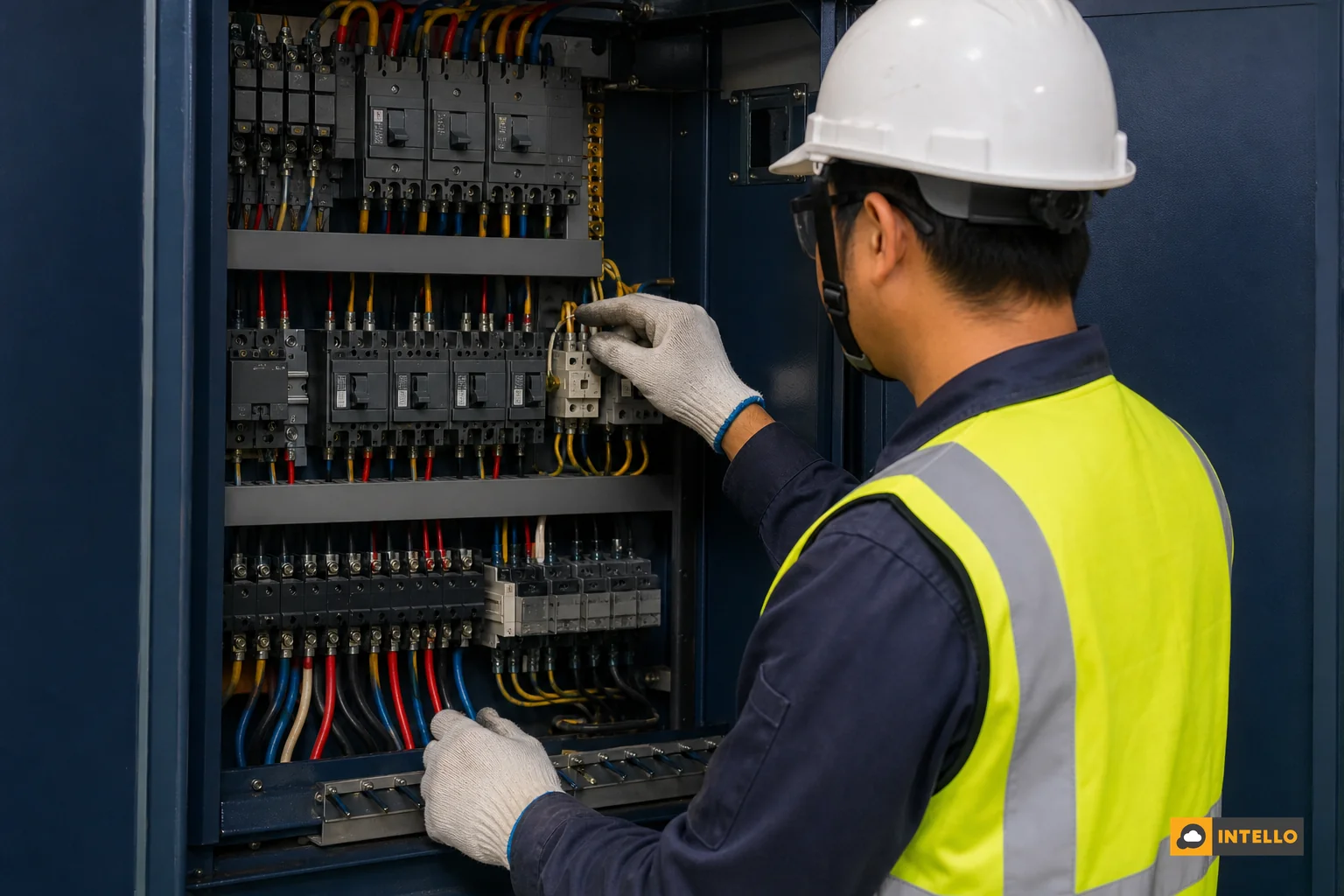
The cost of a DG synchronization panel is driven mainly by how many generators it must parallel, how automated the control logic is, and how many protection features and remote monitoring capabilities are built in. A two-DG relay-based panel costs far less than a PLC-driven hybrid panel integrating solar inverters and grid interconnection.
Several specific factors move the number:
- Number of sources to parallel: Two DG sets cost less to synchronize than four, and adding solar or grid interconnection adds another layer entirely.
- Automation level: A relay-based auto-synchronizer is simpler and cheaper than a PLC-based system with Modbus communication to inverters, as outlined in guidance on generator synchronization panel selection.
- Protection suite: Reverse-power protection, under/over-voltage, under/over-frequency, and anti-islanding relays all add hardware and engineering time.
- Remote visibility: Panels wired into a central monitoring dashboard, rather than standalone with local indicators only, carry extra integration cost but pay back in faster fault response.
- Site wiring complexity: Retrofitting synchronization into an existing site with legacy switchgear usually costs more than specifying it into a new build from day one.
Because these variables swing so widely, a site-specific quote from a qualified panel integrator is the only reliable way to budget. If you’re planning a hybrid solar-DG setup or want to sanity-check an existing design, you can request a quote and walk through your site’s specific generator count and automation needs.
Choosing and Maintaining a DG Synchronization Panel
Choosing the right panel starts with an honest count of what you’re synchronizing: just DG sets, or DG plus solar plus grid. Share that scope with your EPC or panel vendor before anything else, because retrofitting hybrid capability later is almost always more expensive than designing it in.
Ask for a written breakdown of protection relays included, not just “auto-sync” as a feature name. A panel worth buying names its sync-check relay, its reverse-power protection, and its anti-islanding scheme explicitly, the same way a DG-PV synchronization controller buyer’s guide would recommend checking line by line.
Once installed, synchronization panels need the same preventive discipline as any other critical electrical asset. Relay settings drift. Breaker contacts wear. Firmware on PLC-based panels needs periodic review, especially after a site adds inverters or swaps a generator. A checklist similar to what belongs in any solar annual maintenance contract should cover panel inspection intervals explicitly, not leave them as an afterthought.
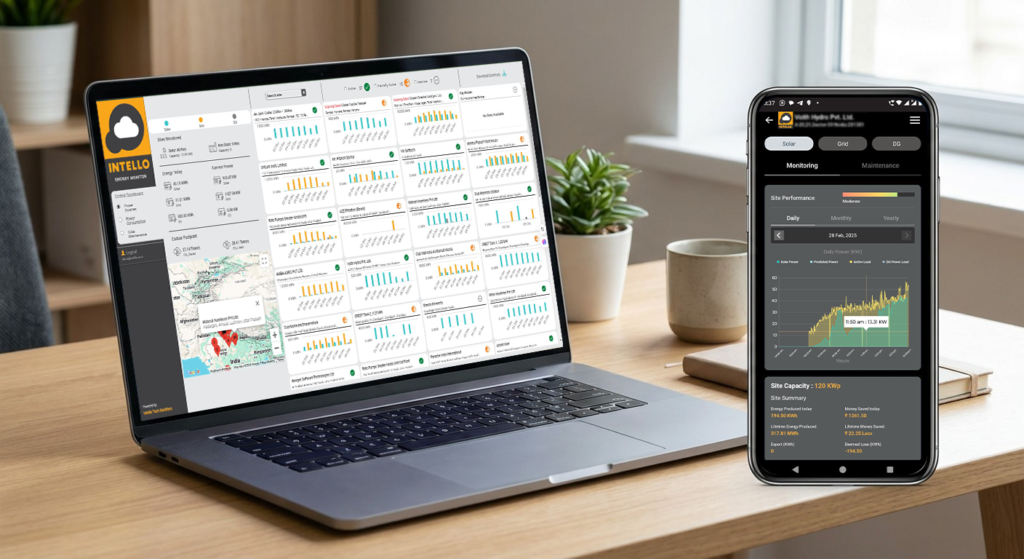
This is where centralized monitoring earns its keep. A site running solar, DG and grid through a synchronization panel generates fault signals worth watching in real time, not discovering a week later on a site visit.
Pairing that panel with a centralized solar monitoring setup turns a silent nuisance trip into an alert your O&M team can act on the same day. If you already use a monitoring dashboard, you can check current fault history through your portal login rather than waiting for the next scheduled visit.
Frequently Asked Questions
Is a DG synchronization panel the same as an ATS?
No. An automatic transfer switch (ATS) toggles between two sources without ever running them in parallel, so there’s a brief break in supply. A DG synchronization panel keeps both sources running together on a shared bus, matching voltage, frequency and phase so the transfer is close to seamless.
Can solar and DG run together without a synchronization panel?
Not reliably at commercial scale. Small single-inverter setups sometimes get away with basic changeover logic, but any site running multiple strings, multiple inverters, or DG sets in parallel needs a proper synchronizing panel to avoid nuisance trips and equipment stress, a problem covered in why DG-solar synchronization fails and how to fix it.
How often should a DG synchronization panel be tested?
Most sites schedule a functional test of the sync-check relay and breaker logic at least annually, alongside routine generator maintenance, with more frequent checks after any change to the generator fleet, inverter fleet, or panel firmware. Sites with heavy DG runtime during monsoon-related grid outages often benefit from a pre-monsoon check too, similar in spirit to a monsoon solar maintenance checklist.
Does a synchronization panel reduce diesel costs?
Yes, indirectly. By letting solar carry load whenever it’s available and only calling on diesel for the shortfall, a well-tuned hybrid synchronizing panel cuts generator runtime hours compared to a setup where DG runs at full load any time the grid drops, independent of solar output.
A DG synchronization panel is not a line item to skip when budgets tighten on a hybrid solar-diesel project. It’s the layer that decides whether your generator, your inverter, and your grid connection cooperate or collide.
If your site is running solar and diesel side by side and you’re not confident the synchronization logic is doing its job quietly in the background, learn more about how Intello’s O&M teams diagnose and maintain these systems, or request a quote to get a technician’s eyes on your panel before the next outage finds the gap for you.